
As a full time whisk(e)y enthusiast and a part time distillery tour guide in Kentucky, one of the most common questions I get asked is, “What is the difference between whiskey and bourbon?”
I always appreciate the people who are willing to pose this question, and even more so when it’s asked outright. Humble ignorance is welcome, and it’s far less frustrating than the persistent—and incorrect—insistence that bourbon is bourbon and whiskey is everything else.
Sometimes, the word “whiskey” is even wielded as an insult, particularly in reference to the spirits made south of the border—the state border, that is. If you ever want to see a born-and-bred Kentuckian’s head explode, suggest that Jack Daniels Tennessee Whiskey is also bourbon. We’ll save the question of whether it actually is or isn’t bourbon for another post, but let me tell you this: as a resident of the state by relocation rather than heritage, it’s good fun.
The truth is this: bourbon is whiskey. Not all whiskey is bourbon, however.
Whiskey (or whisky, depending) is a broad category of spirits. It includes the subcategories of bourbon, rye, Scotch, Canadian whiskey, Irish whiskey, and so much more. But to understand the definitions of and differences between these varieties, we have to first answer the bigger question: what is whiskey?
Note: Because this conversation started with bourbon, an American whiskey, I use the e-inclusive spellings of “whiskey” and “whiskeys” throughout, rather than my usual “whisky.”
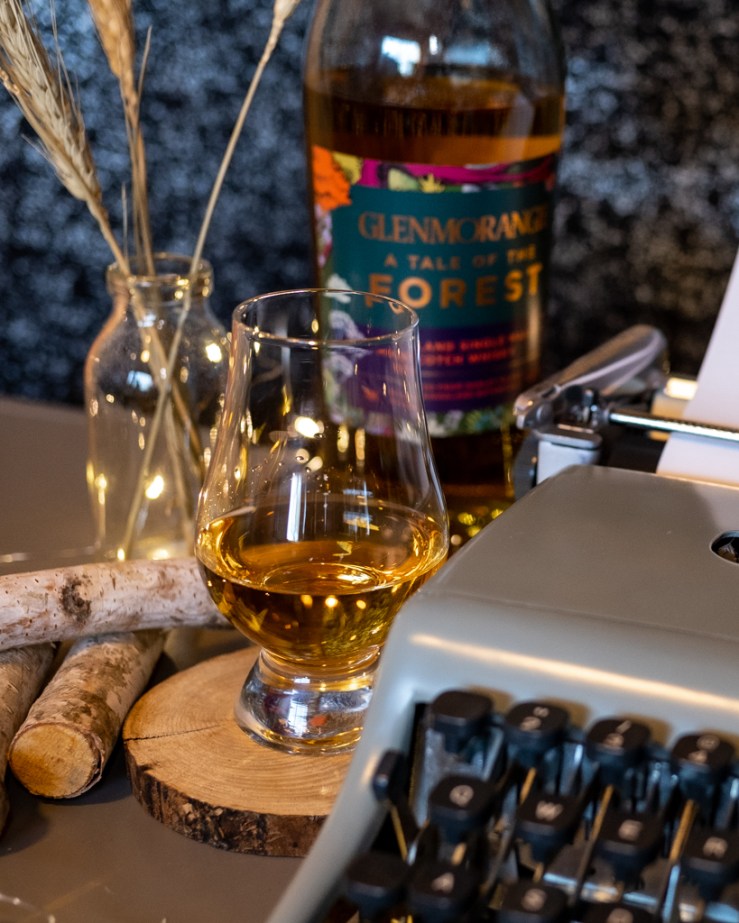
What is Whiskey? (Or, What is Whisky?)
Whiskey—with or without the e—is any spirit distilled from a fermented grain mash. The grains most commonly used in whiskey are malted or unmalted barley, corn, rye, and wheat.
The grain-based nature of whiskey is critical in its definition, as it distinguishes the spirit from rum (fermented and distilled from sugar or sugar cane), brandy (fermented and distilled from fruit), or any other distilled spirit made worldwide. Those spirits may follow a somewhat similar fermentation and distillation process, but they are not whiskey.
How is Whiskey Made?
Whiskey is created through a multi-step process involving mashing, fermentation, and distillation, in that order.
Mashing
Starch is a natural component of grain, but sugar is what we need for the production of alcohol. Luckily, the starch that’s found in grains can be converted into sugar relatively easily. This happens through a process called mashing.
When barley is malted—a separate process that teases the grain kernels into starting germination before ruthlessly stagnating their growth—it releases enzymes that can break down starches and convert them into sugars. These powerful enzymes can transform an entire batch of grain, even if only a small portion of the recipe includes malted barley. The enzymes can also be added separately, if no or not enough barley is desired as part of the final product.
The process of mashing activates these enzymes. Introduced to the warmth of hot water (approximately 152 °F or 67 °C to be precise) they quickly get to work, moving through the batch of grain—essentially a big batch of oatmeal (or its alternate-grain equivalent). As the mash soaks, the grains, and then the water, become sweeter and sweeter.
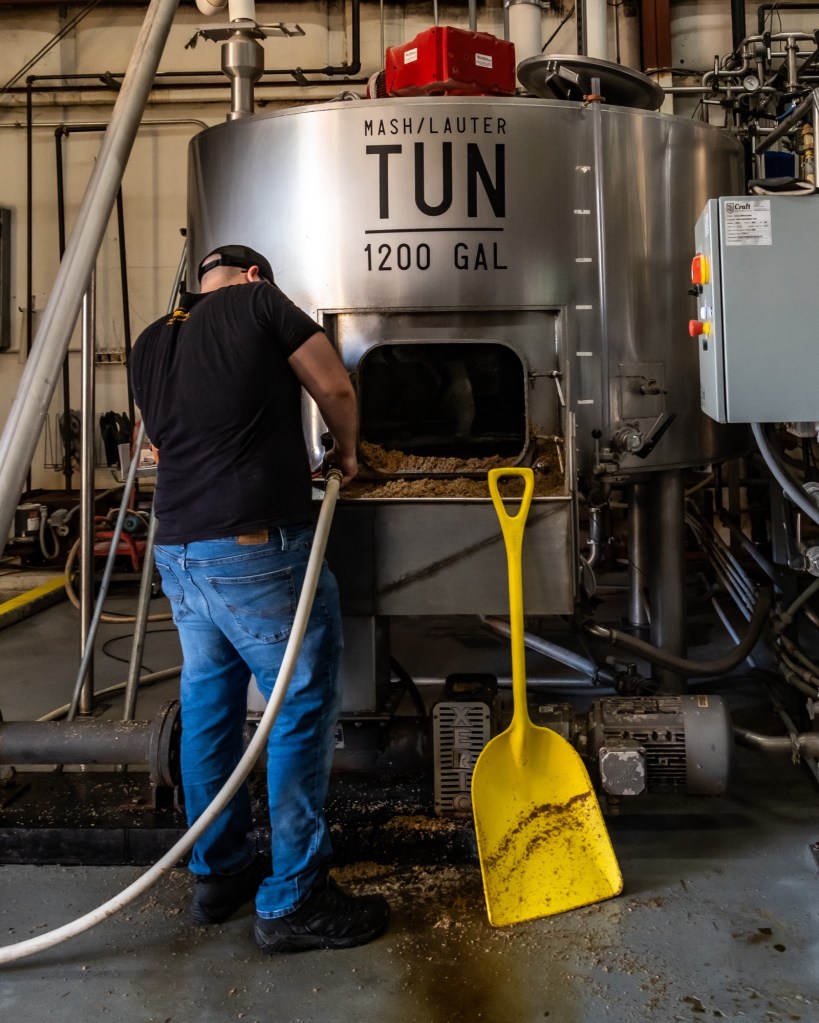
Mashing is a relatively quick process, especially compared with the rest of whiskey production. The mash tun, a big vat designed to stir the contents while it cooks the grain, often finishes its work in an hour or two.
Then it’s on to fermentation.
Fermentation
If you think fermentation sounds fancy, let me assure you—it is not. Fermentation is what happens when yeast, a living microorganism, eats sugar.
Alcohol is yeast poop. CO2, another natural byproduct of fermentation, is yeast farts.
You’re welcome.
Yeast exists everywhere in the world: on plants and surfaces and even our skin. Over the years, the whiskey industry has cultivated particular yeast strains or species for their efficiency and outcomes, often using the same strains of yeast for decades.
Yeast is well known by whiskey enthusiasts for its practical application of creating alcohol. It is deeply under-appreciated for its artistic contribution to whiskey: creating flavor. While whiskey gets a significant portion of its flavor and aromas from a wooden barrel (something we’ll discuss later), the undercurrent of a whiskey’s flavor profile starts in the fermentation tank.
Yeast produces esters, chemical compounds which are central to the flavor of the spirit, and the type of yeast used will impact the flavors that appear.
Craft breweries have been leaning into this fact for some time, experimenting with a wide variety of yeasts. In the whiskey industry, consistency has more often reigned supreme, at least over the last century. That’s not to say that some distilleries aren’t pushing the boundaries of yeast usage. New and old distilleries are increasingly recognizing yeast for its creative and flavorful potential, and exploring what that can mean to the final product.
Regardless of whether a distillery uses a tried-and-true yeast strain or something new, the fermentation process (which can vary from a few days to a week or more) results in something called “distiller’s beer.” Typically containing 8-10% alcohol by volume, this hop-less beer is what we distill into whiskey.

Distillation
Distillation is how we separate the wheat from the chaff—or, more appropriately, the ethanol from nearly everything else.
Distillation works on elementary-level science: every substance on planet earth freezes, boils, and vaporizes at a different temperature. Through distillation, we use this concept (and heat) to parse through the varied components of our distiller’s beer until we are left with a liquid that is both appetizing and safe to drink.
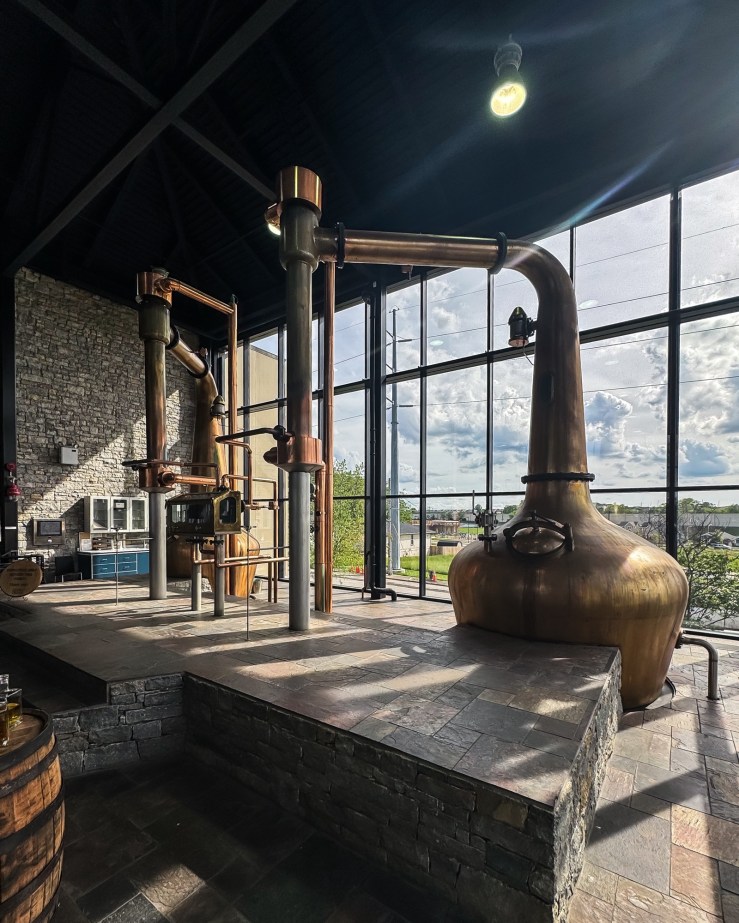
Distillation happens on a still. Whether it’s a column still, a pot still, or some hybrid combination of the two depends on the distillery and the type of whiskey they’re creating.
Whiskey stills are almost always made of copper. Copper will naturally react with sulphur particles in the distiller’s beer. The result is copper sulfate, a compound that sticks to the inside of the still rather than in your glass. Sulphur, typically described with a smell like rotten eggs, is not a flavor you probably want in your whiskey, and copper takes it out.
We could get into the intricacies of various stills and their functionality, but that’s a post all on its own. Here’s what you need to know: at the end of the distillation process, the stills have whittled the distiller’s beer down to what’s called “new make spirit.” You might also hear it called distillate, white dog, white lightning, moonshine, or, my personal (and unofficial) favorite, “pre-whiskey.”
The alcohol percentage of new make spirit is significantly higher than distiller’s beer. It’s also perfectly (or nearly) clear and high in ethanol (the good alcohol), though many of the oils and esters of the fermented beer have persevered through the process. This is good; it means our whiskey will have flavor.
According to our dictionary definition, we could stop here—but most whiskey geeks would (rightfully) scoff at the idea. There is one more more step to transform this clear spirit into our favorite amber liquid.
Does Whiskey Have to Be Aged?
Whiskey lovers, brace yourselves: what I’m about to say might make you angry.
Technically, whiskey may not need to be aged.
You may have noticed that the general definition of whiskey noted above does not mention it at all. Worse, there are a number of clear, unaged “white” whiskeys in the market at this very moment.
I know, I hate it too.
That said, most defined sub-categories of whiskey do require aging, and some even mandate a minimum age. More importantly, the universally-accepted expectation of whiskey demands an aged spirit.
So put down your pitchforks, damnit. I’m on your side.

What is Aging?
When a whiskey is “aged,” it has spent some amount of time in a wooden barrel. Typically made of white oak, these barrels significantly contribute to the flavor of the spirit—and they provide all of its typical golden, amber, or brown color.
Barrels made of white oak are the #1 choice for whiskey distillers worldwide. As a hardwood, white oak’s dense fibers and natural components help to prevent whiskey from leaking through and out of the barrel. This is key to making sure that the spirit stays in the barrel where it belongs, rather than on the floor of your rackhouse.
White oak also contains natural compounds that contribute to the flavor of whiskey. While the presence and levels of these compounds may vary depending on the species of white oak used, a handful are well-known for their particular flavor influence on whiskey:
- Vanillins: vanilla and spice
- Oak Lactones: coconut and wood
- Guaiacyl: smoke
- Eugenol: spice
- Tannins: bitterness and astringency
Many whiskeys, particularly American whiskeys aged in virgin oak barrels, also feature a caramel note and a pronounced sweetness. This is largely due to the wood sugars in the barrel, which are charred and caramelized through the process to prepare the barrel for aging. The more times a barrel is used, the less influence these and other compounds will impart on the final flavor of the whiskey.
How are barrels made?
Whiskey barrels are made by a cooper in a cooperage.
Yes, if your last name is Cooper (à la Emily in Paris), your ancestors probably made wooden barrels for a living.
Using heat and force, wood planks (called staves) are shaped and secured with metal hoops. For American whiskeys, the barrels are typically charred, or burned out on the inside. There are several levels of charring, ranging from one to four, and I’ve heard five mentioned on occasion. Each level corresponds to a particular number of seconds that the barrel is subjected to fire. The lower the char level, the less fire is used.
Charring a barrel breaks through the outer layer of the wood and gives the spirit more access to those flavorful compounds noted above. The more charred the barrel, the more influence the wood compounds will have on your final product.
Some distilleries also “toast” their barrels. Toasting is a slower, more careful process to heat the inside of the barrel. Toasting often results in a lighter colored whiskey with less wood influence in its flavor profile.

What does the “age” of a whiskey mean?
While other alcoholic drinks can continue to age even after leaving the barrel, a whiskey’s age is calculated as the number of whole years that the spirit spent in its oaky home. There’s no rounding up in whiskey—a whiskey that spent 9 and 3/4 years in a barrel is not a 10-year-old whiskey; it is 9 years old.
When a bottle of whiskey is marked with a particular age, it indicates the youngest whiskey that is included in the bottle. Blended and batched whiskeys (yet another topic for another time) are defined by the youngest whiskey added to the blend, even if it’s only a drop—a 10-year-old whiskey could contain spirits that aged for far longer, and those elderly spirits could even be in the majority.
Some whiskey folks are very particular about the age of their whiskey, suggesting that a whiskey can’t be good if it’s less than 10 years old, or some other such self-imposed standard. Some national regulations also require a minimum age to carry a particular label, such as the three years necessary to make Scotch whiskey.
The average age of whiskey, (and the minimum for a “good” whiskey) varies significantly worldwide. It largely depends on the region in which the spirits are produced and aged; American whiskeys “age” quickly, influenced by the country’s diverse (and wide-ranging) climate and the requirement that bourbon and rye are aged in virgin oak barrels. Whiskeys produced in Scotland and Ireland, in contrast, take longer to mature, given the more temperate climates of those nations and the common practice of re-using barrels.
At the end of the day, whether a whiskey is aged for 10 months or 40 years is not that relevant, as long as it meets the requirements of its home country’s definition. Far more important is the flavor of the whiskey when it leaves the barrel—and what’s “good” or not is entirely up to you.
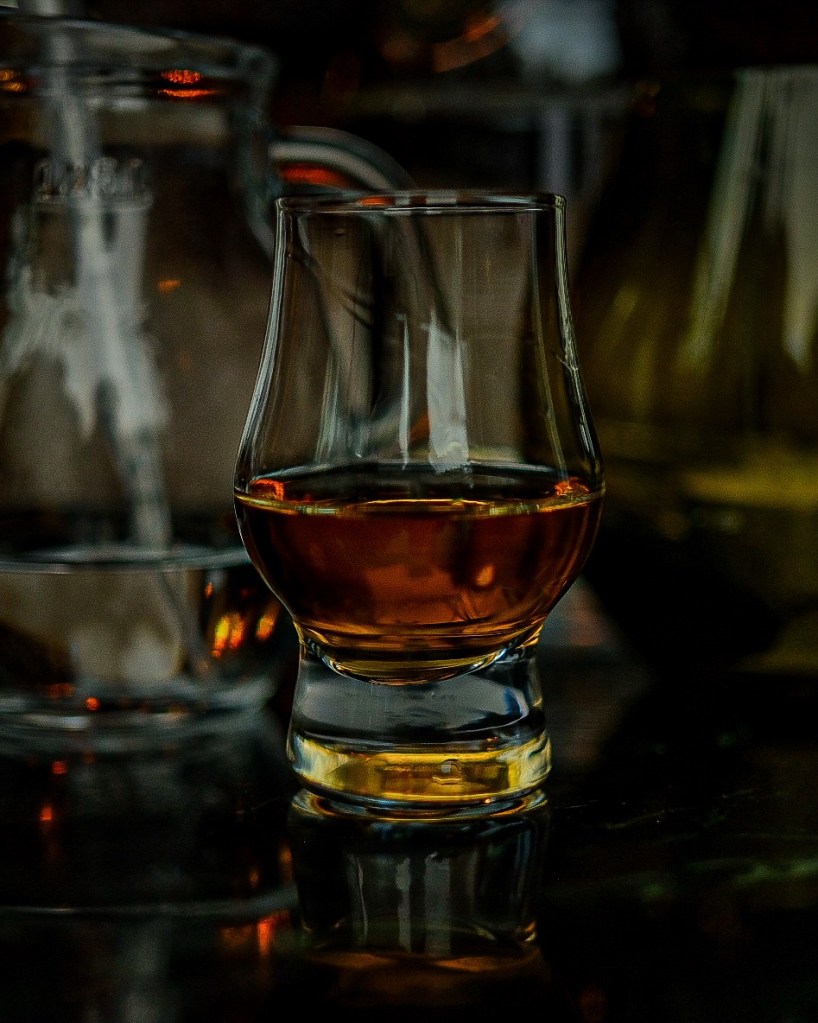
The Final Word: What is Whiskey, again?
Just to drive the point home, we’ll say it one more time: whiskey is an alcoholic spirit distilled from fermented grain and, unless you want to upset your whiskey-loving friends, aged in an oak barrel.
This post is intended to be a basic introduction to whiskey. Every part of the production process is far more complex and nuanced than noted here, sometimes due to basic science and sometimes due to the wide ranging practices of various regions. To start, the plan is to dig into those differences and idiosyncrasies as part of a deeper dive into each of whiskey’s subcategories.
In short, this is part one of a probably-lengthy series, so make sure you’re following along.
Check back each week as we dive deeper into the world of whiskey, from the experience of the spirit to the practices that define it. And be sure to follow The Whisky Type on Instagram too!
 The Whisky Type
Leave a comment