Category: Single Malt

  • Whiskey Del Bac // Sonoran Single Malt

    Whiskey Del Bac // Sonoran Single Malt

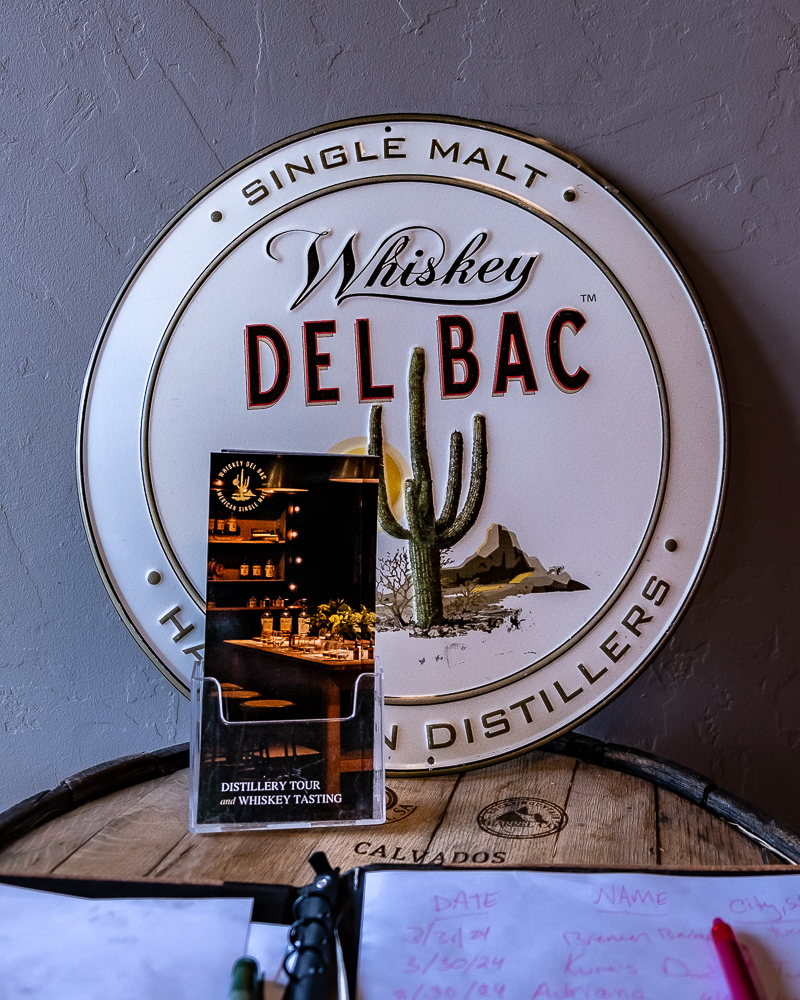
    If you’re not actively looking for Whiskey Del Bac’s award-winning distillery in Tucson, Arizona, you’re not likely to find it. Nestled against the I-10 highway in an industrial park on the west side of town, only an understated decal to announces its front door.

    Of course, for those who know about whisky (or even about craft beer), the massive silo on the back of the building is a dead giveaway that something is brewing inside the otherwise unassuming walls.

    That silo holds some 50,000 pounds of unmalted barley, waiting and ready for a trip into the drum malter inside. Until a couple of years ago, Whiskey Del Bac (more formally known as Hamilton Distillers) only produced American Single Malt Whiskey. Like most modern single malt distilleries, they source the majority of their barley ready to be milled and mashed. But when founder Stephen Paul began to fiddle with the idea of making whiskey, he had a particular outcome in mind, which required him to malt his own barley, even as an amateur distiller.

    That idea is now bottled and named Dorado, a mesquite-smoked single malt whiskey that, as I used to tell guests at the distillery, is more akin to a campfire than a boat fire.*

    That’s a good way to segue into my disclaimer for this post: for six wonderful months between the fall of 2021 and the summer of 2022, I was employed by Whiskey Del Bac as a tour guide. For two or three days every week, I led guests through the history and production and experience of the distillery’s core range of whiskies, including Dorado. I’ve always looked back on that time fondly, and I’m still friends with many of the distillers, managers, and sales folk who remained.

    I am no longer paid by Hamilton Distillers, but I’ve continued to be an enthusiastic advocate for what I truly believe to be one of the best American Single Malt Whiskies money can buy.
    How Whiskey Del Bac Came to Be

    Whiskey Del Bac was founded by Stephen and Amanda Paul, a father-daughter duo who are still involved in the distillery’s strategy and operations.

    Unofficially, it was Stephen’s wife who deserves the credit for this American whiskey.

    Stephen is a carpenter and a furniture maker by trade. For years, he owned a custom furniture shop on Tucson’s Fourth Avenue, a lively and iconic street in the Old Pueblo’s downtown area. Embracing the spirit and the natural resources of the Sonoran Desert (of which Tucson is a part), Stephen frequently employed mesquite wood to build his creations.

    Mesquite is a hardwood that grows across the American Southwest. Both beautiful and dense, it is often compared to fine woods like oak and walnut. That makes it a phenomenal choice for furniture—and for smoking meat, which is, indirectly, how Whiskey Del Bac came to be.

    The Pauls were (and are) scotch whisky drinkers. They also would utilize the off-cuts of mesquite wood from Stephen’s shop to smoke meat at home. Legend says that on one such night in the backyard, with a rich cut of beef (or something similarly meaty) on the smoker and a glass of scotch in her hand, Elaine wondered aloud whether one could smoke malted barley with mesquite rather than peat.

    The rest, as they say, is history.

    Whiskey Del Bac’s Core Range: Smoke, No Smoke, and Rye

    At the spiritual heart of Whiskey Del Bac’s core range is Dorado, a smoky single malt whiskey that’s “mesquited, not peated.” It’s the whiskey for which the distillery is most well-known, at least in Tucson, where the marriage of local ingredients and local whiskey frequently receives high praise. Dorado offers a unique combination of sweet mesquite smoke and the bold vanilla-and-caramel flavors characteristic of new American Oak barrels.

    Two other expressions, the Classic and the Sentinel, round out the distillery’s main offerings.

    The Classic is a straightforward whiskey distilled from exclusively unsmoked barley, modeled in quality after a revered Speyside scotch like those from Macallen or Balvenie. It’s also the best of the distillery’s three main whiskies—and that’s not just my opinion. In the last few years, the Classic has earned an enviable 90 rating from Whisky Advocate and a 93 from sister publication Wine Enthusiast. The latter also listed the Classic in its Top 100 Spirits of 2021.

    Sentinel, the distillery’s singular rye whiskey, is the only one of Whiskey Del Bac’s offerings not fully produced on site in Tucson. The raw spirit is distilled in Indiana before being transported to the desert to rest in Del Bac’s casks. The team uses ex-Dorado barrels to age the spirit, infusing the spicy rye with soft notes of mesquite smoke.

    Beyond the core range, the distillery produces some seven (or more) special releases every year.

    Normandie, Frontera, and Ode to Islay (my personal favorite) are annual limited releases. The three expressions utilize a brandy barrel finish, a Pedro Ximenez sherry cask finish, and a veritable crap-ton of mesquited barley, respectively.

    The remaining releases are seasonal. The Winter, Spring, Summer, and Fall Distiller’s Cuts vary from season to season and year to year. As head distiller Mark A. Vierthaler recently explained at a distillery open house, these distiller’s cuts allow his team space for creativity in an industry that otherwise thrives on consistency. The most recent quarterly expression, the Spring 2024 Distiller’s Cut, features “an unsmoked base matured in New American White Oak, finished in Tawny Port barrels, then blended with mesquite smoked American single malt petites eaux from a used bourbon barrel” according to Whiskey Del Bac’s website. The description is a mouthful, but so is the dram.

    Next spring, it’ll be entirely different, a yet-unseen product of the distillers’ imagination.

    Touring Whiskey Del Bac

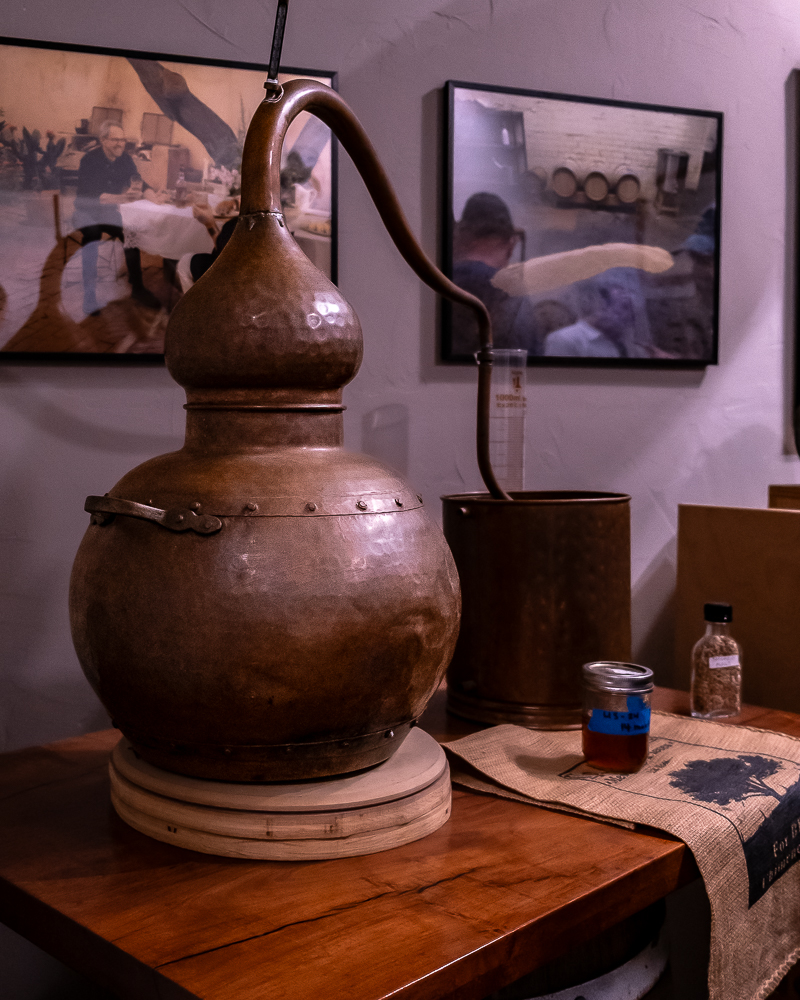
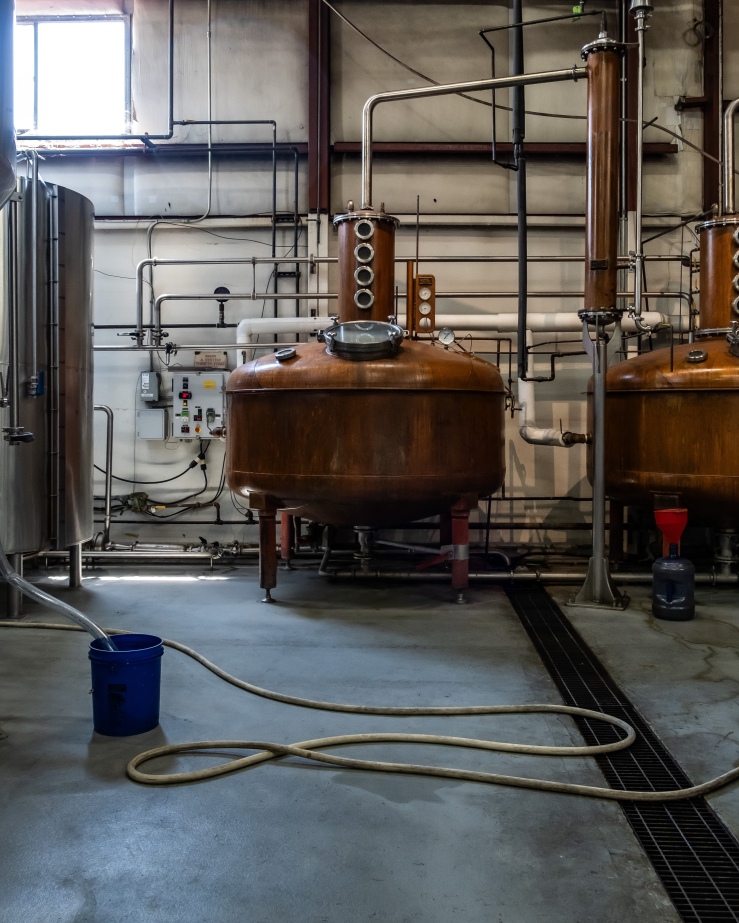
    Whiskey Del Bac still falls firmly in the “craft” category of distillation, filling a relatively small space with a single 500-gallon pot still and various other necessary equipment.

    When you tour the distillery, you start in a narrow corridor between the shop and offices and the production floor. Here, you’ll see one of Stephen Paul’s handcrafted chairs, early iterations of the whiskey’s labels, and, currently, a handmade mill. During my time as a tour guide, the small room housed Paul’s original and intermediate stills, both curvy copper pots with a capacity of five and 60 gallons, respectively.

    It’s here that you learn about Whiskey Del Bac’s original inspiration, and how Stephen’s drive for creation and quality led him down the path to the whiskey we know today. You’ll also learn about how Amanda, freshly returned from New York City, got involved—specifically by urging her dad to formalize his whiskey-making activities rather than be arrested for illegal moonshining.

    From this ad hoc and ever evolving museum, you move to the back of the building, listening to the creaks and sighs of the equipment and systems. The tour guide, Ian in my case, will explain the malting process, performed here on a drum malter. He talks about the grain and the acrospsires and the smoke that are essential to the malting process, as well as the mechanics of moving it all from one tank to another.

    Then it’s on to the mill and the mash tun and the business of making whiskey in earnest. If you’re lucky (or ask), you can taste the newly fermented distiller’s beer, which is not particularly palatable in terms of beer, but also not terrible either.

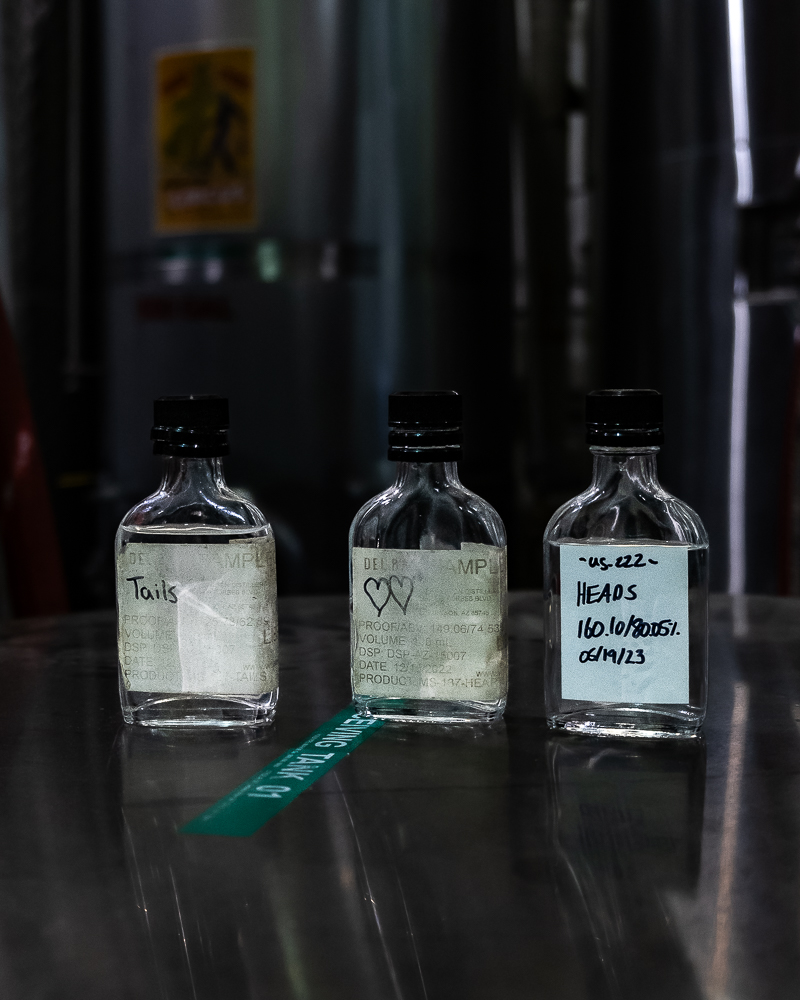
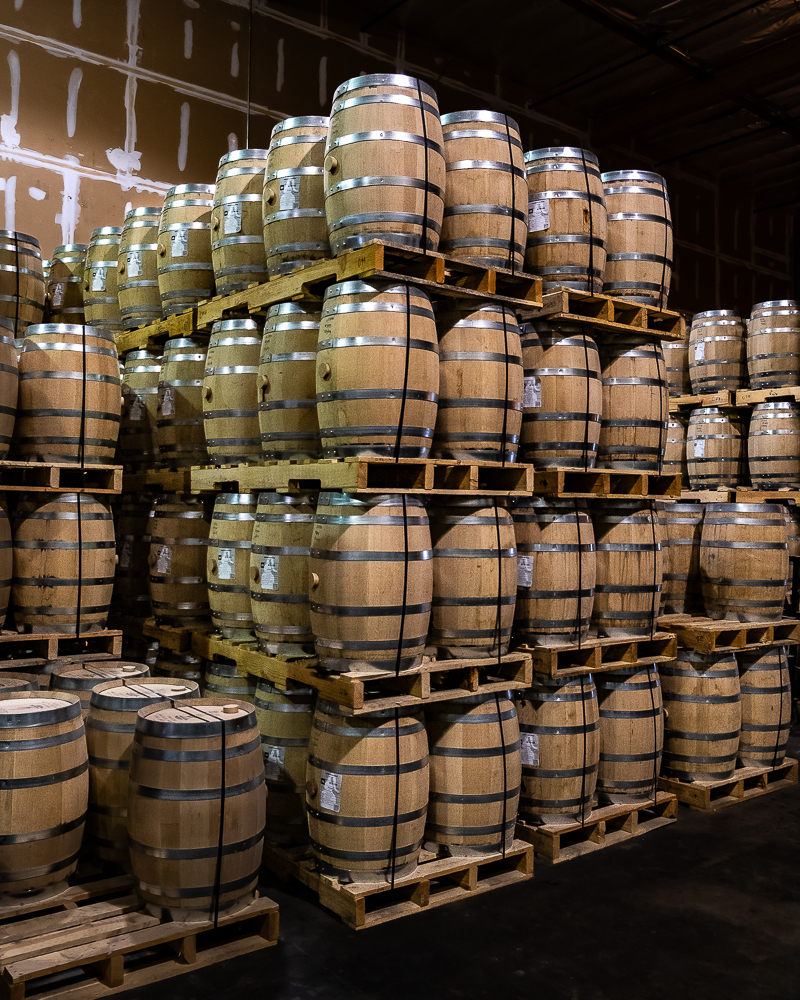
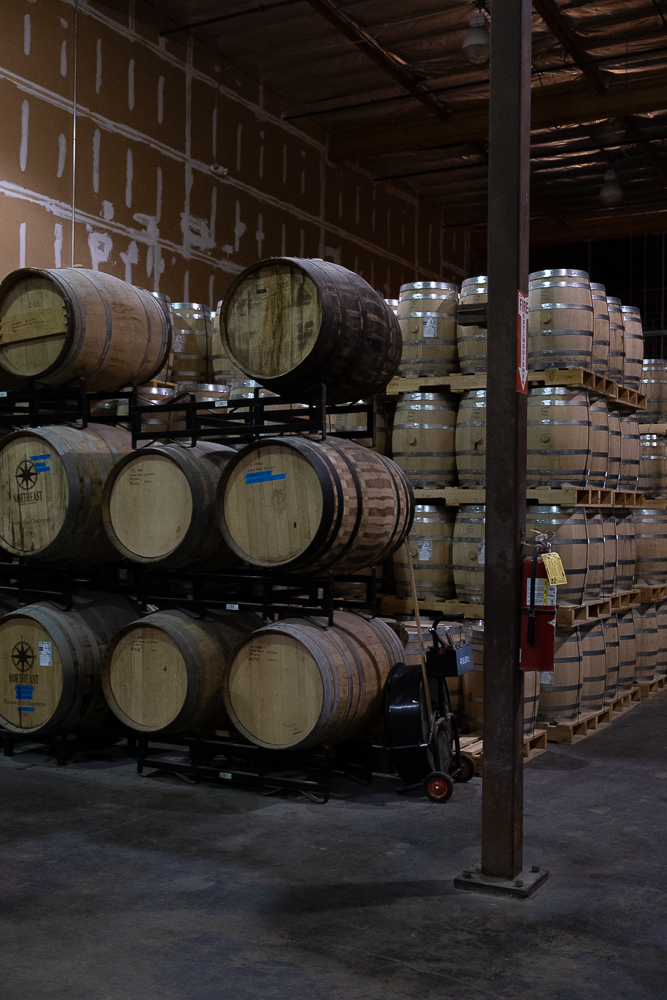
    After the still and a discussion of the heads, hearts, and tails, it’s on to the barrels, which includes both the large finishing casks (rhum agricole, sherry, tequila, cognac, brandy, and more) and the standard new American oak quarter casks, inside of which every drop of Whiskey Del Bac begins its maturation journey.

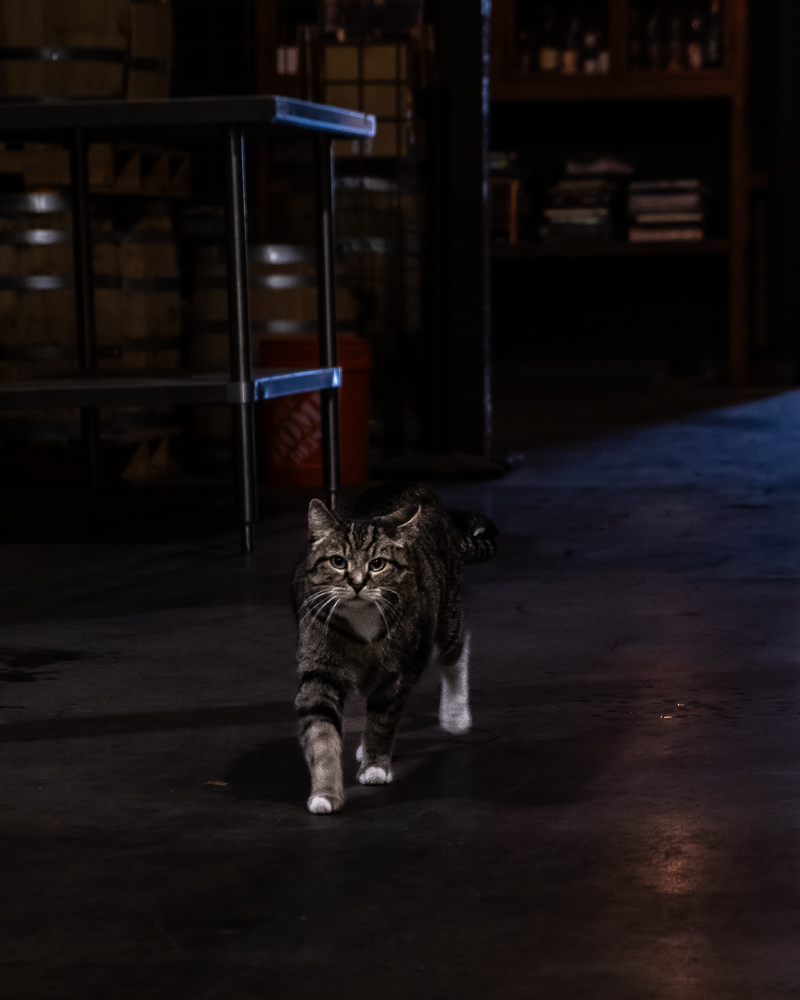
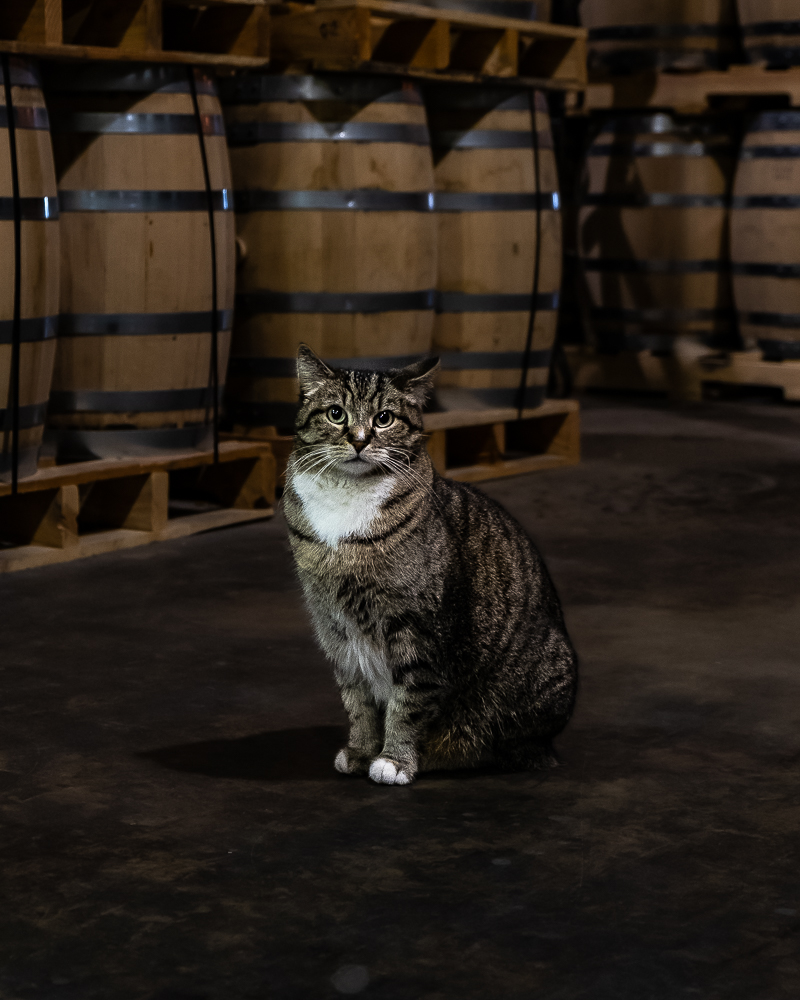
    Somewhere around the barrel area, our tour gropu was graced by the presence of Two-Row, a grey tabby cat who lives at the distillery full time. As head mouser, occasional greeter, and official mascot of Whiskey Del Bac, Two-Row loves to offer her two cents on every tour—and her two front paws to every tasting, often sipping them into unsuspecting guests’ water cups.
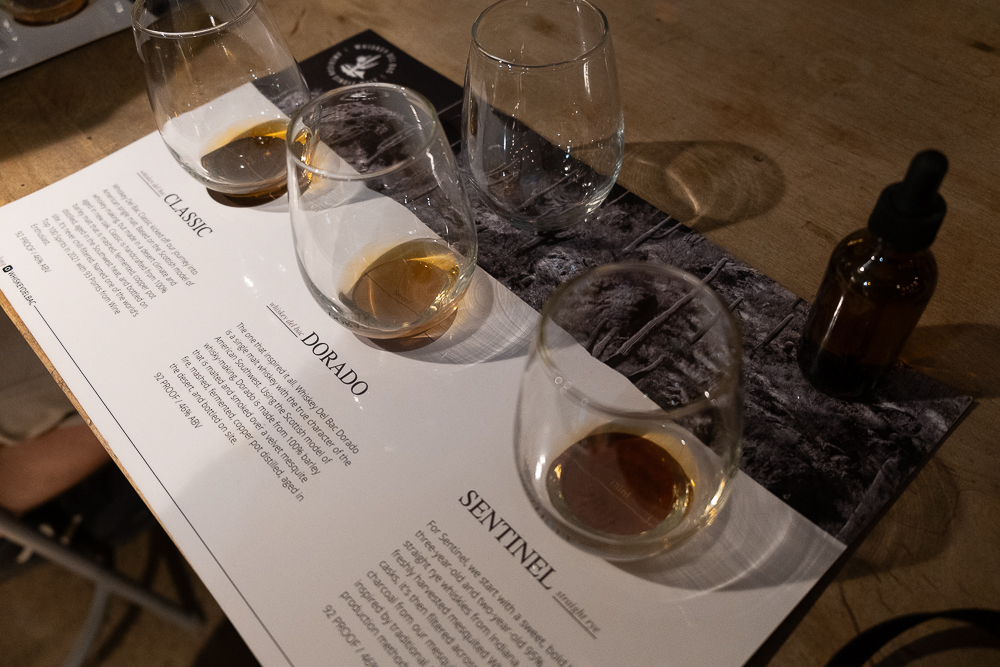
    The tour finishes with a brief nod at the bottling area and then a settling into the tasting room, which, if we’re honest, is the primary reason anyone comes on these tours. Spread around two large rustic tables, you can try the three core expressions (Classic, Dorado, and Sentinel), and then, if available, any current limited releases. On my tour we sampled both the Frontera (an unsmoked barley malt finished in PX sherry casks) and the Spring Distiller’s Cut (see above).

    Of course, every good tour exits through the gift shop. Or, in this case, the whiskey shop, where you can stock up on bottles and other bits and bobs. You’ll even find t-shirts emblazoned with the distillery’s mesquite, not peated motto.

    As you shuffle back into the sunshine, laden with whiskey in paper bags, the bright heat and cacti of the Sonoran desert await. The landscape is harsh and unyielding, but among the scrub and the dust you’ll also find strength and beauty. This, truly, is the spirit of Whiskey Del Bac.

    Slàinte, y’all!


    *My fellow Islay whisky drinkers (and haters) will understand that reference…and most of my guests did too.
  • 5 Things that Excite Me About American Single Malt Whiskey Right Now

    5 Things that Excite Me About American Single Malt Whiskey Right Now

    Two weeks ago, I zipped from Arizona to Colorado to attend the American Single Malt Whisky Commission Convention in downtown Denver. It was a last-minute trip, but I couldn’t resist the opportunity to one of my favorite cities, try more Colorado whiskies, and see more than 20 American Single Malt distillers all together in one room.

    As I stumbled away at the end of the evening, I carried with me a few business cards, several stickers, and five things that excite me about American Single Malt Whiskey right now:

    1. Peat is just as exciting in American Single Malt Whiskey as it is in Scotch.
    2. Experimentation is the name of the game in American Single Malt Whiskey.
    3. There is joy in the American Single Malt Whiskey industry.
    4. The community of American Whiskey is tight-knit and welcoming.
    5. Bourbon may be America’s whiskey, but American Single Malts is on the rise.

    Keep reading as I expand on each!

    Five Things that Excite Me About American Single Malt Whiskey Right Now

    As a whisky enthusiast and an American Single Malt Whiskey (ASMW) enthusiast, these five things about the ASMW category that most excite me right now.

    The use of peat is just as exciting in American Single Malt Whiskey as it is in Scotch.

    I’ll start right out with the most controversial take, fully admitting that not every ASMW drinker (or even every Scotch drinker) will share this opinion. I happen to be a verified Peat Monster. I want peat in my whiskey, and I want it to be so big and bold that it practically crawls out of the glass of its own volition.

    American single malt producers are known for experimenting with different types of smoke, and with great success. Whiskey Del Bac, headquartered just a few miles from my home in Tucson, runs on the slogan “mesquited, not peated.” Every month, they light the firebox with locally-sourced wood to complete their in-house malting process. The result is Dorado, a lovely, rich smoky whisky that many local whiskey lovers rave about.

    But while “it’s not like peat” was often a selling point for skeptical visitors on the tours I once led at the distillery, the cozy campfire smoke of mesquited barley malt and the brash, medicinal peat of Scotland’s western isles are different. Not better or worse. Just different. And both have their place in ASMW.

    For someone who cut their whiskey teeth on peaty Scotch, the use of peat in American whiskies is exciting. I sipped peated whiskey from three distillers at the ASMW Convention: Cedar Ridge Distillery, Boulder Spirits, and McCarthy’s from Hood River Distillers. All three source their peated barley directly from Scotland before mashing and distilling it onsite in the US. And all three were fantastic whiskies that I wouldn’t hesitate to order or buy.

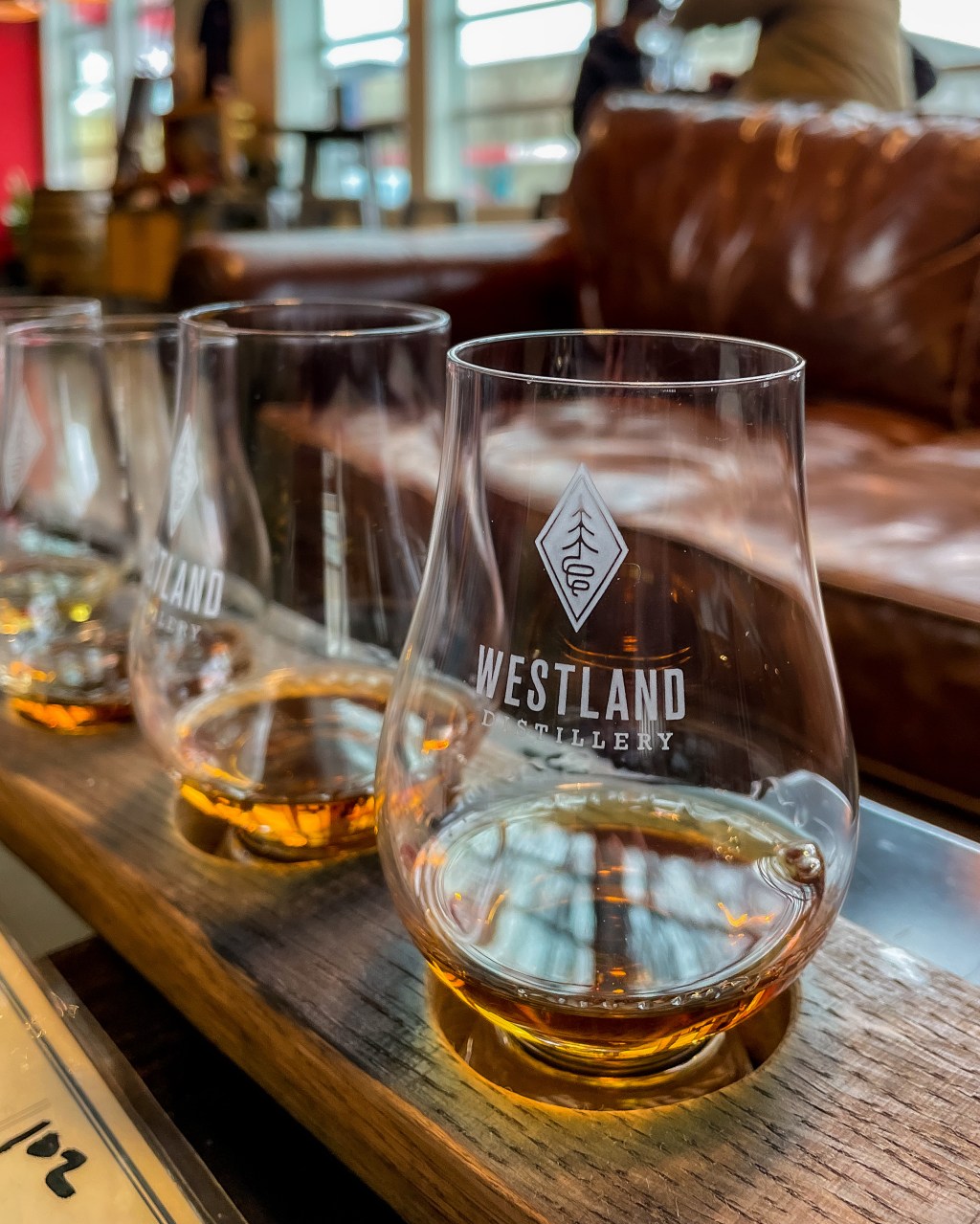
    Sampling Westland Distillery whiskies in their Seattle-area distillery and tasting room.

    Experimentation is the name of the game in American Single Malt Whiskey.

    While my posting here has been sparse over the last few months, there have been commonalities in the distilleries and whiskies I’ve visited and sampled. More often than not, the distilleries are relatively new—especially when compared to the historic distilleries of Kentucky and Ireland and Scotland—and small, some even largely unknown outside of a dedicated local whiskey community.

    There is something to be said for this anonymity (or, perhaps in some cases, notoriety). Last summer when I visited Denver on my first whiskey trip, I noted how the city’s various distilleries were forging their own path with local ingredients and innovative practices and philosophies. Even in Edinburgh, I found the same spirit of experimentation when I dropped into Port of Leith and Holyrood distilleries.

    Without the 200+ years of distilling history that many big whiskey brands enjoy, making a name for yourself in the whiskey world can certainly be a challenge. But where newer distilleries may falter on history, they’re excelling in innovation.

    There is freedom in being unknown, and I see that freedom in the American Single Malt industry in spades. Whiskey Del Bac, as previously mentioned, was one of the first to burn mesquite to dry their malted barley. Iowa’s Cedar Ridge has a delicious whiskey that’s aged in 20+ casks(!!!) before being married in a solera process that keeps various batches all perpetually marinating together. McCarthy Whiskey (officially the first distillery to make American Single Malt) employs brandy stills of just 60 gallons to distill their small-bath whiskey.

    If I had to guess, some of this innovation may be born out of necessity. When you’re just getting started in any business, you have to be a little bit scrappy, making do with limited resources. But, as they say, necessity is the mother of all invention.

    There is joy in the American Single Malt Whiskey industry.

    When I stopped by the Boulder Spirits booth, the team told me that they also make bourbon. They said it almost apologetically, perhaps knowing the crowd that this event would draw. Bourbon, they said, keeps the lights on and the stills running so the team can keep making single malt whiskeys.

    This isn’t the first time I’ve heard this tale: bourbon pays the bills, but single malt brings the joy.

    Many ASMW distilleries are small, and, according to my sources, have had some real moments of financial struggle in the last year or two. This isn’t Jim Beam or Maker’s Mark, putting out a single malt on a whim. Many of these distilleries are focused on the category simply because they love it.

    That passion for single malt was felt through the conversations I had with brand reps (who, admittedly, are paid to smile about their product), but also through the crowd in attendance. ASMW isn’t on every street corner; I’m lucky to live in a town with a distillery producing great barrel-aged spirits, but many aren’t. And the complicated distribution laws and networks of the US mean that the ASMW section in most liquor stores is scant—if they have one at all.

    In fact, one of the reasons I went to Denver is because I have tried, and failed, to access whiskey from a wide range of distilleries. I simply can’t get my hands on a bottle. What this means is that the community around single malt whiskeys produced in the US is intentional. People who know about it and love it get excited about it. Some of us even book a last-minute flight for it.

    The hybrid stills of Stranahan’s Whiskey Distillery in Denver, Colorado.

    The community of American Whiskey is tight-knit and welcoming.

    While visiting Seattle a few years ago, I naturally trekked south of downtown to visit Westland Distillery, still one of my favorite ASMW brands. It was early 2021 and the world was still in the throes of COVID regulations. Officially, the distillery wasn’t offering in-person tours, but when I mentioned that I worked at Del Bac at the time, the doors opened—literally.

    With a swift welcome, we were granted special access and taken on a casual walk-through of the production floor and lab. Shortly after, our impromptu tour guide came to Tucson, and I returned the favor by connecting her with the team at Del Bac.

    I’ve come to expect this camaraderie in the ASMW community as I’ve visited distilleries and chatted with other fans. ASMW fans and distillers are united in the fact that we’re all rooting for the underdog, both in the US and on a global scale. American Single Malt, while growing, remains the little brother of both American Whiskey and the global single malt industry.

    But it’s growing, and the community around it remains part of its appeal. More than once in Denver, I witnessed distillers trading off their duties, allowing each other to venture out into the room and sample their colleagues’ spirits. Almost always, the swap was precipitated with the words, “I really want to try…”

    Bourbon may be America’s whiskey, but American Single Malts is on the rise.

    Before I left Denver two weeks ago, I got coffee with two members of the Edinburgh Whisky Academy team, Kirsty and Heather. They were in town working alongside the convention on a special project: filming distillers and malters and other experts for their American Single Malt Whiskey Certificate, a new course offering from the EWA.

    American Single Malt is, and has been since the first distillation of such, a legitimate category of American whiskey. However, there’s something about a credentialing course that underlines the category’s rightful place in the whiskey world.

    Plus, the packed spaces of Seven Grand in Denver proved a significant interest in the category, something dedicated fans of ASMW already knew. It’s my understanding that this year’s event was the inaugural convention. If so, I can’t wait to see it grow and expand over the coming years.

    Whiskey Del Bac’s official mascot and mouser, Two Row.

    A Challenge to American Scotch Drinkers

    Any time someone asks me to compare a single malt whiskey to bourbon, I usually just laugh. I simply don’t have the experience and language of bourbon to make those connections. So while I absolutely advocate for bourbon drinkers to try American Single Malt Whiskey, this section is specifically for Scotch fans living in the United States.

    Here’s your challenge: if you haven’t yet, try an American Single Malt Whiskey. And then try another. Buy a bottle, or maybe two. Follow the brands on social media. Sign up for their newsletters. Take a tour.

    I’ve linked several brands within this post, but here are a few more worth mentioning. I’ve had the opportunity to sample these whiskies, either in Denver or at my local whiskey bar:

    For even more, check out the American Single Malt Whisky Commission member list, available online.

    I won’t tell you to replace your Scotch entirely (I certainly won’t be doing that anytime soon!), but make space in your liquor cabinet for American Single Malt Whiskey, nestling it in next to the Glenmorangies and Macallans and Laphroaigs on your shelf.

    Then crack open those bottles and pour yourself a dram.

    Sláinte, y’all!

  • Port of Leith Distillery // Elevating Whisky in Edinburgh

    Port of Leith Distillery // Elevating Whisky in Edinburgh

    It could be said that the whisky is nothing without tradition. Legends and practices of days long past flow through the industry’s walls and stills and barrels before slipping into your glass. This is a liquid that requires time and patience, with the initiation of the spirit and the final results often spanning generations.

    At the same time, there’s something so remarkable about blazing your own path.

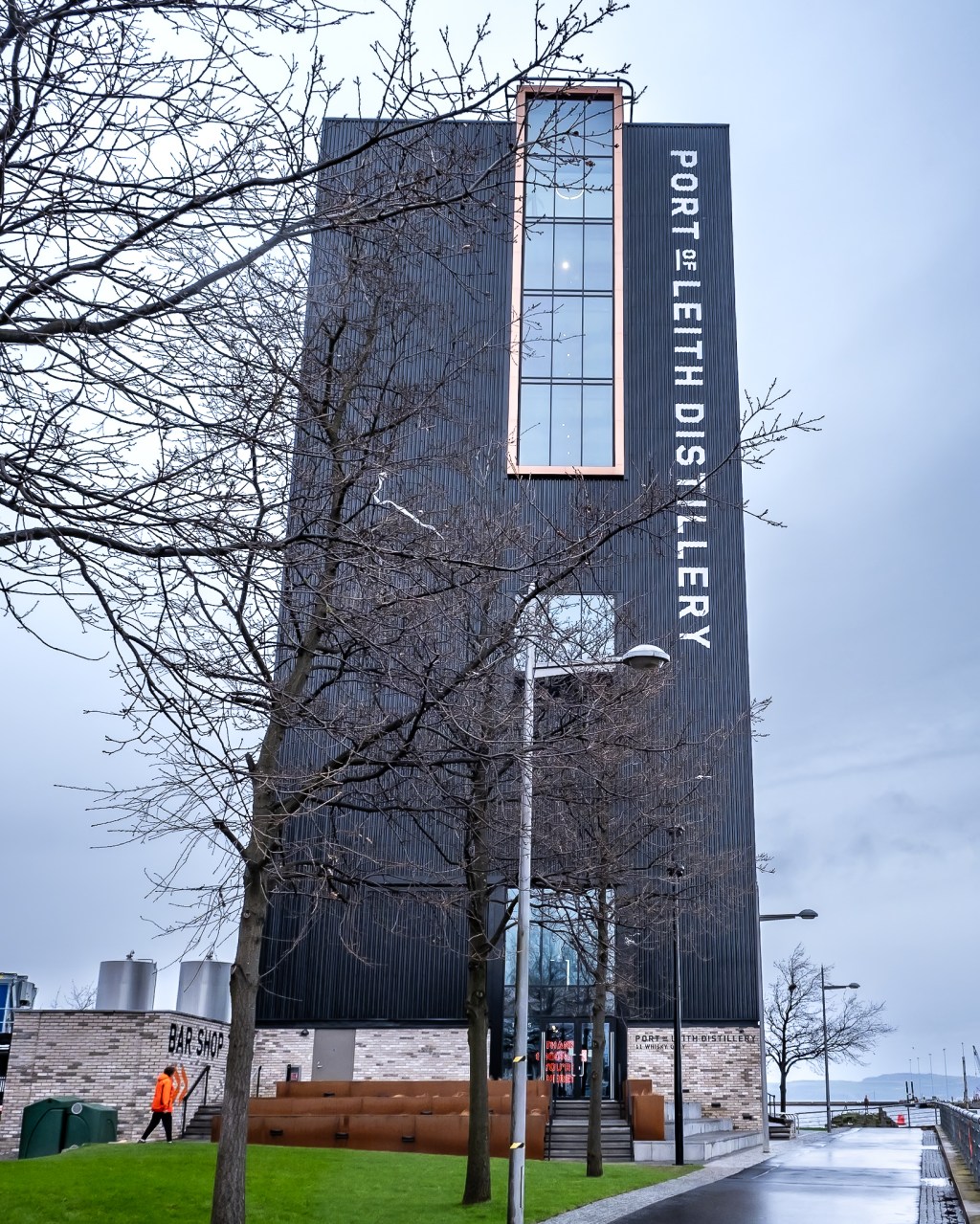
    Case in point: Port of Leith Distillery, the towering new single malt scotch whisky distillery planted on the outer edges of Edinburgh’s northern shores.

    Standing several stories tall, even the bare structure of Port of Leith’s distillation headquarters invite you to consider a new way to whisky. They’re not the only vertical distillery in the world, but they are the tallest. Photographs of the newly-built space’s construction phase reveal wash backs and tanks, glistening in shiny steel, suspended in the air and anchored in place meters above the ground.

    The building is now complete, enclosing those tanks inside its modern walls along with various other equipment, a shop, and a swanky top-floor bar. The look is modern and clean, all dressed in orange and black and white. Entering through the front door, you’re greeted by a brightly lit neon sign: “Thank goodness you’re here!”

    Thank goodness, indeed.

    But while the distillery is ready for guests, their whisky is not. It’ll be another 8 years before the public gets to taste the first single malt whiskies from Port of Leith.

    So what do you do in a whisky distillery that doesn’t have whisky?

    Plenty, it turns out.

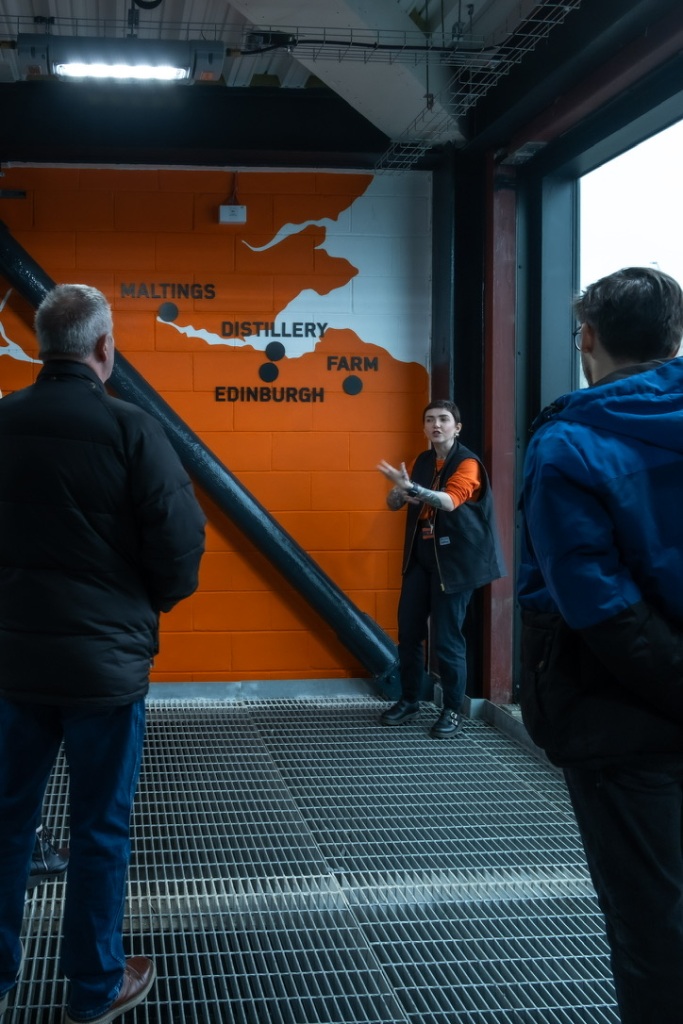
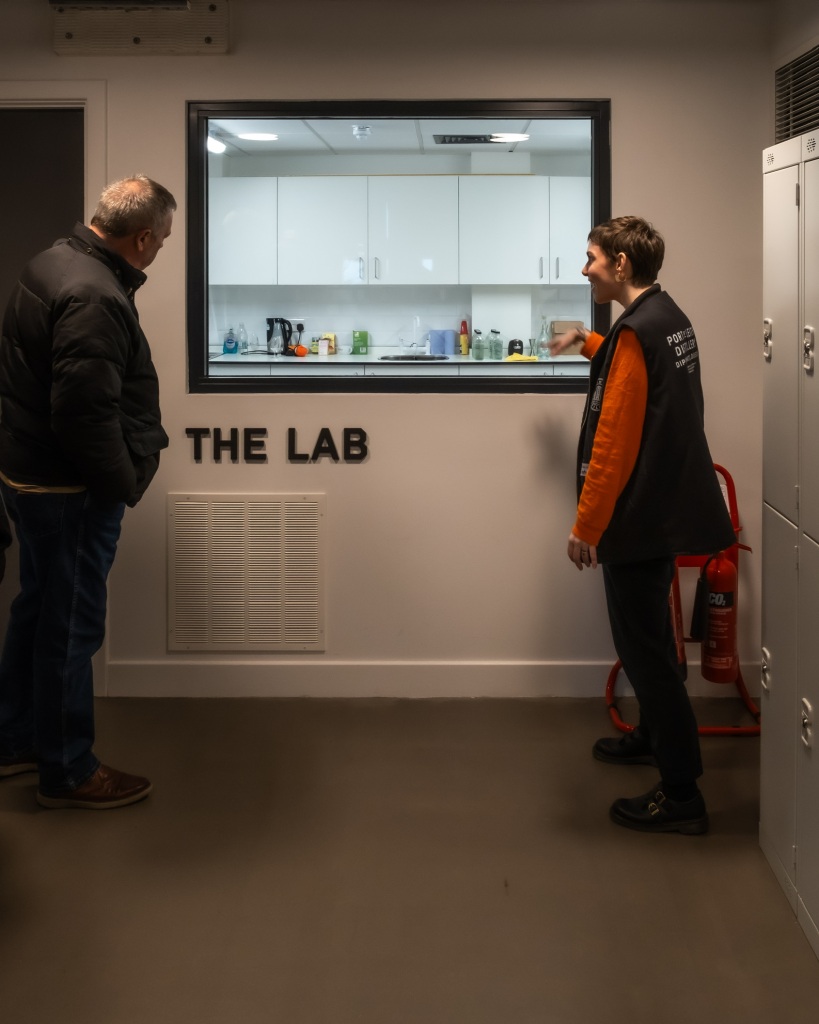
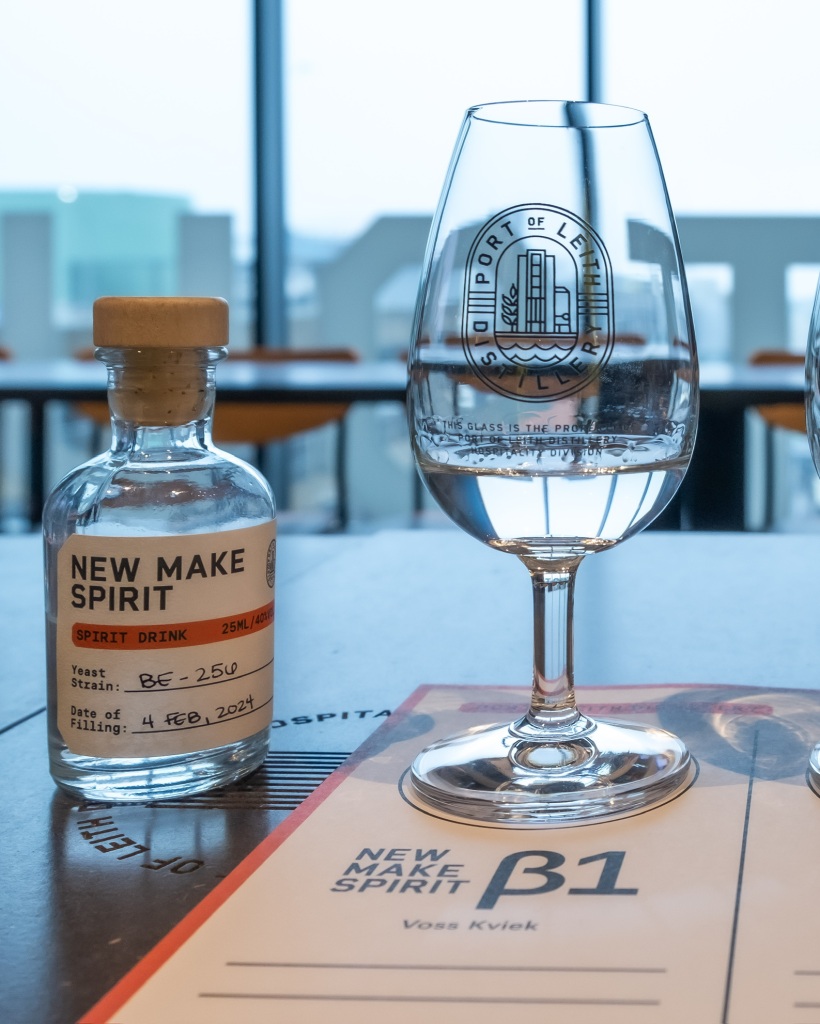
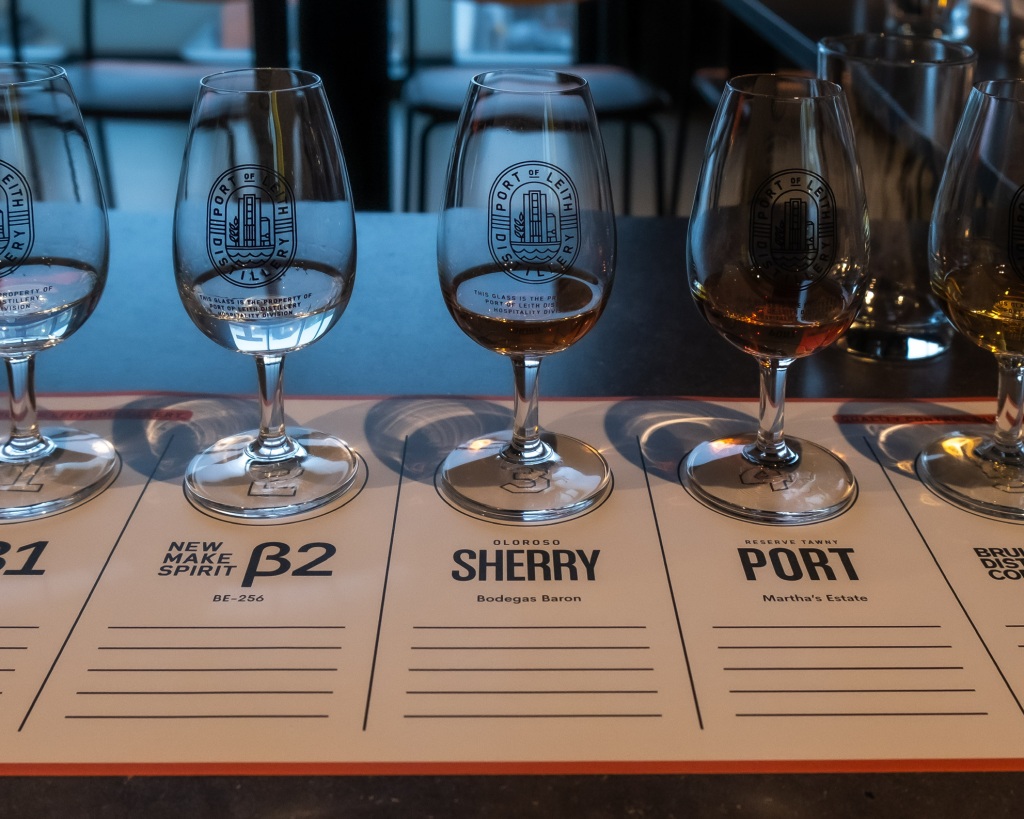
    The tour at Port of Leith, a roughly 90-minute event, is not unlike most distillery tours. As you rise and fall through the distillery’s many floors, you can observe the mill and the water tanks and the stills, one wash and one spirit. You can run your hand through the crushed barley grains and see the 1970s cooler box one of the founders borrowed from his parents — it has a purpose, I promise. Your guide, named Ellie in my case, will tell you all about the history of the operation, the grit and determination that led them to their present state. You’ll taste the new make — two different varieties — and learn about the circular practices that make their distillation process sustainable.

    If you’ve ever done another distillery tour, however, you’ll quickly note several points of differentiation. First and foremost: the decision to go vertical. While Leith’s limited landscape made it necessary to build up instead of out, it’s a stark contrast to the sprawling whisky estates of Scotland’s more rural settings. But consider also the barrels soon to be employed to age the distillery’s first whisky: rather than sourcing empty casks through a cooperage, the team went straight to the source, buying still-full casks of sherry and port, wrapping their own label around the now-bottled contents.

    Whisky distillation is a science, but it’s also an art — and a game of faith. It’s hard to know now exactly what the results of the distillery’s efforts will be several years from now when the first bottles are released.

    But while most whisky weighs heavy with the solemnity of tradition, Port of Leith’s joy in the spirit is obvious. You can see it in the bright orange motifs throughout, in the cheeky “property of” notations that adorn their merchandise, and in the curiosity that drives their experimentation with different strains of yeast, something that’s almost unheard of in the current Scotch industry.

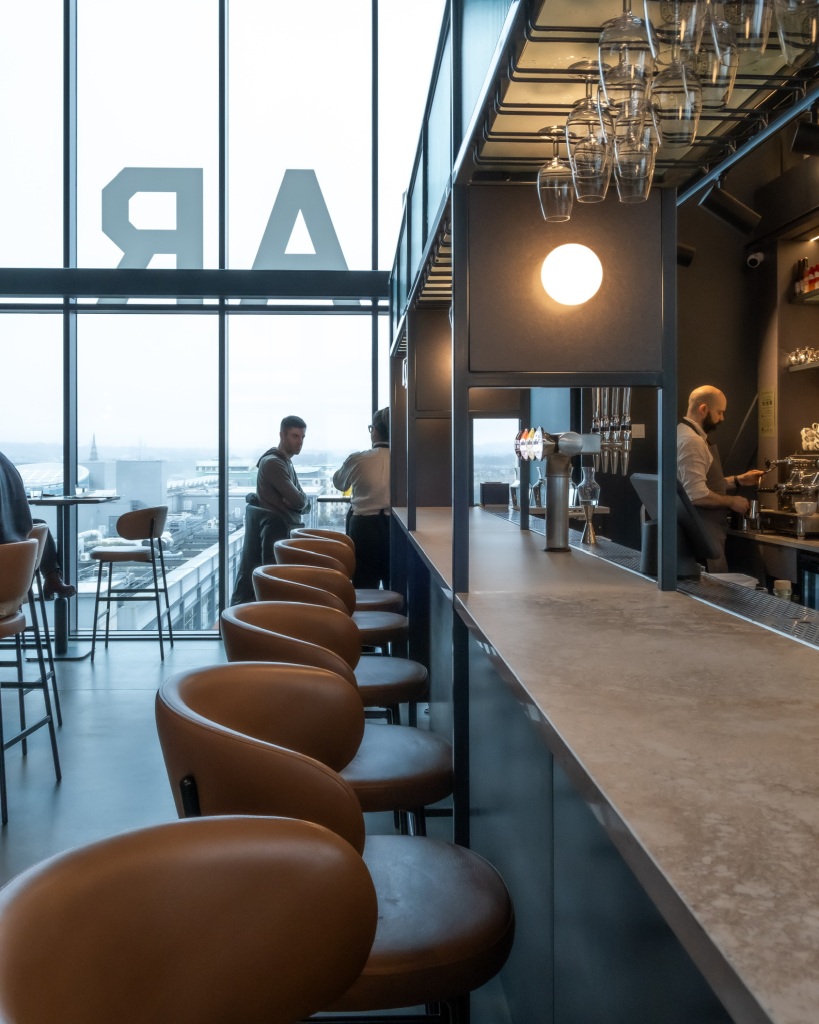
    Sitting in the distillery’s penthouse bar to wrap up my experience, the appreciation for whisky and innovation was palpable. To start, the whisky selection stretched high to the ceiling, requiring a library ladder to retrieve the uppermost bottles. In addition, the extensive spirits menu focuses on flavor impact rather than region: light and floral vs. big and bold and so on.

    For two drams, I enlisted the knowledge of my hosts, ultimately selecting an Ardnamurchan and a private bottling from a Speyside distillery. Both were delicious. As were the chips, which I very much needed after several tipples of whisky and wine.

    All in all, it’s hard not to root for Port of Leith’s success. And if you have to wait nearly a decade for whisky, you might as well do it in a 9-story building with stunning views.

    Slàinte, y’all!

  • Lagavulin Offerman Edition (2022) // Nectar of the Gods

    Lagavulin Offerman Edition (2022) // Nectar of the Gods

    Prepare to experience true freedom and bliss.

    Ron Swanson; Parks & Recreation

    I’ve never been a huge television person. When I do watch a show, it’s usually no less than three years after it went off the air. This affords me the privilege of impatience, moving quickly through a series from pilot to finale. In other words, I binge old TV.

    Parks & Recreation is no exception. I remember when it came out, but I didn’t own a TV, and, until recently, I hadn’t seen a single full episode. Even so, I was not unaware of the connection between actor Nick Offerman, his character Ron Swanson, and the noted Islay distillery Lagavulin. In fact, when I visited Lagavulin last year, Nick/Ron’s name came up. It also came up during my stay at the Machrie Hotel; Offerman had been there just a few months before, with unanimously positive reports from the staff about him as a guest and a person.

    This reputation, combined with his gruff-but-lovable demeanor on the short-lived and absolutely delightful crafting reality show Making It (which I unexpectedly watched in real time), led me to jokingly refer to Offerman as “Uncle Nick” when picked up a bottle of his most recent collaboration with Lagavulin.

    I’ve since learned that the character Ron Swanson referred to himself as “Uncle Ron” on at least one occasion in Parks & Rec (I’m currently on Season 5), so I stand by the moniker. Who wouldn’t want a woodworking, whisky-loving uncle to call on for how tos and general life advice?

    Seriously, this bus conversion project is a beast….we could use the help.

    At least we have the whisky. While the 2022 Lagavulin Offerman Edition can’t release a thousand rivets or teach us how to build custom cabinets, it does offer a nice complement to the satisfaction of a job well done. Or, at a minimum, done. Or perhaps more realistically, moving incrementally closer to done at a glacial pace.

    This “pleasing nectar” was designed to perfectly accompany a medium-rare steak—or any of the other six “delicious foods” glorified by Offerman.

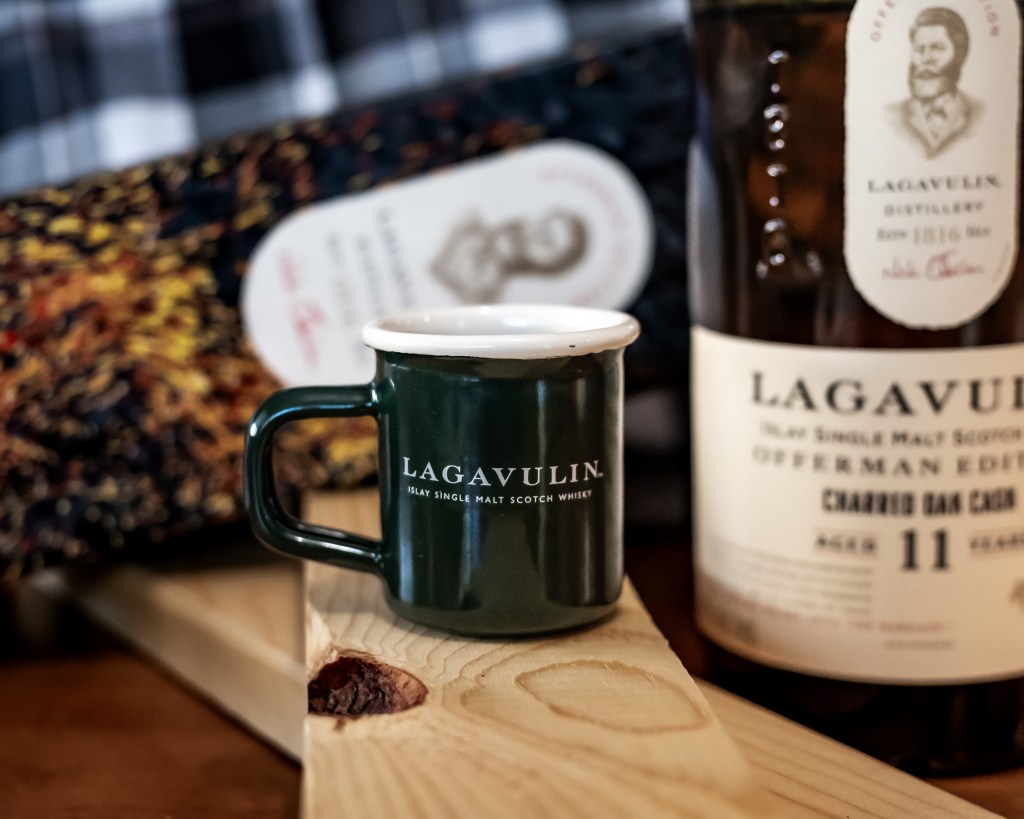
    Pulsing with Lagavulin’s characteristically refined island peat and brine, the whisky was aged 11 years in reused American White and European Oak Scotch and wine casks, all freshly charred for this purpose. Hints of brown sugar and fruit, cocoa and tobacco dance on the nose and tongue before crashing into a finish of smoke and pepper at the back of the throat.

    One could argue that the glowing, lingering, spicy, and simply sensational finish are precisely the pinnacle of what human evolution was leading up to this entire time.

    Nick Offerman; Lagavulin Charred Oak Cask Offerman Edition (2022)

    Many Islay whiskies are themselves thick and chewy, reminiscent of salty, fatty bacon and other rich meats. Instead, the Offerman Edition embodies something more akin to a glaze, a complementary addition intended to elevate an otherwise carnivorous experience.

    With apologies to Uncle Nick for what is undoubtedly a character flaw, an Impossible Burger is as close as I’m going to get to a steak, and I haven’t yet had the opportunity to pair the whisky with bacon (my dietary Achilles heel) or even fish and chips. I can’t personally attest to the transcendent pairing for which it is intended.

    However, I can certainly vouch for the standalone quality of the whisky. It’s not overly complex, but smart and well-rounded. For a barbecue-inspired whisky, I found Ardbeg’s Bizarre-B-Q to be slightly more on-the-nose (and $30 cheaper). But that’s a small complaint and easily forgotten with the pour of another dram.

    In My Glass Cup

    Lagavulin 11 Year Charred Oak Cask Offerman Edition
    Single Malt Scotch Whisky
    11 Years Old; 46% ABV
    Scotland (Islay)

    On My Desk

    1950s/60s Antares Parva with a Swedish Keyboard

  • Sipping Spirits in the Mile High City: Denver, Colorado

    Sipping Spirits in the Mile High City: Denver, Colorado

    Update: this post was intended to be part one of a two-part series, but it’s been six months, and my dog ate my homework (aka..my laptop ate my draft), so it’s been updated to a standalone post. It seems that another trip to Colorado is in order!

    In July when I began planning a semi-impromptu trip to Denver, Colorado’s capital city, I didn’t intend to make it a “whiskey trip” per se. Yes, the primary driver of the visit was attending the first night of respected Scotch whisky writer Dave Broom’s brief US tour. And, as a single malt enthusiast, a visit to Stranahan’s Whiskey Distillery, the city’s well-known single malt makers, was required.

    More, I expected to partake in a good amount of local beer. Colorado is, after all, home to the perrenial favorite of dads and hipsters everywhere, Coors Brewing, not to mention well-known craft breweries like Oskar Blues. But whiskey? I doubted that my explorations in the spirits realm would go very far.

    I was—happily—wrong.

    Big Chief Bottling Co. in Denver, Colorado; July 2023. Photo by The Whisky Type.

    Colorado, an underrated whiskey destination.

    By their current count, Colorado is home to approximately 40 distilleries producing craft spirits ranging from vodka to gin to bourbon and rye, not to mention American single malt and the nation’s first single pot still whiskey. Known collectively as the Colorado Spirits Trail, several of these distillers are peppered throughout the state, tucked between mountains and along distant trails, promising a bit of adventure with each sample. However, most are gathered along the state’s urban corridor spanning Colorado Springs to Fort Collins.

    In Denver alone, there are approximately 15 distilleries, a fact I discovered when I googled “Denver Distilleries” on a whim last month. The first search result, published by VISIT DENVER, presented me with a list of no less than 12 active distilleries in and around the city. Another posting suggested a few more, topping off the list.

    I had only a few days in the city to explore, so I quickly perused the webpages of each local distiller, determining the type of spirits they produced, a few points of interest, and, most importantly, where and when I could find them for a tasting. By the end of my research, I had identified nine targets for tours and tastings.

    It was an ambitious plan and I’m not ashamed to admit that I failed to accomplish it. My alcohol tolerance is on the lower end of most whisky enthusiasts even without the added limitations of mountain elevation, so the effects of the alcohol quickly outpaced my ambitions. Even so, I managed to try spirits from five different distilleries while in Denver— and I was not disappointed by the experience. I’ll get into my experiences at each in part two, but first, let’s explore some of what, in my observation, makes Colorado’s spirits unique.

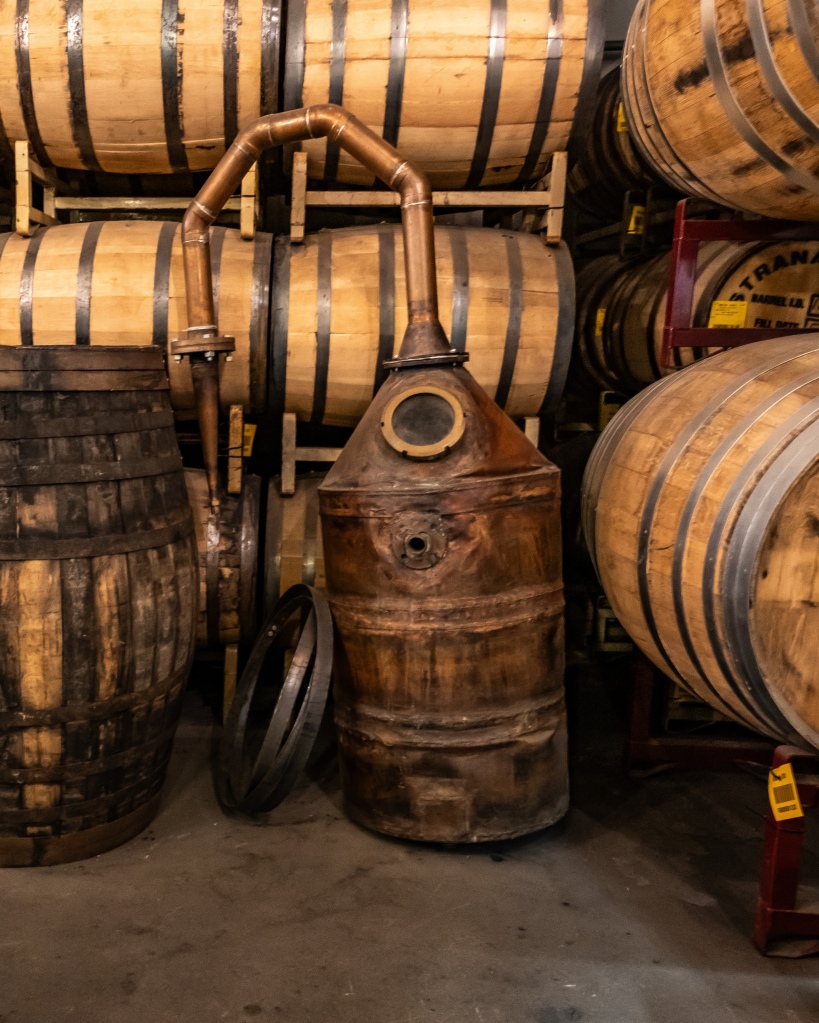
    A vintage still at Stranahan’s Whiskey Distillery; July 2023. Photo by The Whisky Type.

    Forget farm-to-table; this is grain-to-glass.

    All whiskies journey from the fields to the still room to the barrel before landing in your glass, but in Colorado, that journey is often personal. Much like a farm-to-table restaurant, the distilleries that I visited almost unanimously noted their use of local grains and botanicals, mashing together Colorado’s rich agricultural history with their distillation present.

    Nearly half of Colorado’s 66 million acres were used for farmland in 2022, according to a bulletin produced by the US Department of Agriculture. As a state, Colorado is ranked 5th in the nation for barley production, with 52,000 acres producing more than 5 million bushels last year, and 18th for corn, despite nearly 1.4 million acres and 148,000,000 bushels.

    Those grains are utilized in a number of ways: as food for humans and livestock, for a variety of grain-based products, and, of course, for the state’s robust beer and spirit industries (fun fact: 87% of the state’s barley goes directly to Coors Brewing Company for their beer).

    But it’s not just the grains or the geography that make Colorado spirits so, well, Coloradan. El Dorado Springs, a small unincorporated area near the city of Boulder, produces some of the best water in the world (and the best bottled water in the nation). Many nearby whiskey distilleries draw on this natural spring water at various points in the distillation process, particularly between the barrel and the bottle, and are quick to infer that this renowned spring water plays an important part in producing high quality spirits.

    Of course, the question of whether “terroir” has an impact on whiskey is constantly under debate. A 2021 scientific study suggested that locality does, in fact, impact the final flavor. Still, some of the industry’s greatest minds suggest that landscape and climate have more of a place in marketing than in the glass.

    The truth is, no one is really sure exactly what goes into the precise flavor of a whiskey, not even those who make it. Whether proven or promise, Colorado distillers seem to be marching ahead under the assumption that locality is, in fact, critical to the outcome. And they might just be onto something; in the spirits I tried, certain qualities did suggest a regional influence: the balance of botanicals selected for a local gin, for example, or even a unique grassiness to balance the spice of a rye whisky.

    Using local grains isn’t, of course, new. Distilleries have been utilizing regional sourcing techniques for centuries, but a global economy has supplemented nearby sources with an open door to the world’s agricultural products. The commonality of this ancient practice throughout Denver’s distilleries is something that makes it—and those distilleries—unique.

    The hybrid still at Stranahan’s Whiskey Distillery, Denver, Colorado; July 2023. Photo by The Whisky Type.

    Keeping Colorado ( and its whiskey) weird.

    Around the world, most distilleries use a pot still or a column still in their distillation process. On the occasion that they employ both in the same still house, they’re separate and distinct machines. During my visit to Stranahan’s Whiskey Distillery, however, I was confronted with something akin to Frankenstein’s monster—but much prettier.

    The hybrid still, as they explain it, is believed to offer the best of both worlds in whiskey distillation: the even boiling and flavor-retention of a pot still and the efficiency and clean cut of a column. According to the tour guide, Stranhan’s was the first to employ the unusual stills, which featured a short, four-window column atop a wide pot. Their use has since spread, at least in the Denver area; I saw a similar configuration down the road at Laws Whiskey House.

    Hybrid stills are not the only way in which Stranahan’s is forging its own path in distillation. Two other points of distinction center around their barrels and their boilings.

    Early in the tour, our guide explained that the distillery boils their wort between the mash tun and the fermenter, a process that I asked the tour guide about after we concluded our tasting. “That’s how they do it in Scotland,” he told me confidently. According to my classes at the Edinburgh Whisky Academy, not to mention the production tours I’ve taken at Glenkinchie, Balvenie, GlenAllachie, and Bruichladdich, it’s not; wort typically is cooled after leaving the mash tun, not reheated. But I gently prodded a little further, and we speculatively decided that it could be part of the beer brewing process; Stranahan’s made its mark on the industry by first distilling beer (actual, intentional beer rather than distiller’s beer) into whiskey.

    When we reached the barrel-packed warehouse, we also learned of Stranahan’s use of the Solera aging method, a process that is believed to increase the consistency of the spirits. Over time, some, but not all, of the whisky aging in the barrel is removed for bottling; it is then replaced with new make spirit, which mingles with the aged spirit left behind. It’s not a new method of aging, but it’s not one that has necessarily been widely adopted in the whiskey industry worldwide.

    Stranhan’s is also using foudre barrels — massive, egg-shaped barrels more commonly employed in wine-making — but I’ll admit that I was both too far away from the tour guide and paying too little attention in that moment to understand why or how.

    I have to wonder if Stranahan’s experimentation with new and old techniques may have come from its singularity; they were the first legal distillery in Colorado since prohibition. And while they were not the first to produce a single malt whiskey on American soil, the category was largely undefined (and unexplored) in 2006 when they released their first bottle.

    There’s something to be said for having the space to forge your own path. Even the bourbon distilleries I visited seemed to be doing their own thing in one way or another, whether or not they are following more traditional distillation methods. With all eyes on the better-known American whiskey regions of Kentucky and Tennessee, perhaps Colorado distillers have had more room to play.

    It’s likely that Colorado distilleries have charted a new course by necessity; the thin air and desert extremes of Colorado are a far cry from the cold, damp climates of Scotland and Ireland or even the humid, multi-seasonal atmosphere of the American mid-south.

    When whisky is aged in a humid climate, alcohol is the first element to evaporate. But in a dry climate, water particles in the new make rush into the wood and the air ahead of the alcohol. This can result in higher-proof whiskey straight from the barrel, but desert angels are greedy, and distilleries lose a lot more product to evaporationoverall. As a result, the whisky can’t spend as much time in the barrel — and you wouldn’t necessarily want it to anyway. Wide swings in temperature throughout the year and within some days cause Denver’s barrels expand and contract at a rapid pace, creating more agitation within the spirit and greater interaction with the wood.

    While that may present challenges to a distiller, it’s a good thing for whiskey lovers; it means that the spirits are ready (and, importantly, palatable) much more quickly than usual.

    That’s a perfect way to segue into the tasting portion of my trip, but for that, you do have to wait—part two of my Denver trip notes (centered around the distilleries I visited) will be released later this week!

  • Bruichladdich Rocks // From the Archives

    Bruichladdich Rocks // From the Archives

    If I could teleport, I’d send myself to Islay this week for Fèis Ìle. Unfortunately, I’m bound by the laws of physics (and my bank account), which means that I’m following the festivities from afar. As a small comfort, I’ve poured a dram of an Islay distillery exclusive from the comfort of my home.

    This little bottle of Rocks from Bruichladdich is a blast from the past—literally. According to my tour guide at the distillery last fall, a wayward case was discovered in a forgotten corner of the distillery some 15+ years after bottling. The unopened remnants were placed in the gift shop for sale, where I picked up a bottle. It was the perfect “vintage” addition to my whisky collection, and what better time to crack it open than this week?

    For a whisky that’s only 46% ABV, it’s surprisingly spirit-forward. Citrus, vinegar, and vanilla crash on the palate. Despite being unpeated, an unmistakable Islay brine brings it all together. It’s no comparison to Bruichladdich’s current (and much loved) lineup, but it’s a small taste of their history and progression, a step along the way to the distillery we know today.

    Sláinte, y’all!

    In My Glass

    Bruichladdich Progressive Hebridean Distillery – Rocks
    Single Malt Scotch Whisky
    NAS; 46% ABV
    Scotland (Islay)

    On My Desk


    1961 Olivetti Lettera 22, Made in Scotland

  • Talisker // Star-Crossed Whiskies

    Talisker // Star-Crossed Whiskies

    As a self-described whisky enthusiast (and certified single malt expert, per the Edinburgh Whisky Academy and the Scottish Qualifications Authority), it’s hard to say this: I found a single malt Scotch whisky that I do not like.

    This is a new experience. There have always been certain bottles I prefer over others, and a few cheap blends I’d rather leave on the shelf. I don’t love most bourbons, and some American single malts are a bit too banana-y for me.

    But never once have I poured a whisk(e)y back into the bottle.

    Until I found Talisker.

    My apologies to any offended Talisker stans. By all accounts, I SHOULD love it; if nothing else, I was led to the distillery by fate or fairies while traveling through Scotland last year. Pressed for time, I decided not to stop by, but my quest for Caora Dubh Coffee dropped me on Talisker’s doorstep (or, more accurately, across the parking lot) anyway.

    Great coffee, by the way. Highly recommend. ☕️

    And the problem isn’t the smoke and the peat or the medicinal brine that attacks your palate from all angles. I like that. I named my cat after that.

    I just don’t like Talisker.

    Talisker 10 to be exact. Or Storm. Or Skye. (I will give them due props for Port Ruighe; the port cask helps).

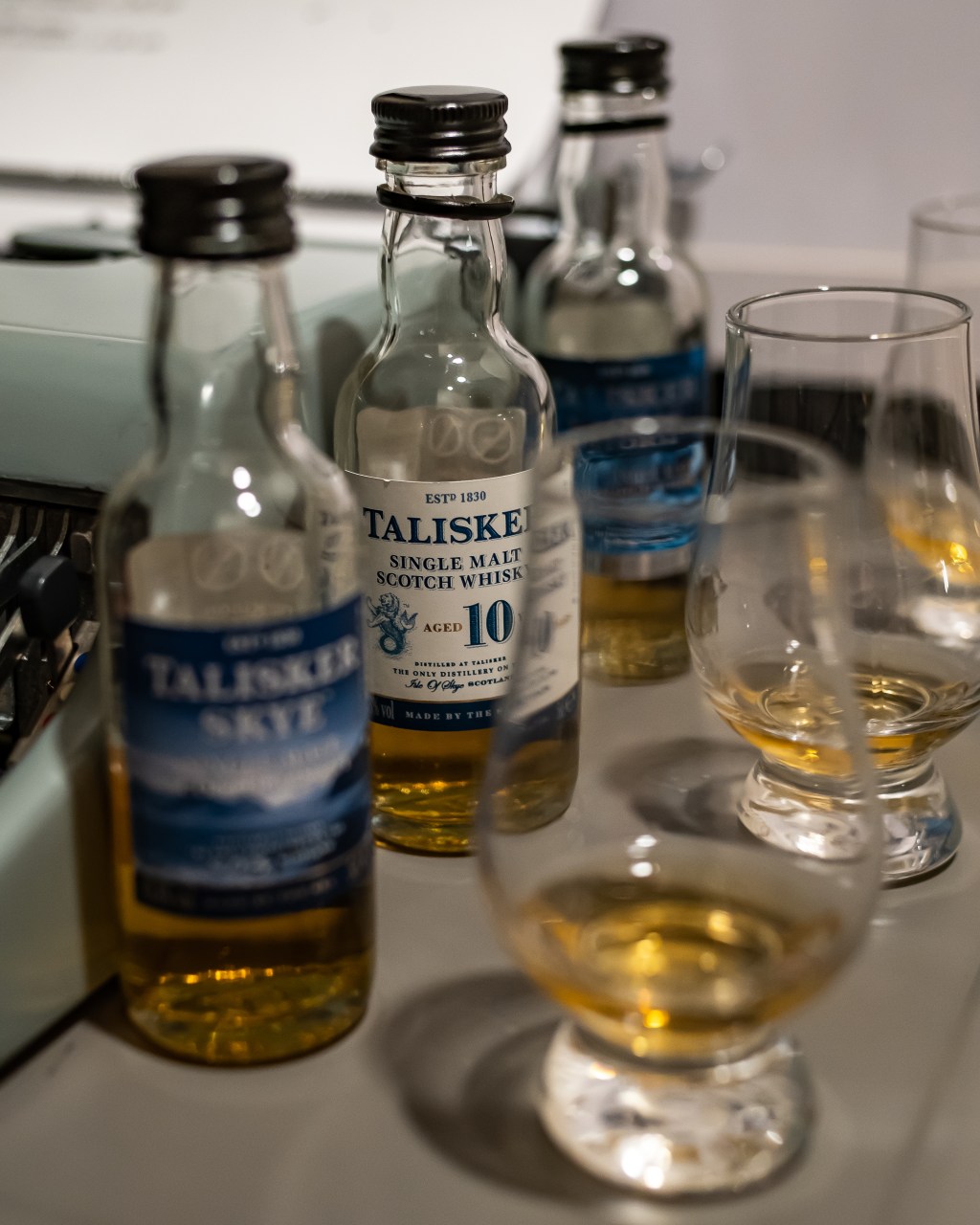
    It wasn’t until after I returned home, armed with a bottled flight of the core range, that I discovered my dislike. They were poured with great anticipation into three separate glasses for nosing and tasting. But then I did the unthinkable, tipping the remains of each dram back into their tiny glass bottles and returning them to the whisky cabinet.

    It was a low moment, an act akin to whisky heresy.

    For months the bottles have waited, daring me to give them another try. Today is Whisky Wednesday, so why not?

    And…nope. 😂

    To me, they’re confused instead of complex, bold and messy. The 10 is okay until the finish, which comes back around with an overly peppery, salty punch. The Storm is like butter gone bad, creamy then angry. The Skye? Meh.

    What does this mean? Nothing. Not every whisky is for every body! If you love it, drink it!

    In My Glass(es)

    Talisker 10, Skye, and Storm
    Single Malt Scotch Whiskies
    10 Years Old/NAS; 45.8% ABV
    Scotland (Highlands & Islands)

    On My Desk

    1961 Olivetti Lettera 22
    Scotland (Glasgow)

  • Cardhu 16 Special Release 2022 // Raise the Red Flag

    Cardhu 16 Special Release 2022 // Raise the Red Flag

    Happy Whisky Wednesday!

    In honor of International Womens Day, I finally popped the cork on my bottle of Cardhu 16 Special Release 2022, which I picked up during a visit to the distillery in October.

    Women have always had a place in distilling, but whisky has a reputation as a boys’ club nonetheless. I should know—I’ve surprised a bartender or two in my time with an order of Scotch whisky, neat.

    Cardhu proudly stands out as a symbol of both powerful women and really good whisky. According to legend (and the lovely book Women of Moray), it was founded as an illicit still in the early 1800s by a man, John Cummings, with the help of his wife Helen. After John’s death, Helen took charge, and the management of the now-legal distillery eventually passed to her daughter-in-law, Elizabeth.

    It was these women who led Cardhu Distillery (then Cardow Farm) into such prominence that it caught the attention of Mr. John Walker, a name that every whisky enthusiast knows well. Walker used Cardhu’s spirits in his eponymous blends and even purchased the distillery in the late 1800s. It remains in the Johnnie Walker family (now under Diego) today, one of the brand’s “four corners.”

    The thick stone walls built by Elizabeth still stand proud on a hill in Speyside. The distillery’s logo—a woman raising a crimson flag—pays homage to Helen, who cleverly used a red flag to alert nearby distillers of the presence of excise men, come to collect.

    And the whisky continues to flow.

    In my glass today is a dram of Cardhu 16, a 2022 limited edition finished in pot still rum casks and bottled at cask strength.

    For a whisky distilled and aged in the Scottish Highlands, it’s surprisingly fruity and tropical. Sweet and tart, notes of banana, grapefruit, pineapple, and even something like lime burst onto the front of the palate, fading toward the back. Some sips taste sugary, almost manufactured, like a handful of Runts Candies all crunched together. But overall it’s a sweet, bright, and unexpected dram—perfect for a warm summer’s day (soon!) and/or dreams of escape.

    Sláinte, y’all!

    In My Glass

    Cardhu 16 Special Release 2022
    Single Malt Scotch Whisky
    16 Years Old; 58% ABV
    Scotland (Speyside)

    On My Desk

    Remington Noiseless Model Seven
    Manual Typewriter
    c. 1946

  • Corsair Distillery Tour

    Corsair Distillery Tour

    Rumor has it that the inspiration for Corsair Distillery’s distinctive label came from a trio of drunken, unbothered Scotsmen striding confidently down a Scottish road after an evening of troublemaking and revelry.

    That, and the film Reservoir Dogs.

    Either way, the spirits produced in this craft distillery are well represented by both its label and legend, bold and unbothered. Corsair’s roots span Kentucky and Tennessee, an area best known for bourbon (and a good bit of moonshine too). But they’re forging their own path, branching out from the whiskey family tree drawn by their regional forefathers.

    In addition to the single malt and rye whiskies produced on Corsair’s pre-prohibition pot still (affectionately named “Ethyl”), the current lineup includes an American-style gin, a spiced rum, a barreled gin, and an absinthe.

    Each bottle is carefully crafted, developed in small batches with experimentation and care, an answer to the ever-repurposed question “what if we…?” What if we smoked our barley malt with a blend of peat and cherrywood and beechwood? What if we spiced our rum, aged our gin in a barrel, and then put another spirit back in the barrel? What if we ignored all the propaganda around absinthe and made it anyway, tinting it bright red with hibiscus?

    As we move through the space, we learn that our tour guide, Carter, has been doing this for years. He knows—and loves—what he’s talking about as ushers us through the small production floor and back across the courtyard to the tasting room for sampling.

    Each sip of Corsair’s offerings is different, surprising. The flavors build and compete and then dance back together, never shy, always interesting. The space that the distillery inhabits (location one of two) is similarly complex, an early-1900s automobile factory turned modern retail space and museum. Like the whiskey, it’s easy to get lost in and, more importantly, even easier not to mind.

    Slainte, y’all!

    In My Glass

    Corsair Distillery – Dark Rye
    American Rye Malt Whiskey
    Aged 1 Year; 42.5% ABV
    USA (Tennessee)

    On My Desk

    1961 Olivetta Lettera 22, Made in Scotland