It’s no question that there is an art to whisky, but nowhere is that idea more prominent than at Maker’s Mark Distillery in Loretto, Kentucky. Nestled in the gentle hills of Marion County—a little more than an hour from both Louisville and Lexington—Maker’s Mark blends craftsmanship, tradition, and design into one of the most beautiful bourbon experiences in the Commonwealth.
Established in 1953 by Bill and Margie Samuels, Maker’s Mark is best known for its wheated bourbon recipe and the iconic red wax that seals every bottle.
Both of these defining features were inspired by Mrs. Samuels, whose distaste for the bourbons of the day led her husband to create a softer, more palatable mash bill, using red winter wheat to balance the necessary corn. Her influence didn’t stop there; the standard Maker’s Mark bottle shape, label design, and hand-dipped wax were all her ideas, now permanently woven into the brand’s identity.
To this day, every bottle is dipped by hand on site, the liquid wax dripping down the neck of the bottles as they shuttle down the assembly line.
Seeing the brand’s bottles dipped in person is not for the faint of heart. But for the brave souls who make the trek down narrow winding roads toward the rural distillery, they are rewarded with a stunning pastoral scene and, for a few months this fall, the art of world renowned glass artist, Dale Chihuly.

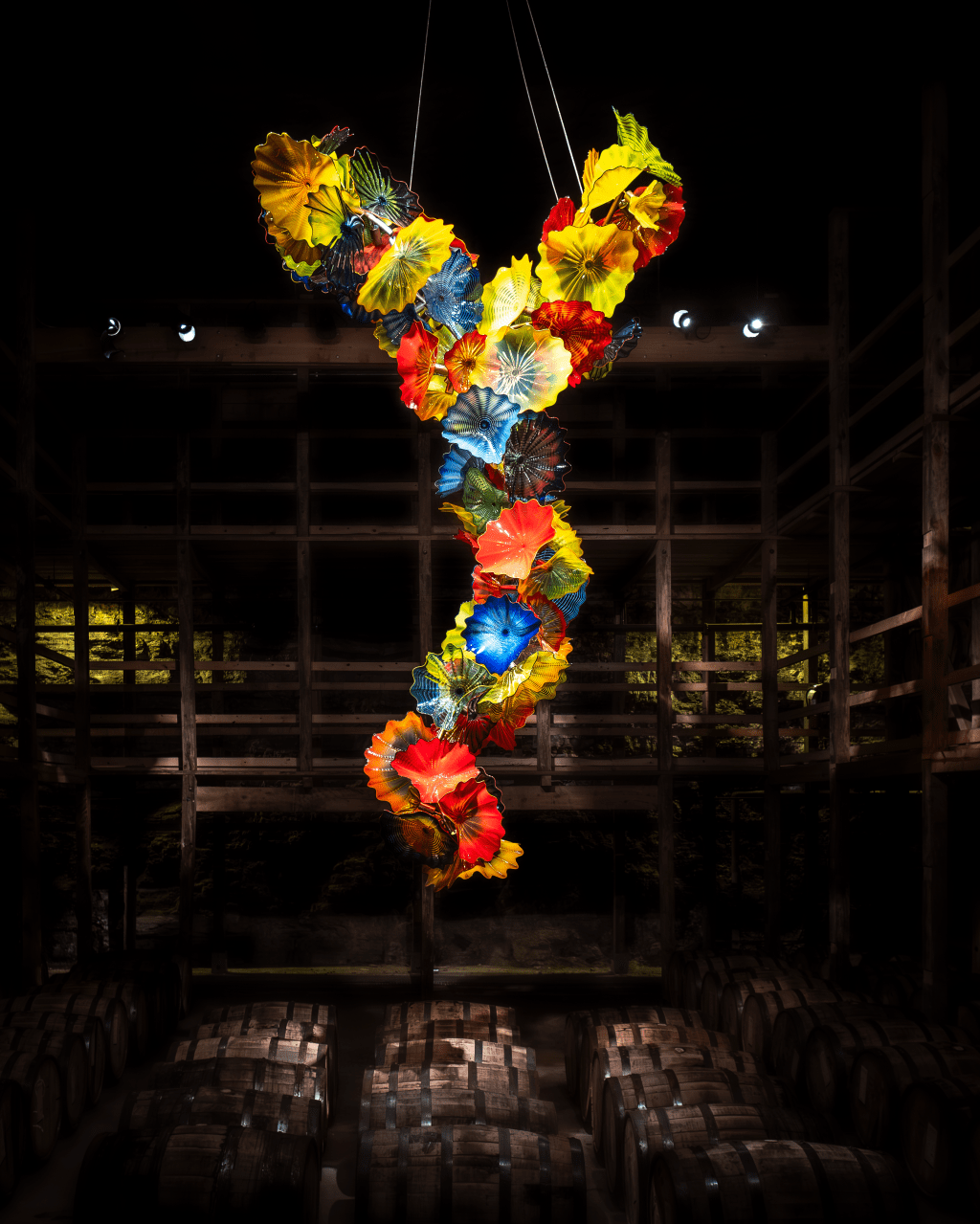
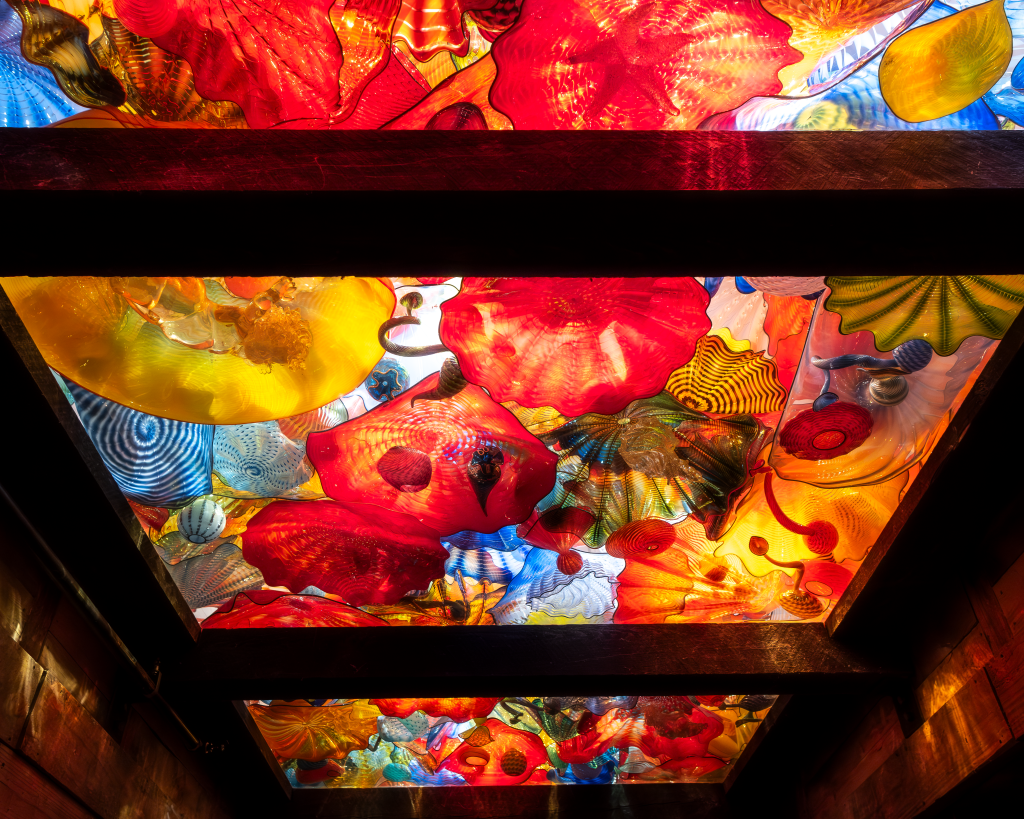
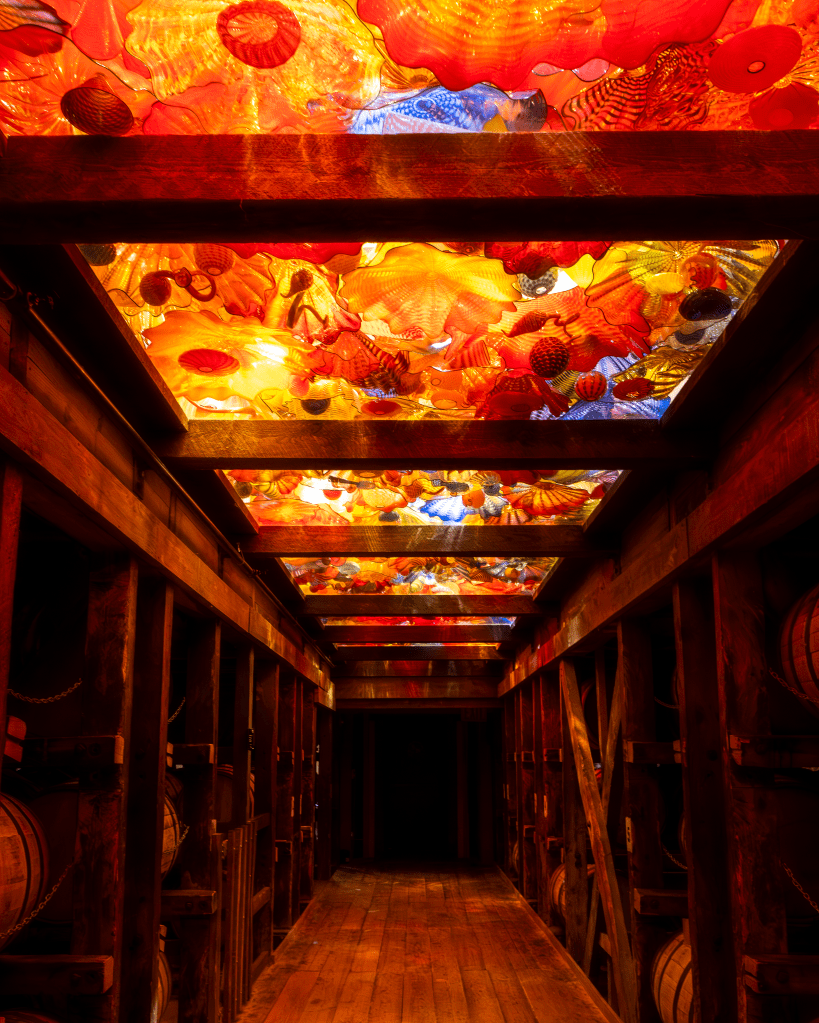
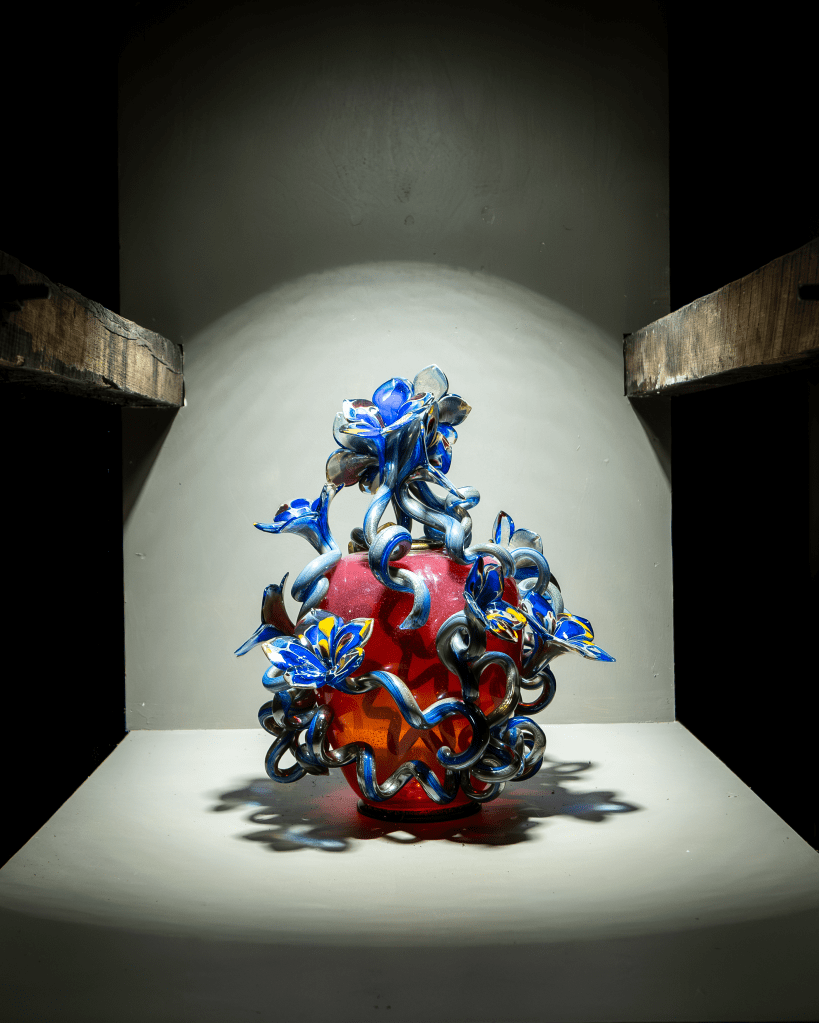
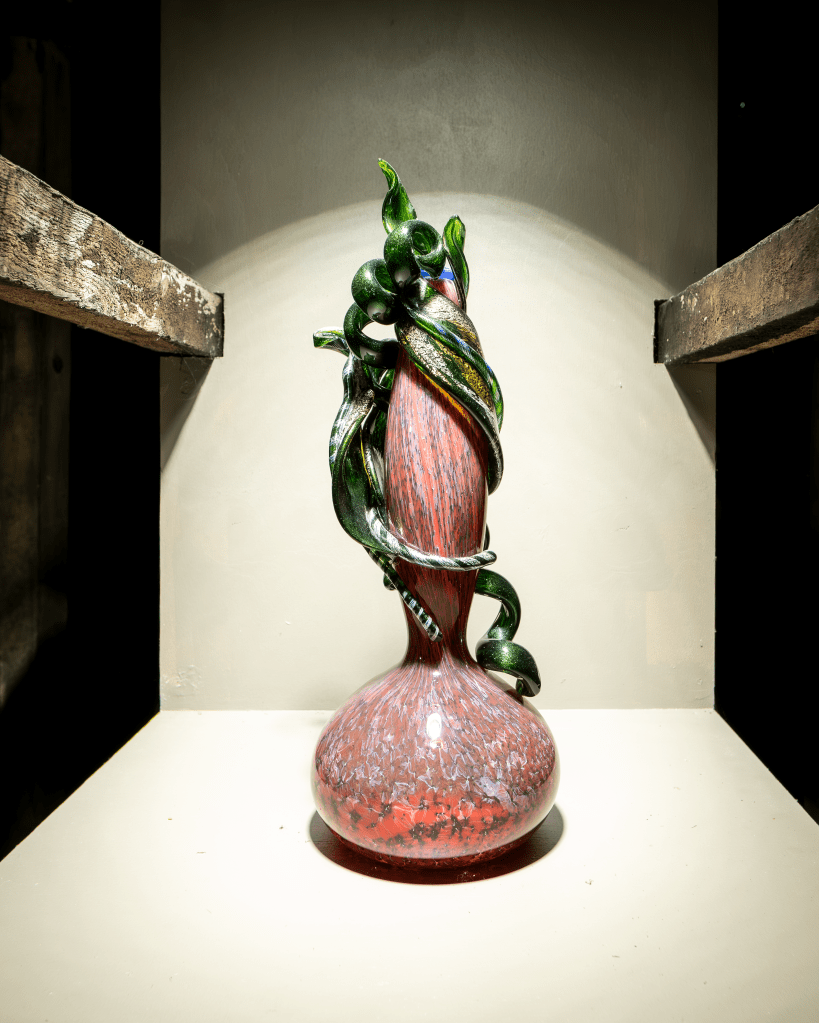
Chihuly’s relationship with Maker’s Mark has spanned more than a decade; 2025’s installation marked a return to the Loretto campus, and a permanent installation of his work, titled The Spirit of the Maker, casts a warm glow over a collection of barrels held in a narrow space alongside the gift shop.
The 2025 exhibit drew new attention to this permanent artwork while incorporating other sculptures, including some new pieces inspired by the distillery.
The Maker’s Mark Tour
While Chihuly’s art is what drew me out to the distillery on Friday, December 5, I wasn’t going to miss the chance for a tour. I chose the Maker’s Mark Tour, the distillery’s most popular option, to learn about the brand’s history.
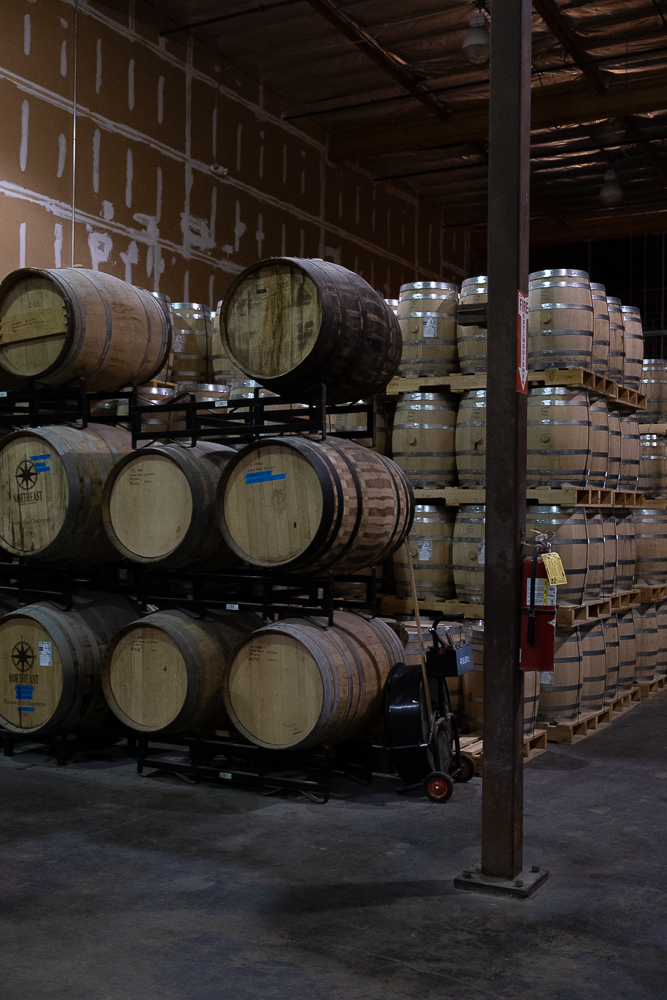
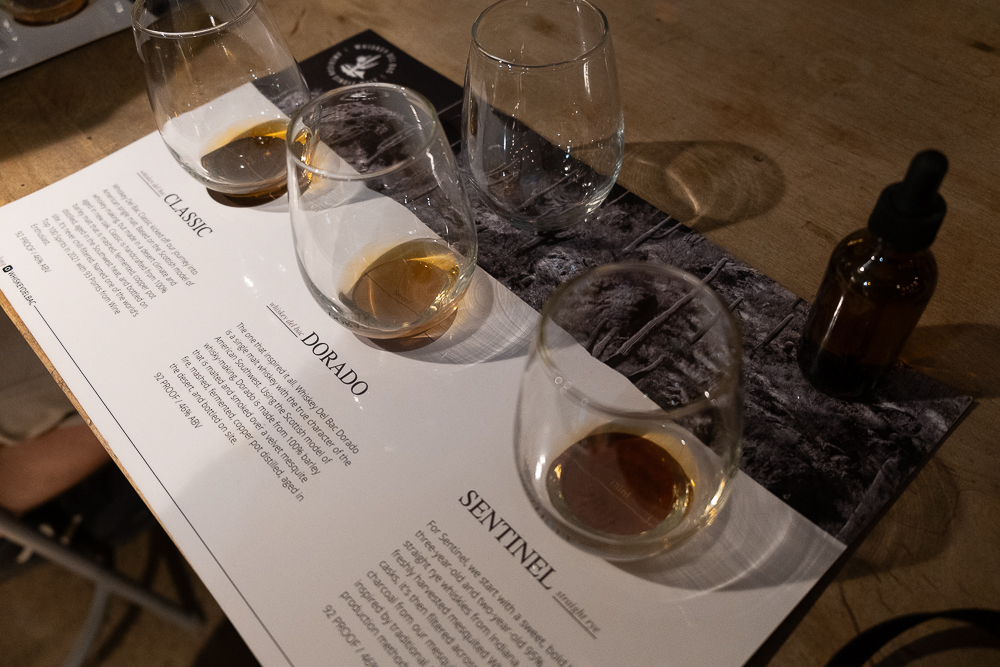
Guided by a friendly and charismatic gentleman named Chad, our group of 15 or so explored the distillery’s historic still house (predating the Maker’s Mark brand at least half a century), warehouses, and label production, along with the bottling line where every bottle of Maker’s Mark Whisky receives its famous wax. The tour ends with a tasting of four Maker’s Mark whiskies and the opportunity to purchase and dip your own bottle in the gift shop.

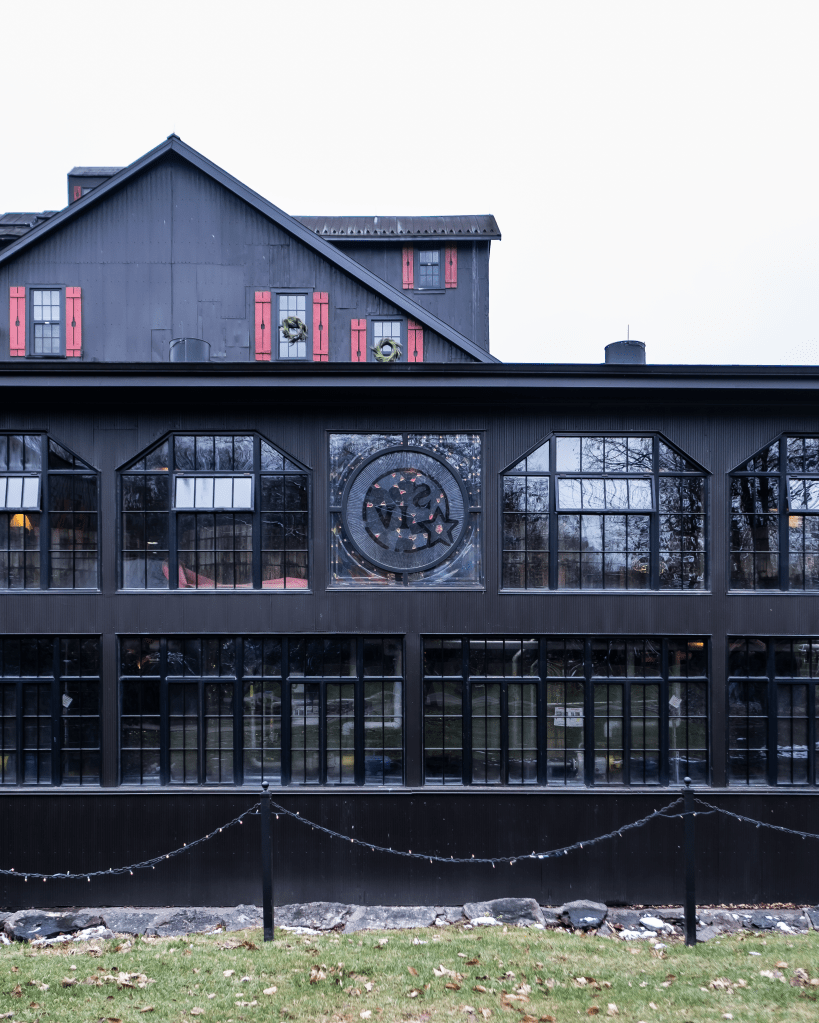
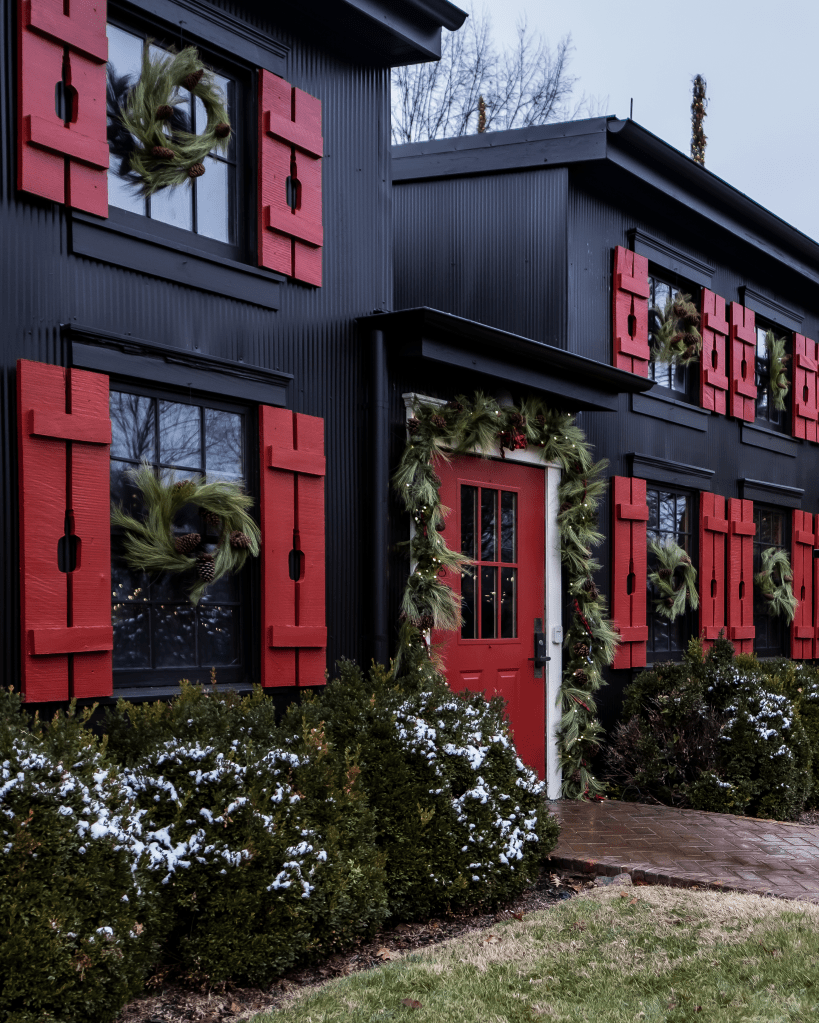
Along the way, we learned of the Samuels’ family’s whisky legacy, which stretches all the way back to Scotland and inspired the brand’s use of the e-exclusive “whisky” on their products. Winding through the black-walled buildings, Chad explained how Mr. Samuels pivoted from a successful career in Louisville to purchase the already-established farm and distillery in rural Loretto. The still-in-use still house is the oldest in the country and home to a column still standing 5 stories tall.
Legend has it that the Samuels family decided on the brand’s singular whisky recipe by baking a variety of proposed mash bills into loaves of bread. The best tasting loaf won out, with a mix of 70% corn, 16% soft red winter wheat, and 14% malted barley. Maker’s Mark 46 came about from a similar burst of experimentation, with 45 unsuccessful attempts to incorporate French oak staves into the maturation process before landing on the winner.
Distillation and its corresponding branding efforts have historically been led by men, but Mrs. Samuels was no silent partner in the creation of Maker’s Mark Whisky. Her contributions to the spirit’s recipe and design are properly appreciated at Maker’s Mark. Not only did Mrs. Samuels choose the shape of the bottles and introduce the red wax, but she designed the mark of Maker’s Mark and hand-wrote the original labels, which are still finished on an antique die cut press operated on site.




Exploring Star Hill Farm
The moment the tour concluded (following a walk through the aforementioned glowing whisky hallway), I jetted off to the nearest Walmart in nearby Lebanon, KY to pick up an SD card. Despite a veritable stack of cards at home, I had set out for adventure with an empty camera. There was no way I was returning to Lexington without some proper photos.
Once back on site, I paused for a quick lunch (a delicious salmon sandwich) at Star Hill Provisions, the farm-to-table restaurant nestled within the distillery grounds. Then I took my now-equipped camera and began to wander around.
“Where can I not go?” I had asked Chad upon my return. In response, he handed me a map with two buildings clearly marked “not open to the public.” Beyond that, the world—or, more accurately, the farm—was my oyster.
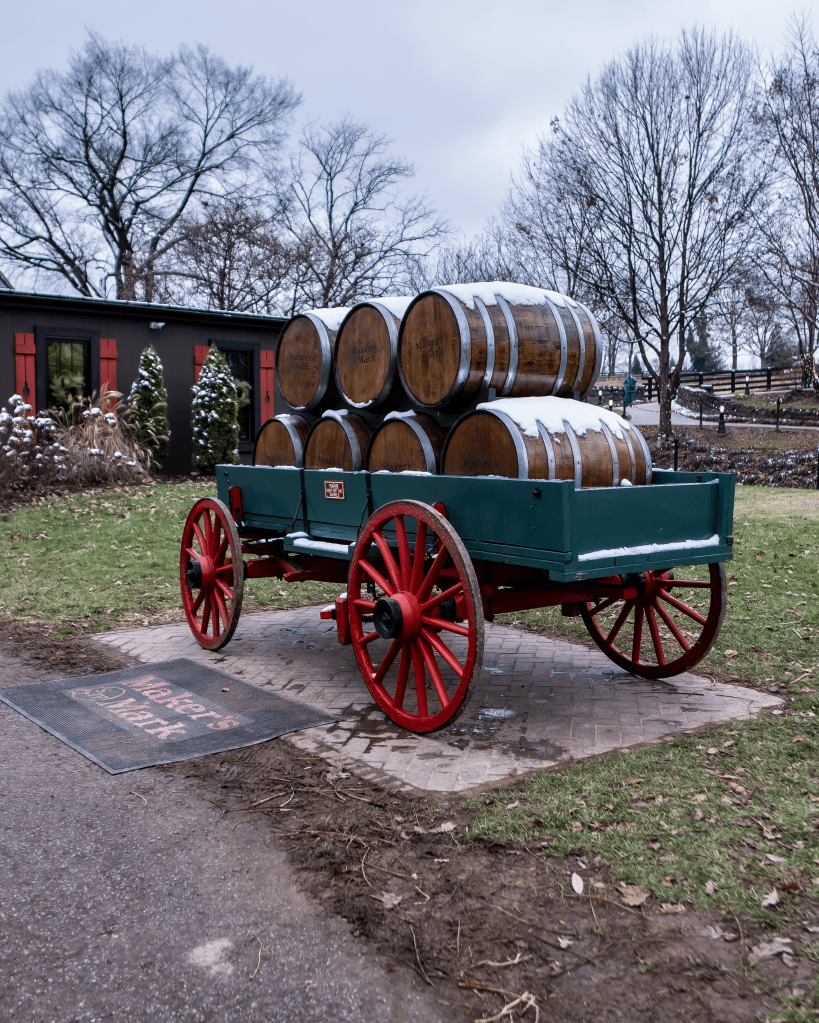
With much of the campus open to guests, I spent the afternoon photographing the Chihuly installations and weaving through historic buildings that make Maker’s Mark feel more like a preserved village than a modern production site.
A couple of passing Maker’s Mark staffers quickly clocked my camera and stopped to point out the best vistas. One even offered to take a photo of me, which I politely declined—I much prefer my place behind the viewfinder—but these interactions positioned Maker’s Mark as one of the nicest distilleries I’ve visited, both at home and abroad.
Dale Chihuly is not only known for his art, but for the way he integrates the glass shapes into the surrounding environment. The first time I experienced Chihuly’s art was at the Clinton Library in Little Rock, Arkansas. The second time was at Frank Lloyd Wright’s Arizona home, Taliesin West.
At Maker’s Mark Distillery, the outdoor sculptures emerged from the grounds in sharp contrast to the grass, earth, and snow below. Scattered throughout the campus, they seemed as natural as the buildings, positioned like flowers bursting through the cold soil in spring.


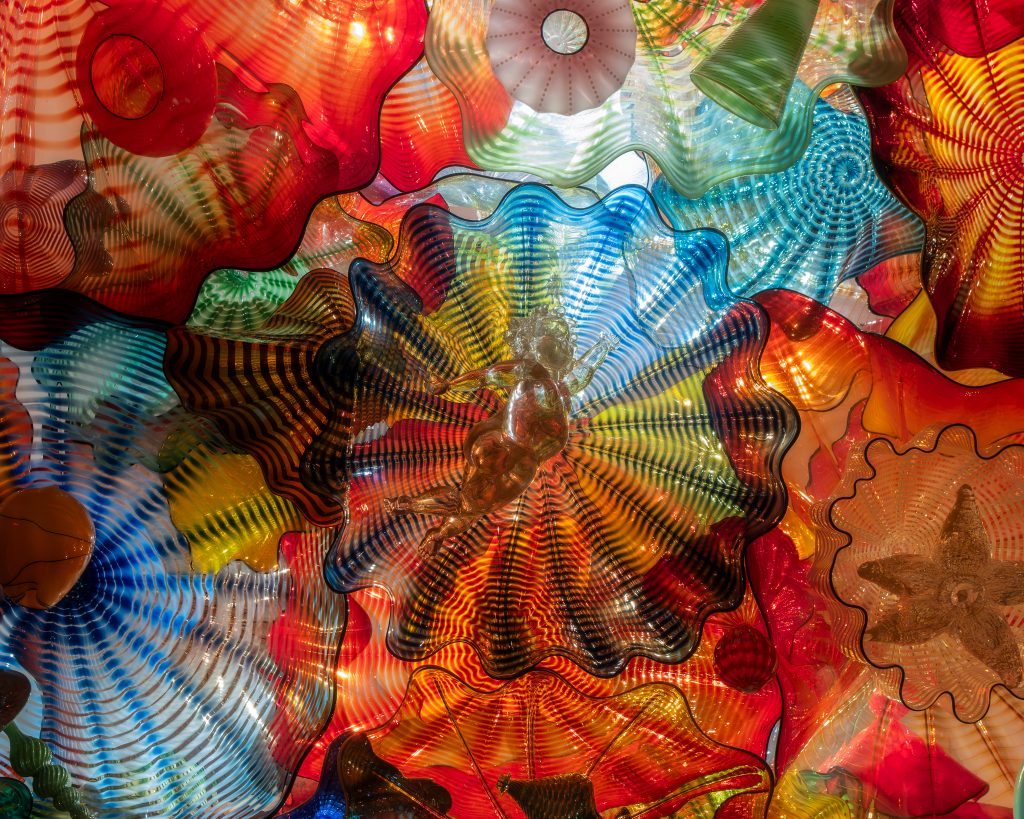
In the cellar, colorful fan-shaped glass explodes from the ceiling over the oak barrels below. Utilizing extra pieces from the gift shop’s ceiling installation, the beauty of the End of the Day Persian Chandelier simply can’t be captured in photographs.
But lord, did I try.

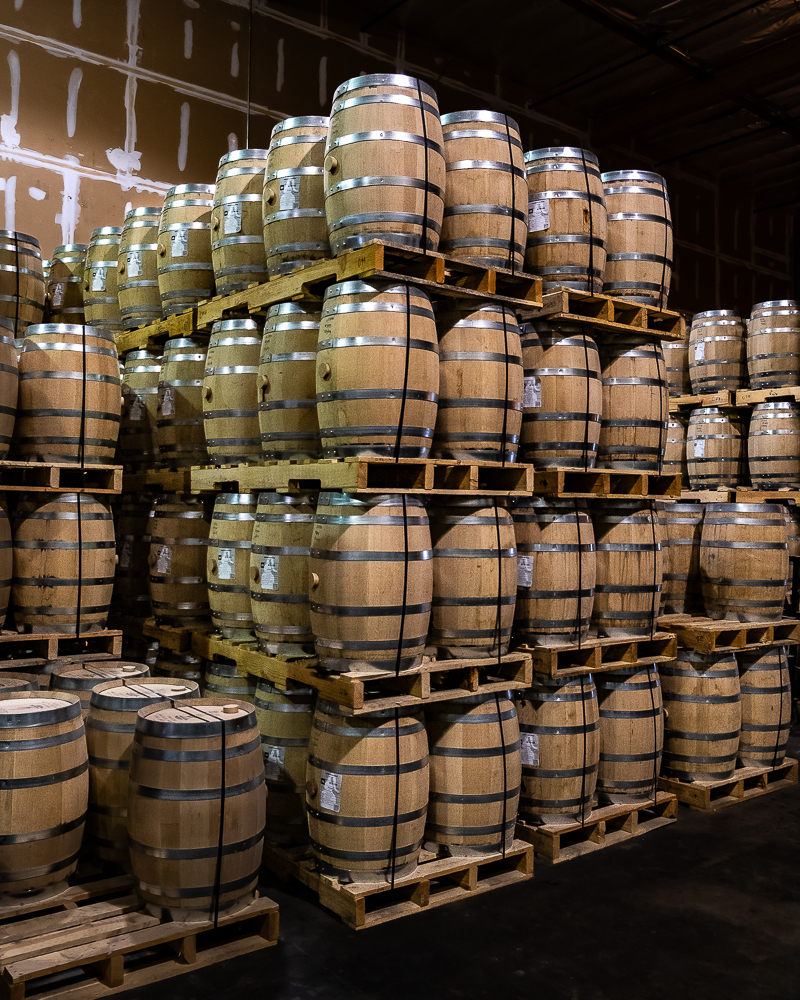
Nearby in the warehouse, a collection of Venetians—elaborate glass vases—were tucked between the barrels, each delicate shape standing in contrast to the sturdy, whisky-filled wood vessels and racks around them.




I even found a typewriter, tucked on a dusty desk in the “Quart House.” The small building once served as a package whisky store (and possibly a toll house for the now-defunct railroad). Dating back to 1889, it’s now on the register of historic places as the oldest still-standing location of its kind, a bit of Kentucky history preserved in Maker’s Mark history.

Starting with Art at Maker’s Mark Distillery
When I was both properly cold and due back to Lexington, I ended my excursion with a quick walk back through the Visitor Center, where all tours—and the experience of art—begin.
Upon arrival at Maker’s Mark Distillery, Guests enter through a gallery, thoughtfully lit and enhanced by high ceilings. I was late and distracted (per the usual) and had failed to notice the colorful welcome on arrival, but appreciated it all the more now, knowing the story of the Samuels family and their whisky.
Even the bathrooms are stunning at Maker’s. While I can’t speak to the men’s room, the ladies is carefully constructed of stone and tile to envelope visitors in a beautiful experience at every turn.
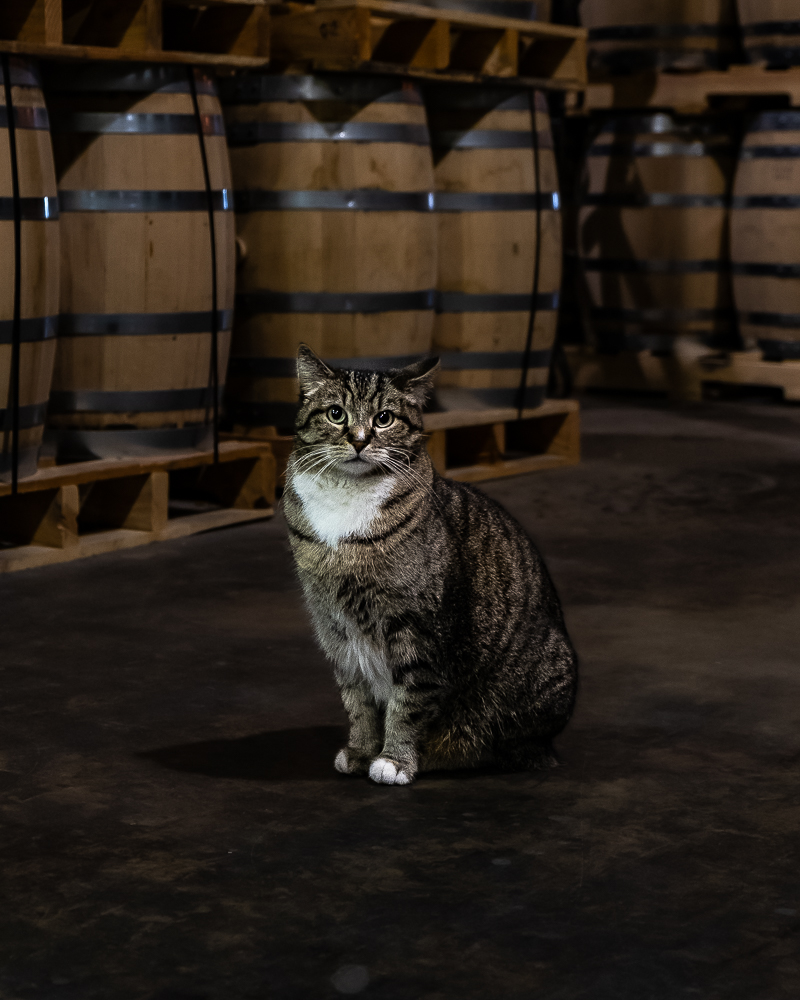
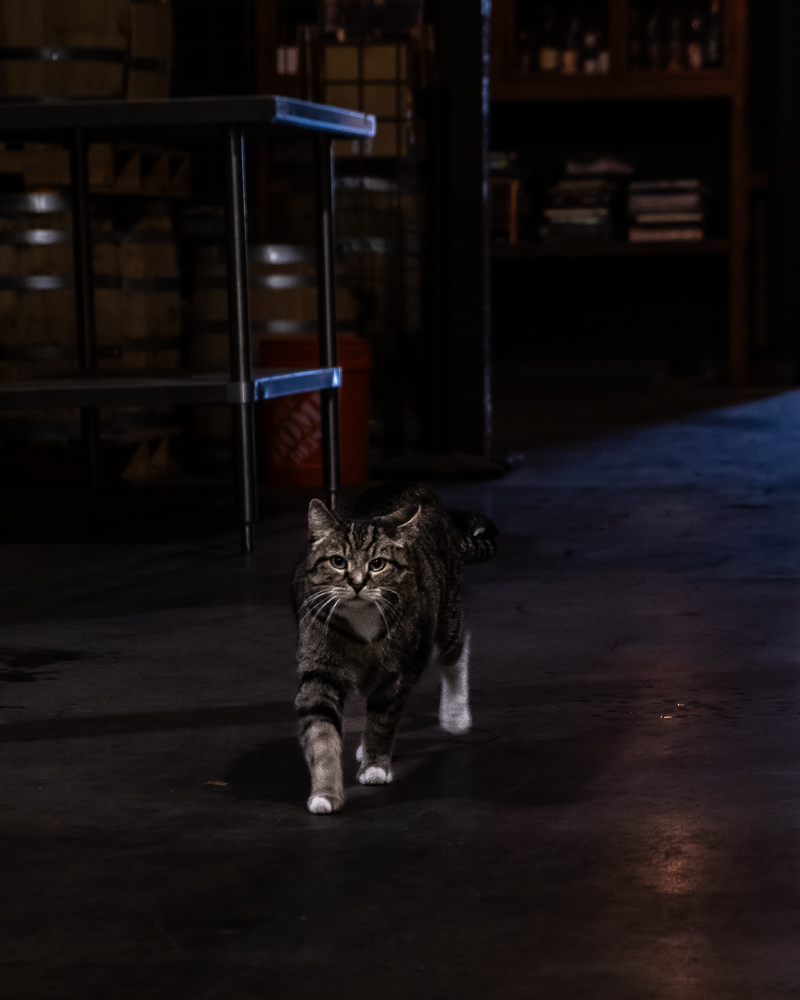
At the back of the Visitor Center is a small cocktail bar, where I met Whisky Jean Samuels, the distillery cat who was completely unbothered by my presence.

Whisky Jean rested on a leather sofa under yet another permanent Chihuly installation, Amber & New Oak Chandelier (2017). It’s not pictured, because I was, in true form, focused on the cat.
If I’d had more time, I would have lingered long enough for a drink, but my evening plans were calling, and I chose safe driving over happy sipping—especially on the single track roads surrounding the distillery.
As I walked to my car, I took one last slow look across the campus. The light was fading, and Christmas lights were starting to sparkle through the trees, ready for the Ambassadors that would arrive within hours.
Maker’s Mark has always been known for its whisky, but being there in person makes it clear that its magic lies just as much in the people, the place, and the art they’ve woven into every turn. Even without Chihuly’s sculptures shimmering in the background (the exhibit ended December 7), Maker’s Mark is not just a distillery that creates whisky. The Samuels family has curated a total experience, every drop crafted with intention.
Sláinte, y’all.
What to Know About Visiting Maker’s Mark Distillery
For those who choose quick answers over the magic of prose, here are few FAQs about Maker’s Mark Distillery, a major attraction on the Kentucky Bourbon Trail.
Where is Maker’s Mark distillery located?
Maker’s Mark Distillery is in Loretto, Kentucky, about an hour south of Louisville.
How much does it cost to tour the Maker’s Mark distillery?
As of December 2025, the Maker’s Mark Tour starts at $30. Other tour experiences range in price.
Is Maker’s Mark distillery worth visiting?
Hell yes! Maker’s Mark offers one of the most immersive and visually stunning distillery experiences in Kentucky, with hand-dipped bottles, a rich family history, and seasonal art installations.
Can I visit Maker’s Mark without a tour?
You might be able to visit Maker’s Mark at Star Hill Farm without a tour—but do you really want to?
Does Maker’s Mark still hand-dip every bottle?
Yes. Every Maker’s Mark bottle is still hand-dipped in red wax at the Loretto, Kentucky distillery.
🥃 The Whisky Type is a self-funded project powered by equal parts curiosity, chaos, and whisky. If you’d like to support Carolyn’s questionable life choices and excellent content, buy her a dram! https://ko-fi.com/thewhiskytype



























 The Whisky Type