Category: Uncategorized

  • Is the Whiskey Industry Doomed?

    Is the Whiskey Industry Doomed?

    In early January, the Brown-Forman Corporation announced that it would be shuttering its Kentucky cooperage and laying off a significant portion of its global workforce. As the parent company for popular whiskey brands Jack Daniel’s, Old Forester, Woodford Reserve, GlenDronach, BenRiach, Glenglassaugh, and more, this news hit the whiskey world hard—and left many talented industry professionals suddenly facing unemployment.

    Before the month’s end, the company popped up with more bad news: Glenglassaugh Distillery, home to Sandend, an award-winning single malt Scotch whisky expression, would also be closing—temporarily, at least. The Highlands distillery isn’t being mothballed, exactly, but its functional reality is shifting, with shared production and alternating silent seasons at BenRiach Distillery in the nearby town of Elgin.

    While these announcements were no surprise to many industry experts, they came as a shock to many enthusiasts. Their appearance on the horizon of 2025 positioned them as harbingers of dread, with worse things possibly to come for the whiskey industry.

    And worse things did come: tariffs. Tariffs imposed by the American government were quickly followed by retaliatory tariffs from other parts of the world, not to mention a clearing of shelves in Canadian retailers, where American spirits are now notably absent.

    Over the last few months, numerous articles have popped up to debate whether the whiskey industry is doomed or thriving. The most remarkable thing about this ongoing discourse is its variety; economics are notoriously difficult to predict in the best of circumstances, but the reality of whiskey in 2025 seems particularly difficult to pin down, especially as the rules of the game change daily.

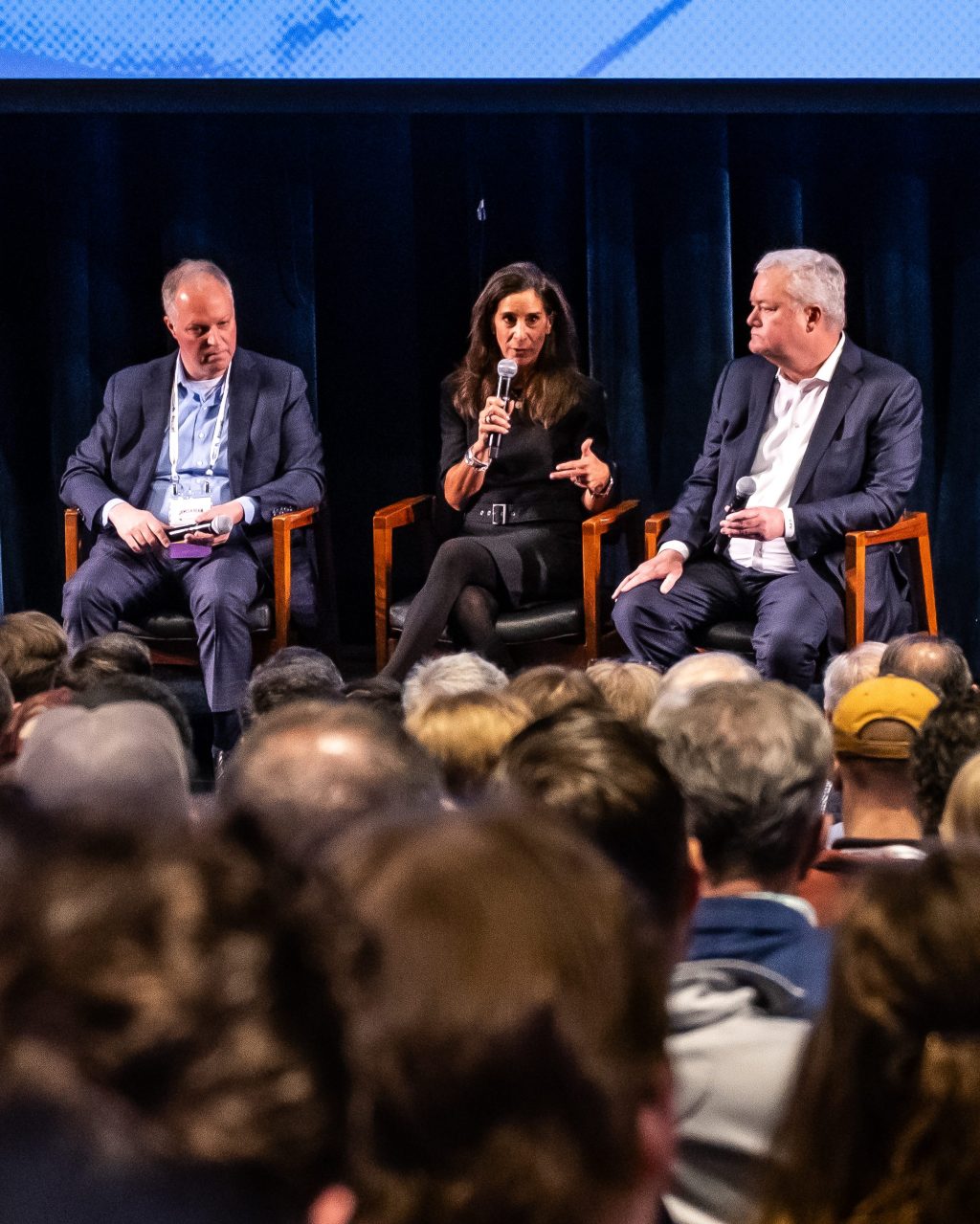
    “The industry is exactly where it would have been without COVID,” said Kate Latts, Co-President of Heaven Hill Brands, at the James B. Beam Institute’s 2025 Industry Conference in Lexington, Kentucky. During a Distilling Leadership Panel moderated by Wine & Spirits Daily’s Executive Editor, Sarah Barrett, Latts shared the stage with Lawson Whiting, CEO of Brown-Forman and Greg Hughes, President of Suntory Global Spirits.

    These three companies are giants in the industry, holding a massive piece of the global whiskey market share, and their CEOs and Presidents did not shy away from the difficult conversations at hand.

    To underline her point, Latts talked about industry statistics and projections made in the years prior to COVID. If the inflated market of the pandemic had not happened, she explained, that data suggests that the industry would be in the same exact place.

    Of course, the pandemic did happen, along with inflation, rising cost of living, and so many more issues that are much, much bigger than the whiskey industry. As the panel shared, the impacts of these challenges are magnified in the whiskey industry, given its three tiers of production and distribution: the consumer, the retailers and the distributors, and the distilleries themselves.

    Even more, there are real people at every tier, and these changes impact far more than just their liquor cabinet—every expansion and contraction of the industry affects the people who produce, distribute, sell, and consume these spirits.

    What’s Driving the Decline of Whiskey Consumption?

    While the overall rate of whiskey consumption rose sharply in 2020, those numbers have recently dropped, and dropped dramatically. Fingers have been pointed at the increasing legalization of cannabis, use of GLP-1 products for weight loss, and the changing habits of Generation Z.

    The reality is likely much more practical, said Lawson Whiting. In 2025, many people can’t afford the luxury of alcohol, at least not in the same way that they once could.

    Economic Uncertainty

    Five years ago, many people suddenly found themselves with an abundance of disposable income and few outlets through which to spend it. They bought everything they could get their hands on—and they were happy to pay for the privilege. Spirits brands could hardly keep up with the demand.

    As purse strings tighten, consumers are becoming much more discerning.

    While overall sales have slumped, sales of smaller-sized bottles have rocketed in the last year, said Whiting. He explained that this shift points to the idea that the desire for these products has not slipped as much as the budgets that allow people to afford them.

    Premiumization has also suffered in recent months, with declining sales on limited release and high value bottles. Greg Hughes, President of Suntory Global Spirits, said that this shift is not because consumers have lost a taste for premium whiskeys, but because they’re being more careful with their purchases. The key to overcoming that spending hesitation, the panel said, is authenticity and quality.

    Shifting Consumer Demand

    While ready-to-drink cocktails, other canned drink options, and low- or no-alcohol options may not be the primary reason for whiskey’s current slowdown, their rise in the market cannot be ignored. Consumers are increasingly reaching for flavor and convenience, said Whiting.

    Others, said Hughes, are experimenting with different ways to reach their consumption goals.

    “Consumers want an experience,” he explained. The type of experience they’re seeking determines the type of drink they reach for.

    Hughes suggested that these trends are less of a threat than an opportunity. Success in a changing market depends on the ability to innovate and deliver against those “need states”—whatever they may be. “We have an obligation to know and meet consumer interests,” he said.

    Tariffs

    With American spirits suddenly absent from Canadian shelves, and with the threat of tariffs looming over the global industry, tariffs pose a huge threat to the future of whiskey. The hope, said the panel, is that the ongoing tariffs war will be worked out before it becomes the problem it threatens to be—and they remain optimistic about that outcome.

    And if not? Spirits brands will survive if they can stay agile and be prepared, said Hughes.

    The problem with tariffs, he explained, is that they affect every segment of the whiskey industry ecosystem: consumers, retailers, restaurants and bars, wholesalers, and producers.

    “We need all of them to be healthy for the bourbon industry to be healthy,” Hughes said.

    The Whiskey Industry is Changing, Not Doomed

    The art of supply and demand is ensuring that you have the right amount of product available for the people who want to buy it at the price you want to sell it. That number is, however, a moving target, especially in an industry that requires the amount of time that whiskey demands.

    A perfect model is impossible, said Latts. As her father tells her, “You never have exactly the right amount.”

    “Everyone is pulling back just a little bit,” said Whiting. “In COVID, everyone was short; now everyone is long.”

    Essentially, the market is correcting itself—a natural occurrence after a period of instability. The COVID boom simply wasn’t sustainable over the long term.

    There’s good news hidden in these shifts, too: despite the overarching decline of alcohol sales, American whiskey remains one of the fastest growing spirits category, trailing only behind tequila.

    “Global consumers love American whiskey,” said Whiting. And while established markets may be slowing, they do not represent the total potential of the global whiskey sales. Even a small expansion in a promising market could represent big growth for the industry.

    Sales for Boomers and Generation X haven’t changed all that much, either, offering some element of consistency in a changing market. Whiting described the whiskey market as LDA to DND—”legal drinking age to damn near dead.” Bringing younger consumers into the fold requires understanding how, why, and what they drink, and delivering on those needs and desires.

    That doesn’t mean it’s not a challenging time for whiskey; layoffs and cutbacks have a real impact on individuals, their families, and their local economies. But the whiskey industry has been through far worse—prohibition ended less than 100 years ago, after all. It will continue to evolve and thrive, and all three panelists are optimistic for its future.

    In the next five to ten years, Whiting predicts increasing globalization, tapping into those new geographic markets. For Latts, it’s a return to premiumization through innovation. For Hughes, it’s both—with a constant focus on quality, authenticity, and transparency.

    We’ll drink to that.

    Sláinte, y’all.

  • Seven Days of ASMW // Courage & Conviction by Virginia Distillery

    Seven Days of ASMW // Courage & Conviction by Virginia Distillery

    There are only five days left until the U.S. Tax & Trade Bureau’s ratification of American Single Malt Whiskey goes into effect. If you’ve been following along around here or on The Whisky Type Instagram account, you know that we’ve been celebrating since Sunday, counting down to January 19 with Seven Days of American Single Malt Whiskeys.

    Today is Day Three of the countdown. You can find Day One (Stryker American Single Malt Whiskey by Andalusia Whiskey Co.) and Day Two (Westland Beer Cask Finish American Single Malt Whiskey) in the archives.

    Our chosen spirit this afternoon is a little bit different than the first two. It’s an American Single Malt, of course, but this particular distillery prefers the e-exclusionary spelling of whisky. Plus, it’s not just one bottle we’re opening. It’s four.

    (Don’t worry, they’re all small.)

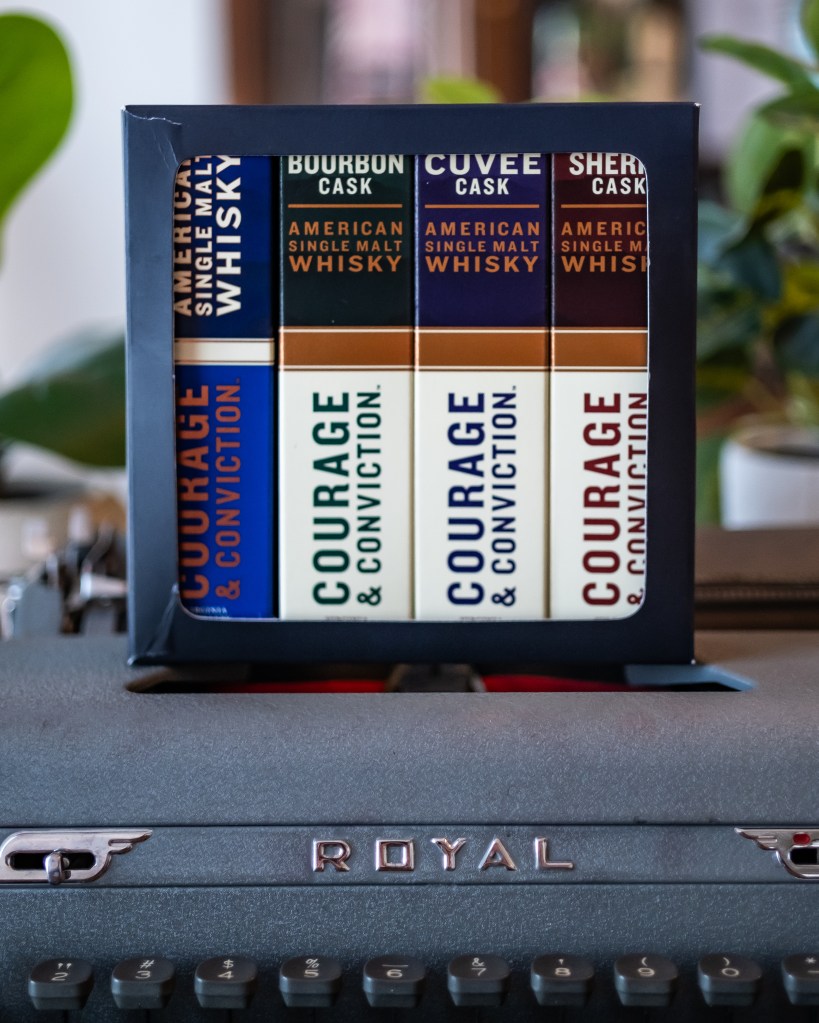
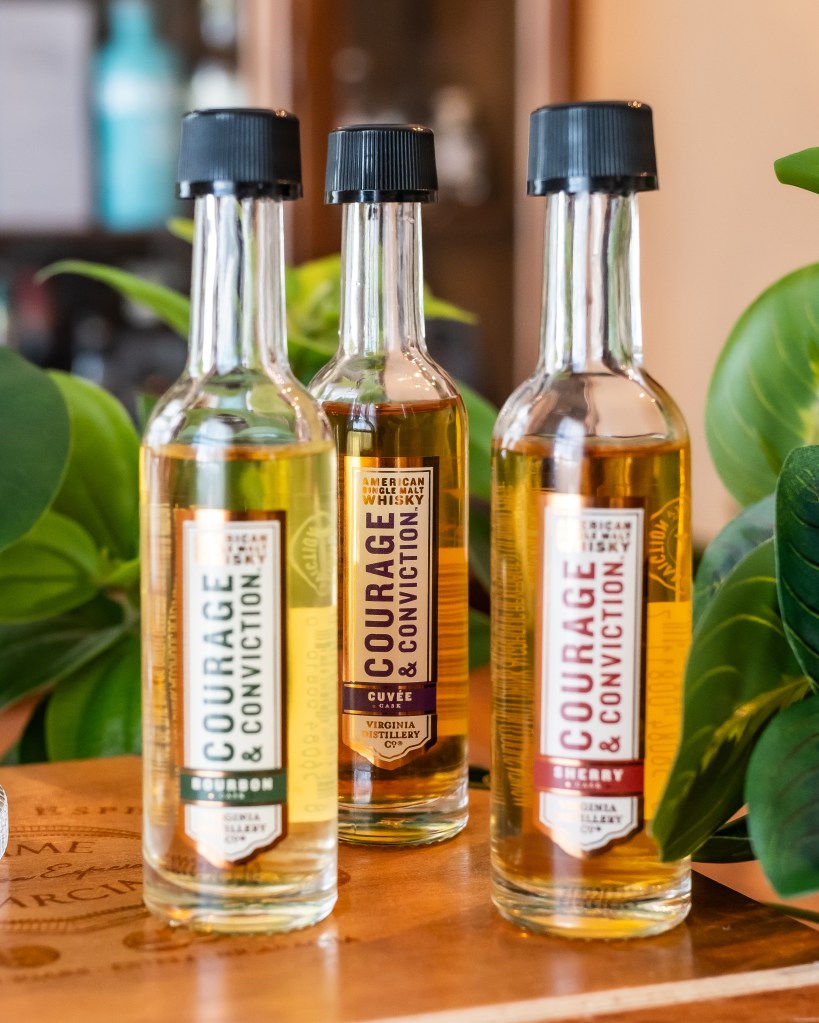
    We’re cracking into a lovely four-pack of Courage & Conviction, the American Single Malt Whisky from Virginia Distillery Co.

    As one of the founding members of the American Single Malt Whiskey Commission, Virginia Distillery has been making its 100% malted barley whiskies in the Blue Ridge Mountains since 2011. The name Courage & Conviction comes from their late founder, Dr. George G. Moore, and his oft-repeated expression, “Have the courage of your convictions.”

    Courage & Conviction is not a singular whiskey. It’s a brand, a range, and a varied experience, all rooted in the same core values: malted barley and natural Blue Ridge spring water.

    I first tried Courage & Conviction last February while attending the ASMWC’s convention in Denver. If memory (which is a little fuzzy after quite a bit of whiskey and time), I tried the single barrel Cuvée Cask expression—and loved it.

    I wanted to know more, and particularly to experience the Courage & Conviction’s core range of whiskies. Back in July, I ordered the four pack featured here along with a full-sized bottle of the Signature Malt whisky. Thanks to a shipping issue, a quick email, and a follow-up phone call, I found myself attending the Bourbon Women Sip-osium as a guest of the distillery a month later.

    And they say drinking whiskey won’t get you anywhere in life.

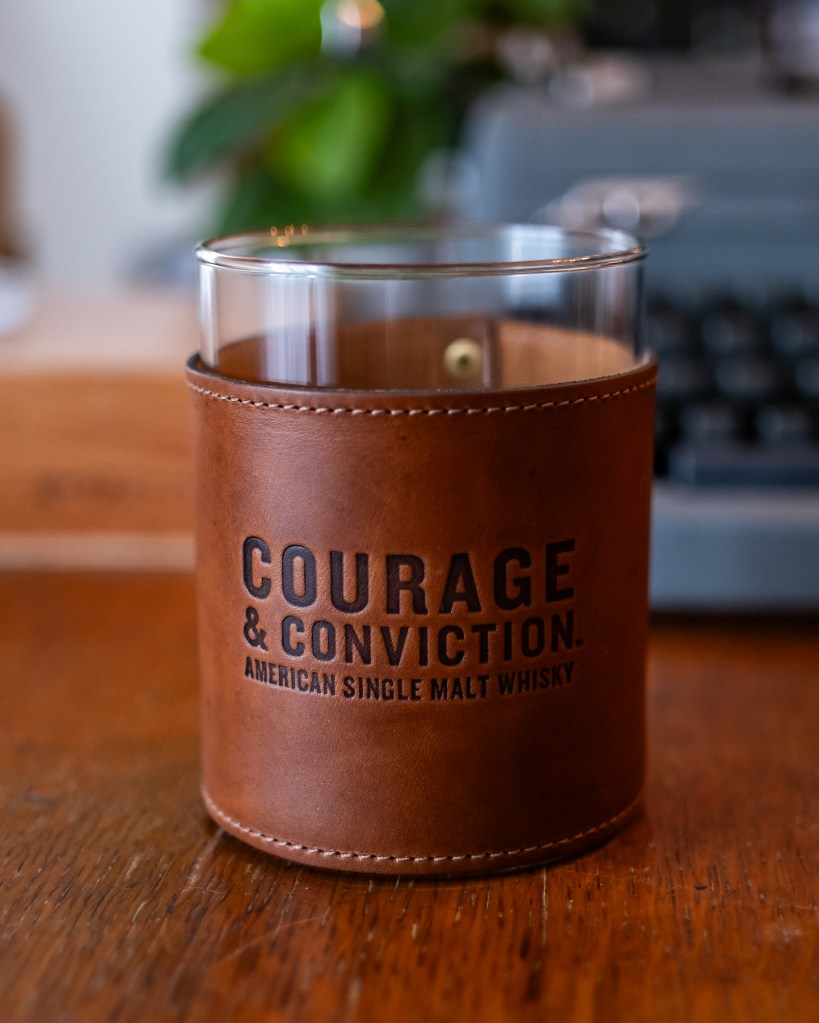
    Virginia Distillery’s afternoon event during the Sip-osium took me and several other guests to Clayton & Crume, an artisan leather shop in Louisville. We drank, we snacked, and we made leather sleeves to fit on rocks glasses, each one embossed with the Courage & Conviction logo.

    More importantly, we learned about the art of blending from Virginia Distillery’s Lead Blender, Amanda Beckwith.

    The core range of Courage & Conviction consists of four whiskies, each 46% ABV and aged for a minimum of four years. The difference lies in their finishing. There’s the Bourbon Cask, the Cuvée Cask, and the Sherry Cask. The fourth core whisky, Signature Malt, is a blend of the other three.

    You can buy each ready-made expression on its own, or pick up a 50 ml sampler like I did. And you could drink them as they come, sipping on each separately.

    But Virginia Distillery has a unique approach to their consumer engagement strategy, which might change how you enjoy their whisky: this is a distillery that believes in audience participation.

    The sampler pack of Courage & Conviction whiskies comes with a QR code. You can scan it to enjoy a virtual tasting experience with Amanda, deepening your experience of each sip.

    Plus, with each of the three core component whiskies on hand, whisky enthusiasts can create their own blend of Courage & Conviction, selecting the specific amounts of each component whisky to include in their glass. Sometimes, whisky fans like me can even order a bottle of their own unique blend. This special offering, called The Draftsman, comes with a special label indicating the percentages of each whisky contained within. It also bears the name of the person who “drafted” it.

    Let me just say from experience: it’s really cool to see your own name on a bottle of whisky.

    My version of The Draftsman is 40% bourbon cask; 20% cuvée cask, and 40% sherry cask. I chose and ordered that particular blend in Louisville. After telling us about the distillery’s history and the basics of her trade, Amanda gave each of us small amounts of the three base whiskies along with pipettes, a place to take notes, and instructions to play.

    As someone who was never really into science, it was the most fun I’ve ever had with a pipette. The fact that I was sampling my experimental blends along the way probably helped.

    Unfortunately, I can’t find The Draftsman on the Courage & Conviction website right now, but that doesn’t mean you can’t blend your own at home if you have all the necessary parts. Plus, VA Distillery’s audience participation options don’t stop there. They also offer a free online education program to learn more about American Single Malt Whiskey, called the ASM Academy.

    Oh, and how are the whiskies? Fantastic.

    The Bourbon Cask is light and creamy, with hints of vanilla and malt a pinch of spice. The Cuvée Cask is comparatively dark and rich, digging deeper into the baking cabinet to pull out notes of brown sugar and even more spice. The Sherry Cask hits the tongue with a bold blend of fruit and leather. The Signature Malt pulls notes from all three, with a gentle layering of flavor that has earned it several 90+ point ratings.

    The good news is this: for an amateur blender…you pretty much can’t go wrong drinking or mixing these whiskies.

    Sláinte, y’all!

    In My Glass(es)

    Courage & Conviction American Single Malt Whiskies

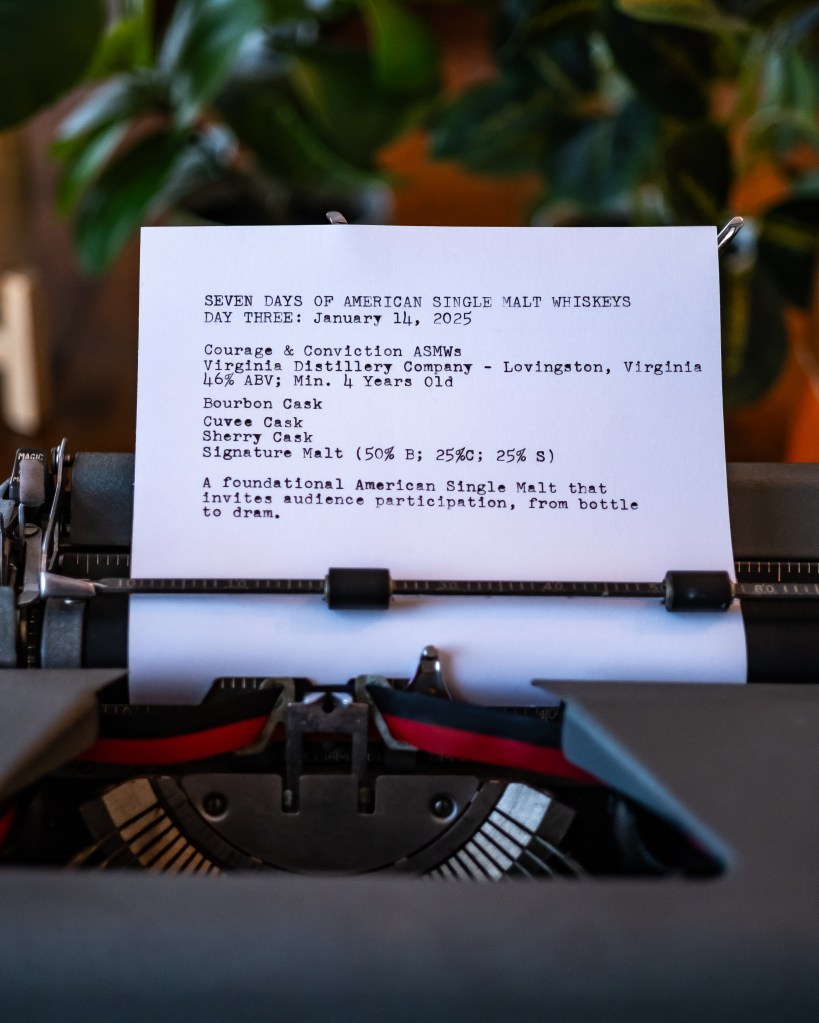
    Bourbon Cask, Cuvée Cask, Sherry Cask, and Signature Malt

    Virginia Distillery Co. – Lovingston, Virginia

    46% ABV; Min. 4 Years

    On My Desk

    A still-new-to-me Royal Quiet De Luxe in its dining room debut.

  • A Typist’s Guide to Whisky // What is Whisk(e)y?

    A Typist’s Guide to Whisky // What is Whisk(e)y?

    As a full time whisk(e)y enthusiast and a part time distillery tour guide in Kentucky, one of the most common questions I get asked is, “What is the difference between whiskey and bourbon?”

    I always appreciate the people who are willing to pose this question, and even more so when it’s asked outright. Humble ignorance is welcome, and it’s far less frustrating than the persistent—and incorrect—insistence that bourbon is bourbon and whiskey is everything else.

    Sometimes, the word “whiskey” is even wielded as an insult, particularly in reference to the spirits made south of the border—the state border, that is. If you ever want to see a born-and-bred Kentuckian’s head explode, suggest that Jack Daniels Tennessee Whiskey is also bourbon. We’ll save the question of whether it actually is or isn’t bourbon for another post, but let me tell you this: as a resident of the state by relocation rather than heritage, it’s good fun.

    The truth is this: bourbon is whiskey. Not all whiskey is bourbon, however.

    Whiskey (or whisky, depending) is a broad category of spirits. It includes the subcategories of bourbon, rye, Scotch, Canadian whiskey, Irish whiskey, and so much more. But to understand the definitions of and differences between these varieties, we have to first answer the bigger question: what is whiskey?

    Note: Because this conversation started with bourbon, an American whiskey, I use the e-inclusive spellings of “whiskey” and “whiskeys” throughout, rather than my usual “whisky.”

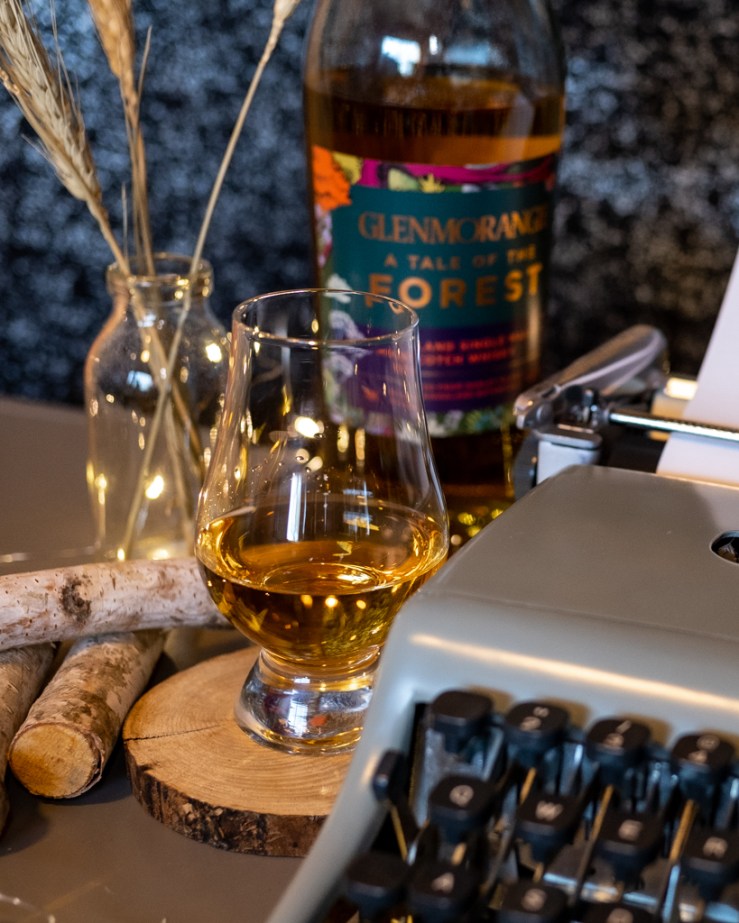
    A lovely dram of Glenmorangie’s Tales of the Forest.

    What is Whiskey? (Or, What is Whisky?)

    Whiskey—with or without the e—is any spirit distilled from a fermented grain mash. The grains most commonly used in whiskey are malted or unmalted barley, corn, rye, and wheat.

    The grain-based nature of whiskey is critical in its definition, as it distinguishes the spirit from rum (fermented and distilled from sugar or sugar cane), brandy (fermented and distilled from fruit), or any other distilled spirit made worldwide. Those spirits may follow a somewhat similar fermentation and distillation process, but they are not whiskey.

    How is Whiskey Made?

    Whiskey is created through a multi-step process involving mashing, fermentation, and distillation, in that order.

    Mashing

    Starch is a natural component of grain, but sugar is what we need for the production of alcohol. Luckily, the starch that’s found in grains can be converted into sugar relatively easily. This happens through a process called mashing.

    When barley is malted—a separate process that teases the grain kernels into starting germination before ruthlessly stagnating their growth—it releases enzymes that can break down starches and convert them into sugars. These powerful enzymes can transform an entire batch of grain, even if only a small portion of the recipe includes malted barley. The enzymes can also be added separately, if no or not enough barley is desired as part of the final product.

    The process of mashing activates these enzymes. Introduced to the warmth of hot water (approximately 152 °F or 67 °C to be precise) they quickly get to work, moving through the batch of grain—essentially a big batch of oatmeal (or its alternate-grain equivalent). As the mash soaks, the grains, and then the water, become sweeter and sweeter.

    Mashing is a relatively quick process, especially compared with the rest of whiskey production. The mash tun, a big vat designed to stir the contents while it cooks the grain, often finishes its work in an hour or two.

    Then it’s on to fermentation.

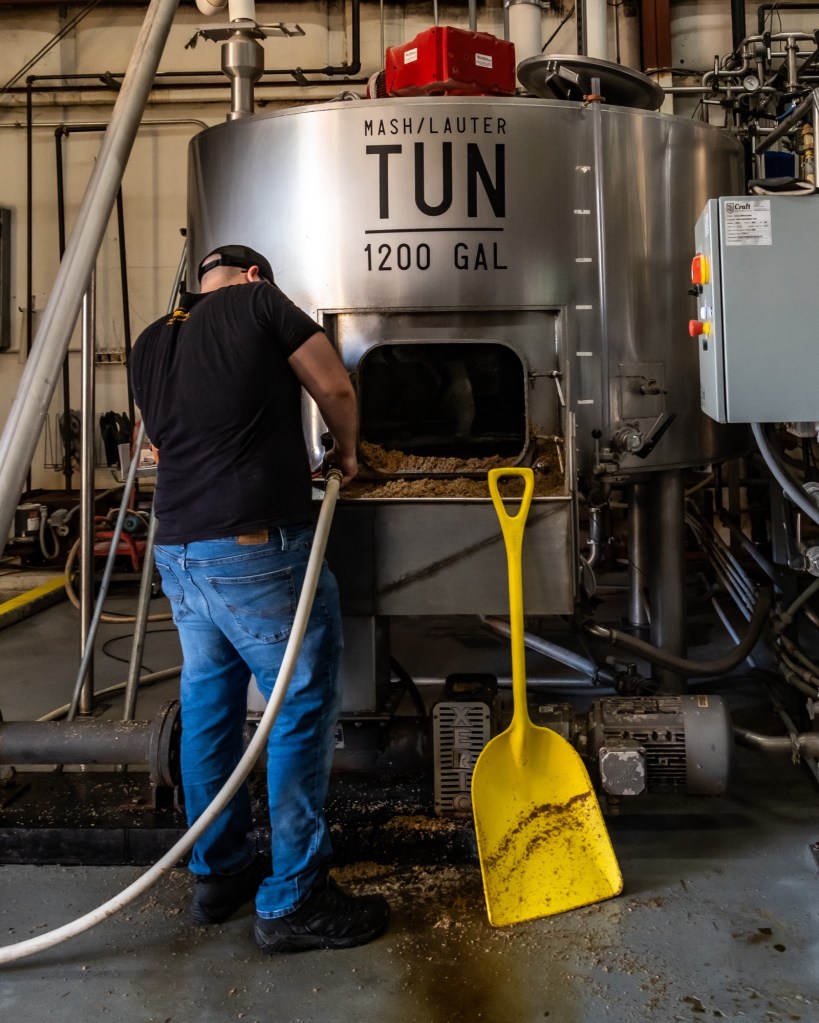
    The mash/lauter tun at Stranahan’s Whiskey Distillery in Denver, Colorado, USA.

    Fermentation

    If you think fermentation sounds fancy, let me assure you—it is not. Fermentation is what happens when yeast, a living microorganism, eats sugar.

    Alcohol is yeast poop. CO2, another natural byproduct of fermentation, is yeast farts.

    You’re welcome.

    Yeast exists everywhere in the world: on plants and surfaces and even our skin. Over the years, the whiskey industry has cultivated particular yeast strains or species for their efficiency and outcomes, often using the same strains of yeast for decades.

    Yeast is well known by whiskey enthusiasts for its practical application of creating alcohol. It is deeply under-appreciated for its artistic contribution to whiskey: creating flavor. While whiskey gets a significant portion of its flavor and aromas from a wooden barrel (something we’ll discuss later), the undercurrent of a whiskey’s flavor profile starts in the fermentation tank.

    Yeast produces esters, chemical compounds which are central to the flavor of the spirit, and the type of yeast used will impact the flavors that appear.

    Craft breweries have been leaning into this fact for some time, experimenting with a wide variety of yeasts. In the whiskey industry, consistency has more often reigned supreme, at least over the last century. That’s not to say that some distilleries aren’t pushing the boundaries of yeast usage. New and old distilleries are increasingly recognizing yeast for its creative and flavorful potential, and exploring what that can mean to the final product.

    Regardless of whether a distillery uses a tried-and-true yeast strain or something new, the fermentation process (which can vary from a few days to a week or more) results in something called “distiller’s beer.” Typically containing 8-10% alcohol by volume, this hop-less beer is what we distill into whiskey.

    Mash fermenting at James E. Pepper Distillery in Lexington, Kentucky, USA.

    Distillation

    Distillation is how we separate the wheat from the chaff—or, more appropriately, the ethanol from nearly everything else.

    Distillation works on elementary-level science: every substance on planet earth freezes, boils, and vaporizes at a different temperature. Through distillation, we use this concept (and heat) to parse through the varied components of our distiller’s beer until we are left with a liquid that is both appetizing and safe to drink.

    Distillation happens on a still. Whether it’s a column still, a pot still, or some hybrid combination of the two depends on the distillery and the type of whiskey they’re creating.

    Whiskey stills are almost always made of copper. Copper will naturally react with sulphur particles in the distiller’s beer. The result is copper sulfate, a compound that sticks to the inside of the still rather than in your glass. Sulphur, typically described with a smell like rotten eggs, is not a flavor you probably want in your whiskey, and copper takes it out.

    We could get into the intricacies of various stills and their functionality, but that’s a post all on its own. Here’s what you need to know: at the end of the distillation process, the stills have whittled the distiller’s beer down to what’s called “new make spirit.” You might also hear it called distillate, white dog, white lightning, moonshine, or, my personal (and unofficial) favorite, “pre-whiskey.”

    The alcohol percentage of new make spirit is significantly higher than distiller’s beer. It’s also perfectly (or nearly) clear and high in ethanol (the good alcohol), though many of the oils and esters of the fermented beer have persevered through the process. This is good; it means our whiskey will have flavor.

    According to our dictionary definition, we could stop here—but most whiskey geeks would (rightfully) scoff at the idea. There is one more more step to transform this clear spirit into our favorite amber liquid.

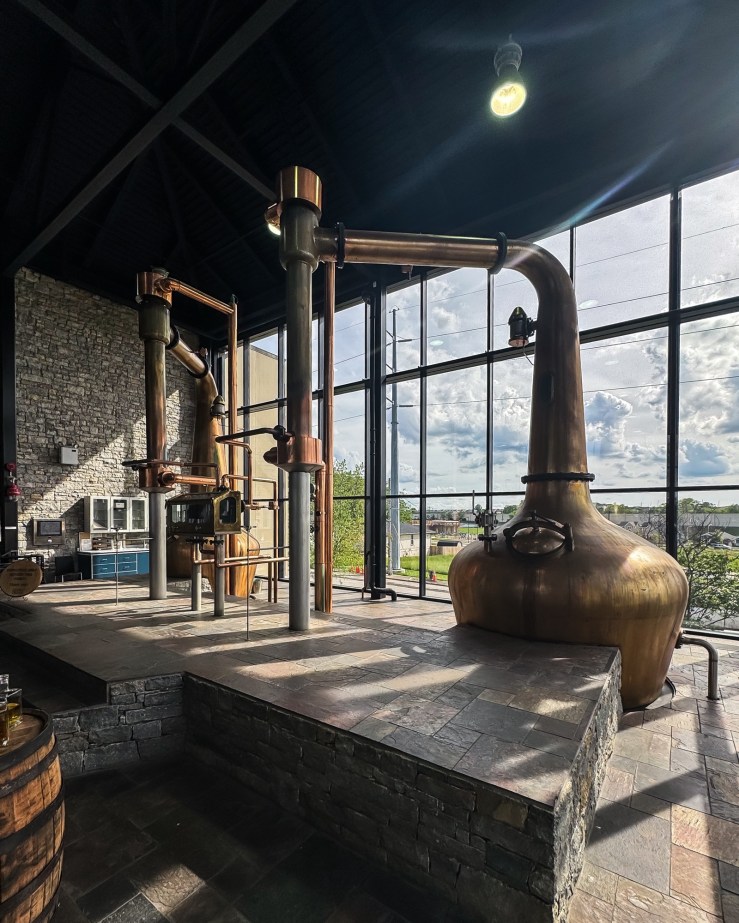
    Copper pot stills at Town Branch Distillery in Lexington, Kentucky, USA.

    Does Whiskey Have to Be Aged?

    Whiskey lovers, brace yourselves: what I’m about to say might make you angry.

    Technically, whiskey may not need to be aged.

    You may have noticed that the general definition of whiskey noted above does not mention it at all. Worse, there are a number of clear, unaged “white” whiskeys in the market at this very moment.

    I know, I hate it too.

    That said, most defined sub-categories of whiskey do require aging, and some even mandate a minimum age. More importantly, the universally-accepted expectation of whiskey demands an aged spirit.

    So put down your pitchforks, damnit. I’m on your side.

    Whisky barrels aging in the warehouse at Bunnahabhain Distillery, Port Askaig, Scotland.

    What is Aging?

    When a whiskey is “aged,” it has spent some amount of time in a wooden barrel. Typically made of white oak, these barrels significantly contribute to the flavor of the spirit—and they provide all of its typical golden, amber, or brown color.

    Barrels made of white oak are the #1 choice for whiskey distillers worldwide. As a hardwood, white oak’s dense fibers and natural components help to prevent whiskey from leaking through and out of the barrel. This is key to making sure that the spirit stays in the barrel where it belongs, rather than on the floor of your rackhouse.

    White oak also contains natural compounds that contribute to the flavor of whiskey. While the presence and levels of these compounds may vary depending on the species of white oak used, a handful are well-known for their particular flavor influence on whiskey:

    • Vanillins: vanilla and spice 
    • Oak Lactones: coconut and wood
    • Guaiacyl: smoke 
    • Eugenol: spice
    • Tannins: bitterness and astringency

    Many whiskeys, particularly American whiskeys aged in virgin oak barrels, also feature a caramel note and a pronounced sweetness. This is largely due to the wood sugars in the barrel, which are charred and caramelized through the process to prepare the barrel for aging. The more times a barrel is used, the less influence these and other compounds will impart on the final flavor of the whiskey.

    How are barrels made?

    Whiskey barrels are made by a cooper in a cooperage.

    Yes, if your last name is Cooper (à la Emily in Paris), your ancestors probably made wooden barrels for a living.

    Using heat and force, wood planks (called staves) are shaped and secured with metal hoops. For American whiskeys, the barrels are typically charred, or burned out on the inside. There are several levels of charring, ranging from one to four, and I’ve heard five mentioned on occasion. Each level corresponds to a particular number of seconds that the barrel is subjected to fire. The lower the char level, the less fire is used.

    Charring a barrel breaks through the outer layer of the wood and gives the spirit more access to those flavorful compounds noted above. The more charred the barrel, the more influence the wood compounds will have on your final product.

    Some distilleries also “toast” their barrels. Toasting is a slower, more careful process to heat the inside of the barrel. Toasting often results in a lighter colored whiskey with less wood influence in its flavor profile.

    Barrels of whisky at Glenkinchie Distillery, East Lothian, Scotland.

    What does the “age” of a whiskey mean?

    While other alcoholic drinks can continue to age even after leaving the barrel, a whiskey’s age is calculated as the number of whole years that the spirit spent in its oaky home. There’s no rounding up in whiskey—a whiskey that spent 9 and 3/4 years in a barrel is not a 10-year-old whiskey; it is 9 years old.

    When a bottle of whiskey is marked with a particular age, it indicates the youngest whiskey that is included in the bottle. Blended and batched whiskeys (yet another topic for another time) are defined by the youngest whiskey added to the blend, even if it’s only a drop—a 10-year-old whiskey could contain spirits that aged for far longer, and those elderly spirits could even be in the majority.

    Some whiskey folks are very particular about the age of their whiskey, suggesting that a whiskey can’t be good if it’s less than 10 years old, or some other such self-imposed standard. Some national regulations also require a minimum age to carry a particular label, such as the three years necessary to make Scotch whiskey.

    The average age of whiskey, (and the minimum for a “good” whiskey) varies significantly worldwide. It largely depends on the region in which the spirits are produced and aged; American whiskeys “age” quickly, influenced by the country’s diverse (and wide-ranging) climate and the requirement that bourbon and rye are aged in virgin oak barrels. Whiskeys produced in Scotland and Ireland, in contrast, take longer to mature, given the more temperate climates of those nations and the common practice of re-using barrels.

    At the end of the day, whether a whiskey is aged for 10 months or 40 years is not that relevant, as long as it meets the requirements of its home country’s definition. Far more important is the flavor of the whiskey when it leaves the barrel—and what’s “good” or not is entirely up to you.

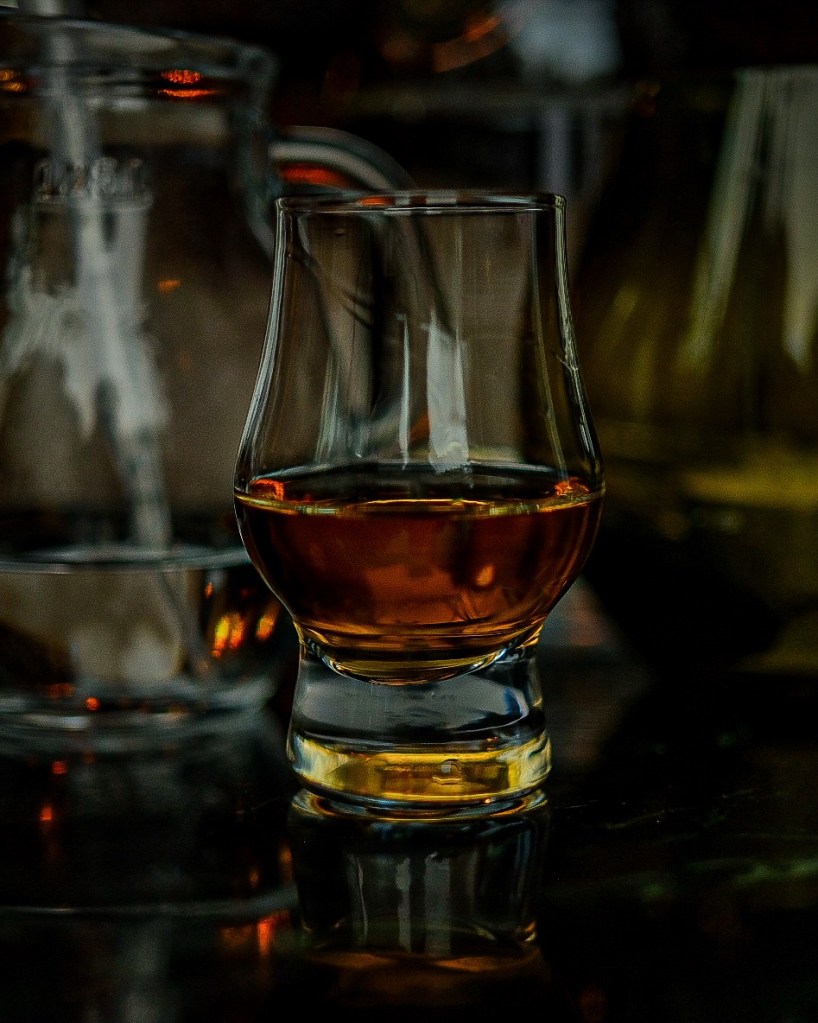
    A tiny dram of whisky at Whiski Rooms in Edinburgh, Scotland.

    The Final Word: What is Whiskey, again?

    Just to drive the point home, we’ll say it one more time: whiskey is an alcoholic spirit distilled from fermented grain and, unless you want to upset your whiskey-loving friends, aged in an oak barrel.

    This post is intended to be a basic introduction to whiskey. Every part of the production process is far more complex and nuanced than noted here, sometimes due to basic science and sometimes due to the wide ranging practices of various regions. To start, the plan is to dig into those differences and idiosyncrasies as part of a deeper dive into each of whiskey’s subcategories.

    In short, this is part one of a probably-lengthy series, so make sure you’re following along.

    Check back each week as we dive deeper into the world of whiskey, from the experience of the spirit to the practices that define it. And be sure to follow The Whisky Type on Instagram too!