Tag: travel

  • Seven Days of ASMW 2026 // Stranahan’s Mountain Angel 12 Year

    Seven Days of ASMW 2026 // Stranahan’s Mountain Angel 12 Year

    It’s day three of the 2026 Seven Days of American Single Malt Whiskey series, and I have a confession to make: I didn’t like Stranahan’s Rocky Mountain Whiskey the first time I tasted it.

    The thing is, there are certain American Single Malt expressions that lean hard into a banana bread flavor profile. I’ve asked a few distillers about the source of this particular note, and the answer is always the same: it’s a combination of factors. Yeast selection. Fermentation methods. Where the cuts are made off the still.

    It’s all science and taste and artistry tied together. Absolutely fascinating, of course.

    But I just don’t enjoy it.

    It’s odd, too, because I love banana bread.

    I still have my grandmother’s handwritten recipe card in my kitchen, nearly 20 years after her death. She made it often, using up whatever rapidly-browning bananas were sitting on her counter. She would even send me a loaf or two when I was in college. I would warm a slice in the microwave, slather it with butter, and enjoy a little taste of home.

    But one thing that I’ve discovered throughout my whiskey journey is this: while I may love something on a plate, I don’t always like it in a glass.

    Banana bread is the perfect example, and it was that flavor profile that dominated my first experience with Stranahan’s Original Single Malt Whiskey. But with so many other whiskeys in the world to explore, I simply labeled the spirit as “not my favorite” and moved on.

    Until a few years later, when I found myself in Stranahan’s Denver Distillery.

    I had flown up from Tucson, Arizona to attend an event with the Scotch Malt Whisky Society, and I figured I ought to make the most of the plane ticket. Despite my skepticism toward Stranahan’s (unfairly assigned after one tasting of one expression), I was excited to visit another ASM distillery, so I booked a tour.

    Walking through the facility—one of the largest, if not the largest, single malt-focused distilleries in the country—I learned about its history and processes. While Stranahan’s wasn’t the first to make an American Single Malt Whiskey, they are among the oldest. Their first whiskey was released in 2006, nearly 10 years after a barn fire sparked an unexpected friendship between a local brewer and a volunteer firefighter.

    That fire connected local whiskey enthusiasts Jess Graber and George Stranahan, who together developed the recipe for what would become Stranahan’s Rocky Mountain American Single Malt Whiskey. Graber officially founded the company in 2004, naming it after his friend. It was the first (legal) distillery in Colorado since prohibition.
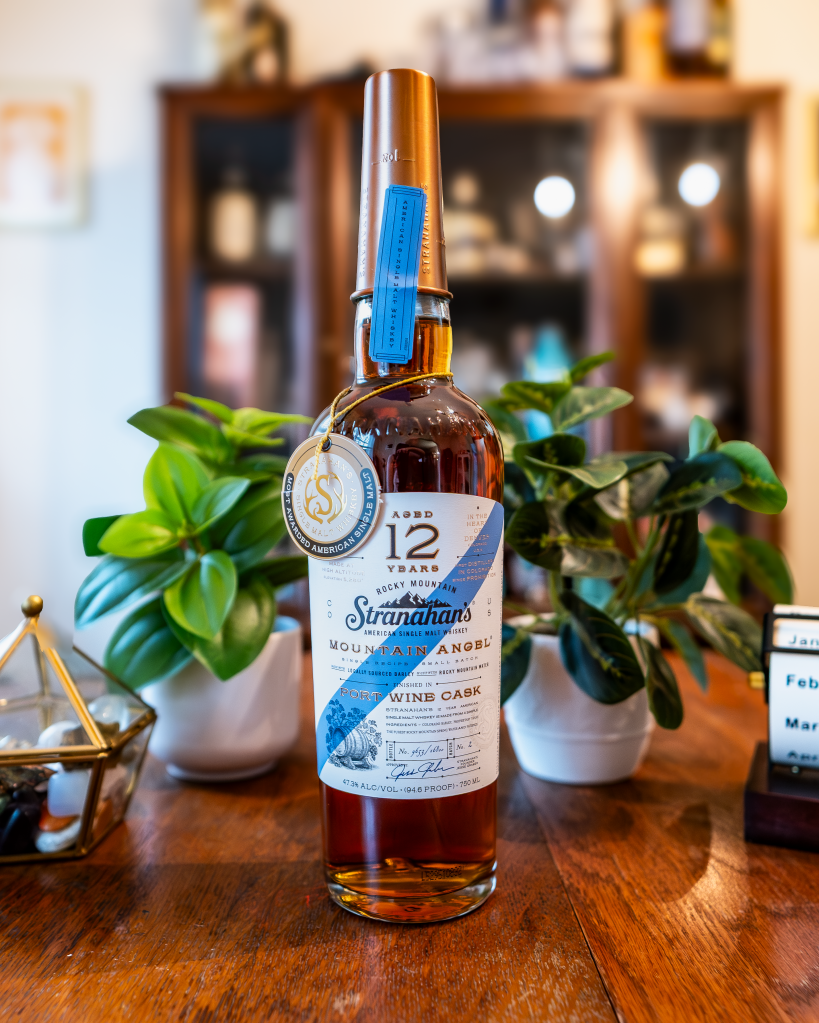
    Today, Stranahan’s proudly calls itself the #1 American Single Malt. It’s a bold claim, but not without merit. After 20 years of production, they are the most awarded distillery in the American Single Malt Whiskey category. Building on the success of the Original, they offer a full range of small batch single malt whiskeys, which are available for sale in their Denver brand home and across the country.

    I tasted a few of those whiskeys—including one or two limited distillery exclusives—at the end of my 2023 tour. Standing in the Stranahan’s distillery tasting room, I learned a very important lesson:

    Never, ever judge a whole distillery by a single expression.

    As it turns out, I like Stranahan’s just fine, thank you very much. And I’m genuinely excited to include them in this year’s Seven Days of American Single Malt Whiskey series. Especially because the expression they sent me, the Mountain Angel 12 Year, was recently awarded the #16 spot in Whisky Advocate’s Top 20 Whiskies of 2025.

    Yes, please.

    Tasting Stranahan’s Mountain Angel 12 Year Single Malt Whiskey (Batch 2)

    If you’ve ever wondered where the angels might be the happiest, look to the skies above Denver, Colorado. The city’s high altitude, dry air, and dramatic temperature shifts all wreak havoc on aging whiskey. Evaporation accelerates as barrels breathe deeply and the angel’s share climbs, leaving far less in the barrel than one would prefer.

    For the Mountain Angel 12 Year, the angel’s share reaches nearly 80%. A shocking four-fifths of every barrel disappears into the air in just over a decade. What remains is bottled as the distillery’s “rarest expression,” produced in limited runs and released in small batches.

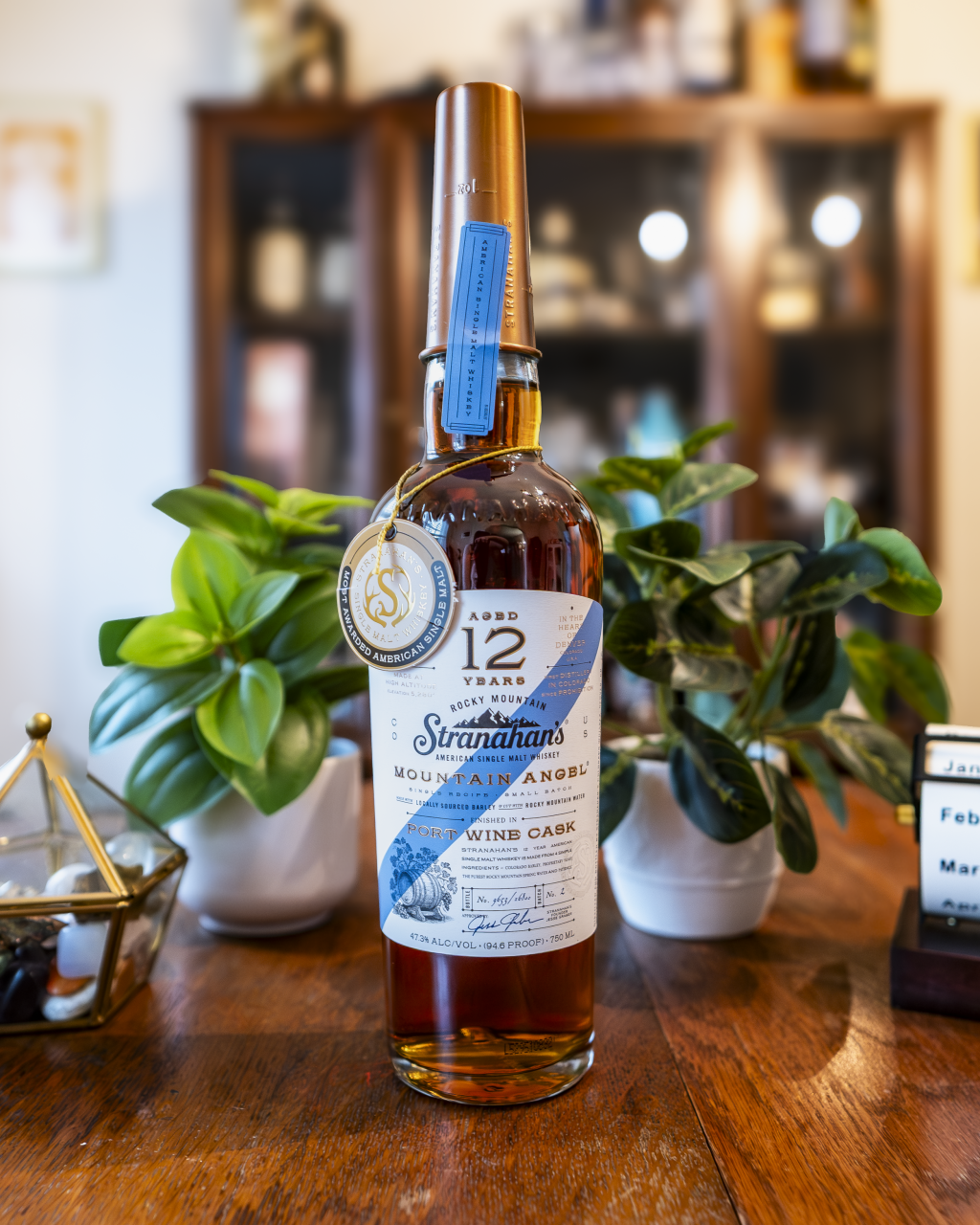
    My bottle is from Batch No. 2, numbered as 9,653 out of 16,800.

    (Okay, it’s not a tiny run of whiskey, but I told you they were pretty big.)
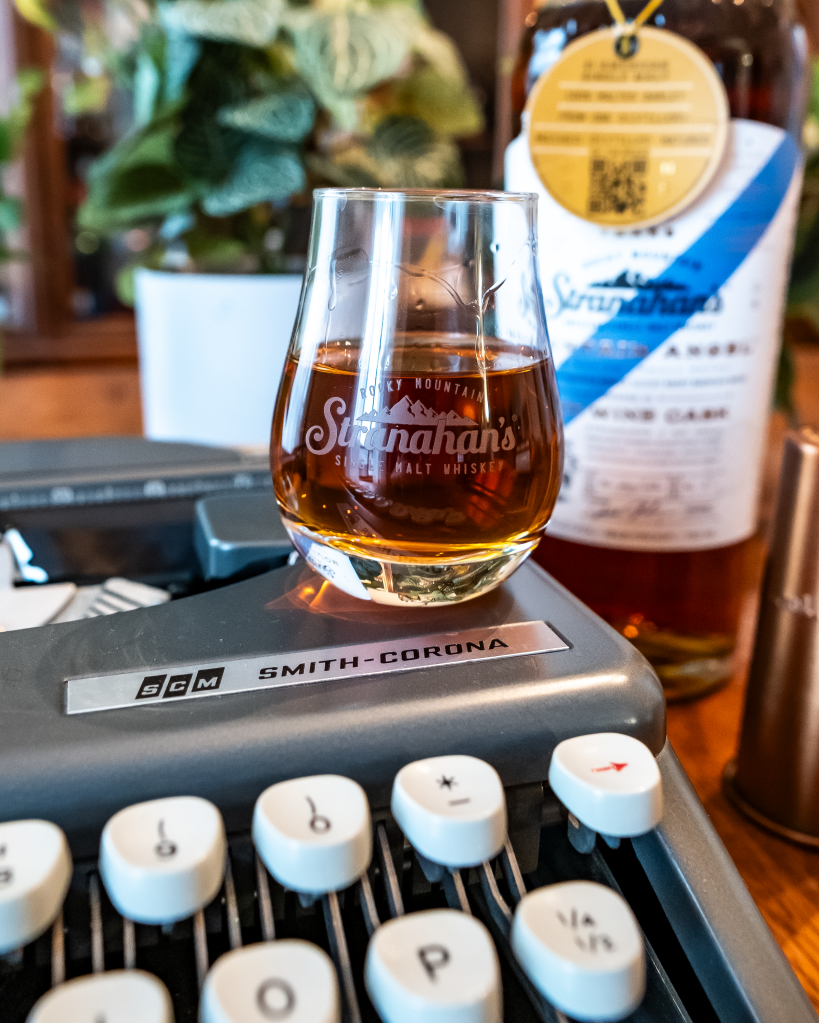
    For a whiskey category that’s barely three decades old, a 12-year age statement is not insignificant. Stranahan’s uses local barley—Colorado being one of the few states where the crop thrives—and crisp Rocky Mountain spring water to produce their spirits. This particular whiskey is aged first in new American Oak barrels, then finished in port wine casks.

    On the nose, I get rich, ripe fruit, sweet and potent. Yes, there’s still a whisper of banana bread, but it’s refined now, not heavy or overbearing. After a swirl, the whiskey slides back down the glass at a moderate pace, not too thick and not too thin.

    The first sip is surprisingly light, not entirely what I expected from a port wine-finished whiskey. It’s rounder and fuller than the legs would suggest, and the flavor flows in waves, notes of fruit and pastry coating the tongue before settling into an oaky, tannic finish.

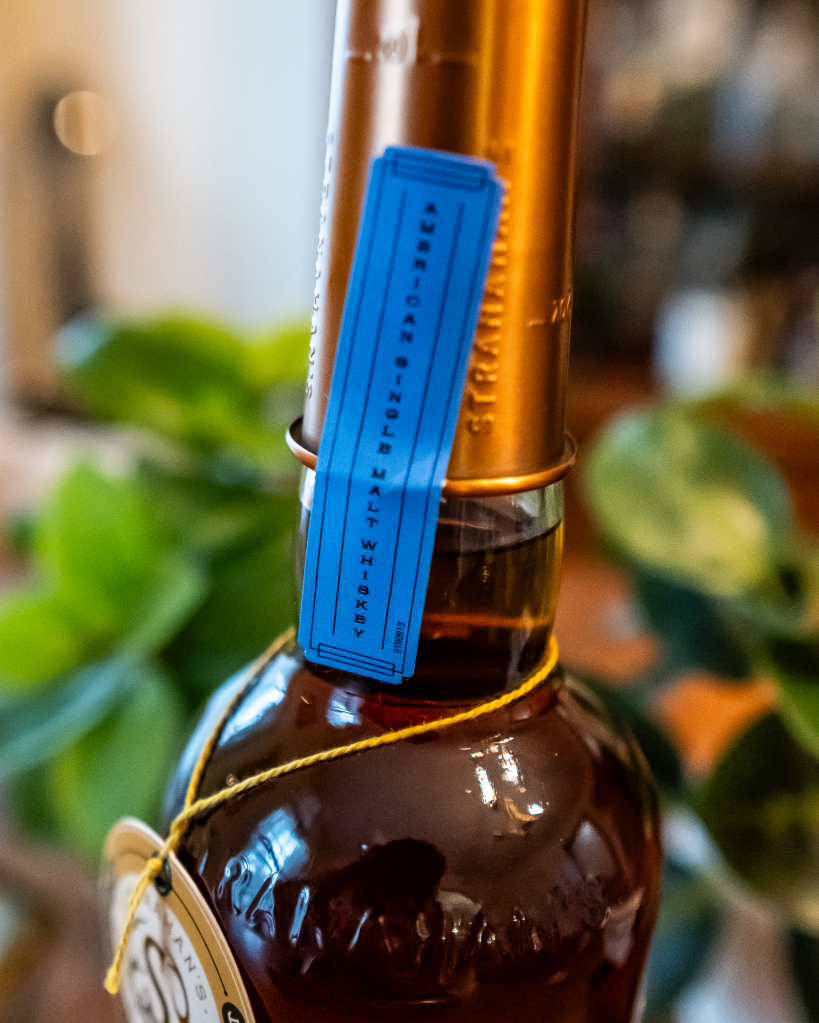
    At 94.6 proof, it falls in what I consider the sweet spot for most single malt whiskeys. Still, I wonder about its potential at a slightly higher ABV. I wouldn’t mind a little more intensity, a stronger punch of flavor on the palate.

    As it stands, it’s well-balanced, and likely appeals to a wider audience at 94.6 than it would at 100 proof. Mountain Angel is also a remarkably smooth whiskey, with enjoyable nuance and depth to it.

    Thank goodness the angels didn’t take it all.

    In My Glass

    Stranahan’s 12 Year Mountain Angel Single Malt Whiskey (Batch 2)

    Stranahan’s Colorado Whiskey – Denver, Colorado

    47.3% ABV; 12 Years Old

    On My Desk

    1961 Smith-Corona Skyriter (purchased online from a Colorado Goodwill!)

    Read More from the Seven Days of American Single Malt Whiskey 2026

    Day One: McCarthy’s Oregon Single Malt Whiskey

    Day Two: New Riff Sour Mash Single Malt

    Day Four: Redwood Empire Foggy Burl Single Malt Whiskey


    A Note of Gratitude

    This bottle of Stranahan’s American Single Malt Whiskey was sent to me by the folks at the distillery, who I did not tell about our rocky start. Thank you to the team for letting me taste and share their wonderful whiskey!
  • Art & Whisky // Maker’s Mark Distillery in Loretto, Kentucky

    Art & Whisky // Maker’s Mark Distillery in Loretto, Kentucky

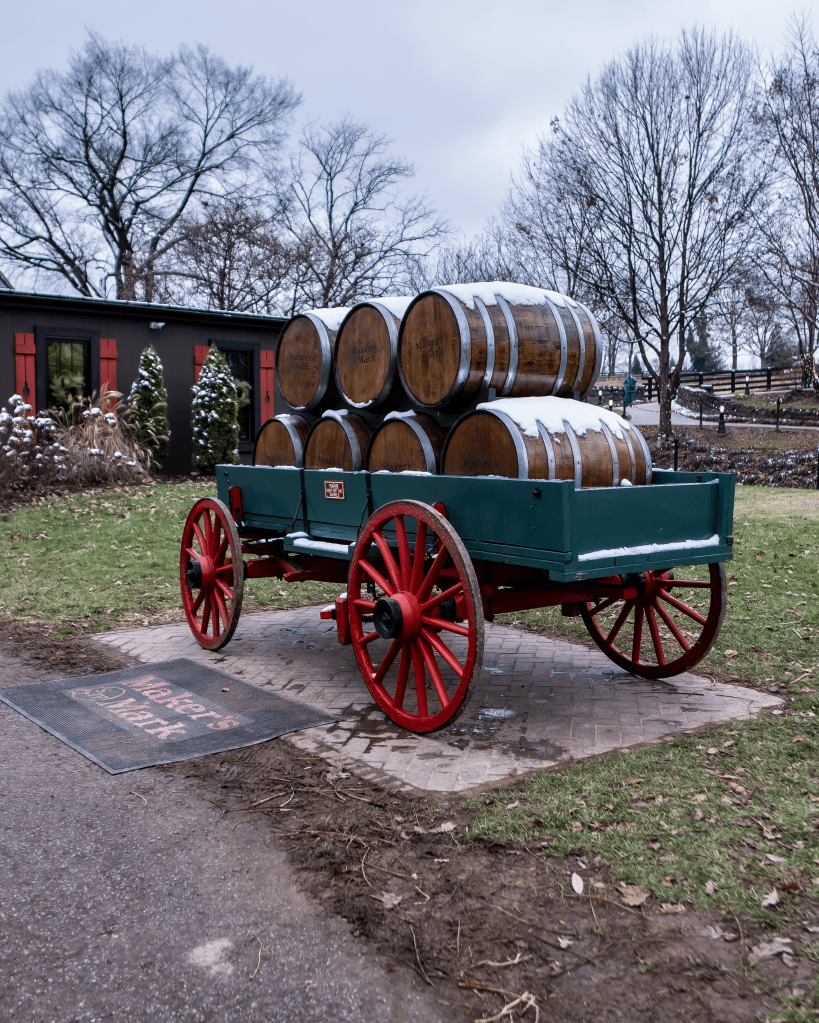
    It’s no question that there is an art to whisky, but nowhere is that idea more prominent than at Maker’s Mark Distillery in Loretto, Kentucky. Nestled in the gentle hills of Marion County—a little more than an hour from both Louisville and Lexington—Maker’s Mark blends craftsmanship, tradition, and design into one of the most beautiful bourbon experiences in the Commonwealth.

    Established in 1953 by Bill and Margie Samuels, Maker’s Mark is best known for its wheated bourbon recipe and the iconic red wax that seals every bottle.

    Both of these defining features were inspired by Mrs. Samuels, whose distaste for the bourbons of the day led her husband to create a softer, more palatable mash bill, using red winter wheat to balance the necessary corn. Her influence didn’t stop there; the standard Maker’s Mark bottle shape, label design, and hand-dipped wax were all her ideas, now permanently woven into the brand’s identity.

    To this day, every bottle is dipped by hand on site, the liquid wax dripping down the neck of the bottles as they shuttle down the assembly line.

    Seeing the brand’s bottles dipped in person is not for the faint of heart. But for the brave souls who make the trek down narrow winding roads toward the rural distillery, they are rewarded with a stunning pastoral scene and, for a few months this fall, the art of world renowned glass artist, Dale Chihuly.

    Orange Hornet Chandelier (2025)

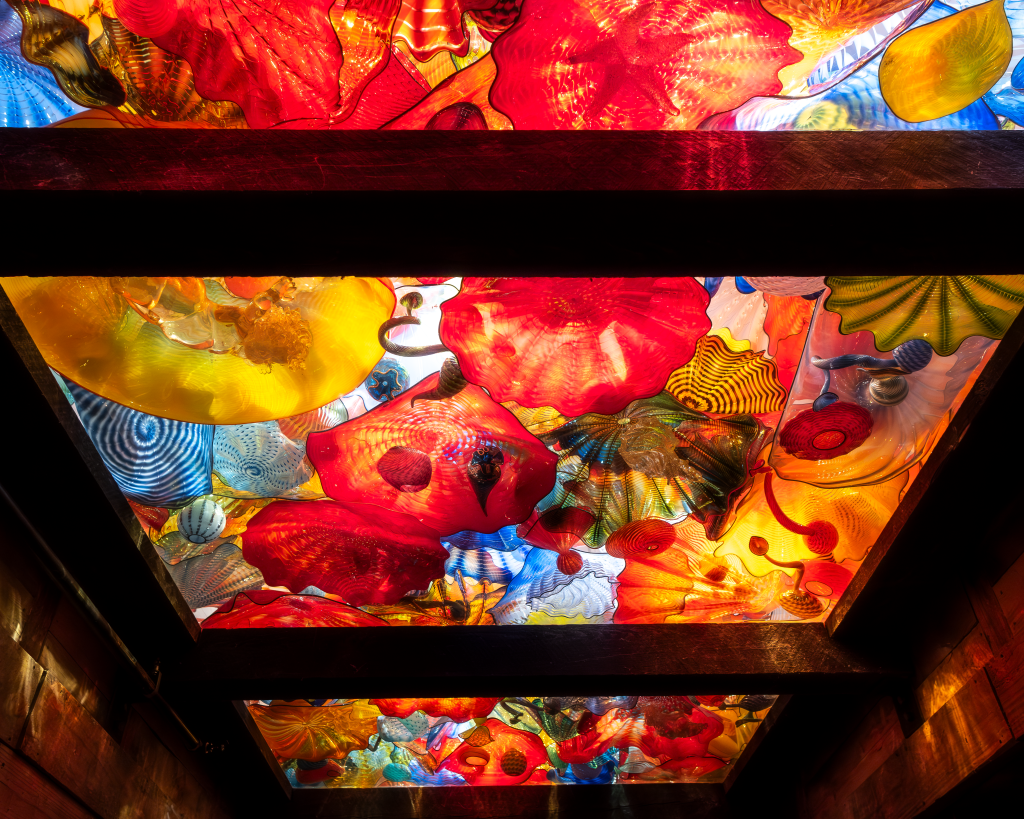
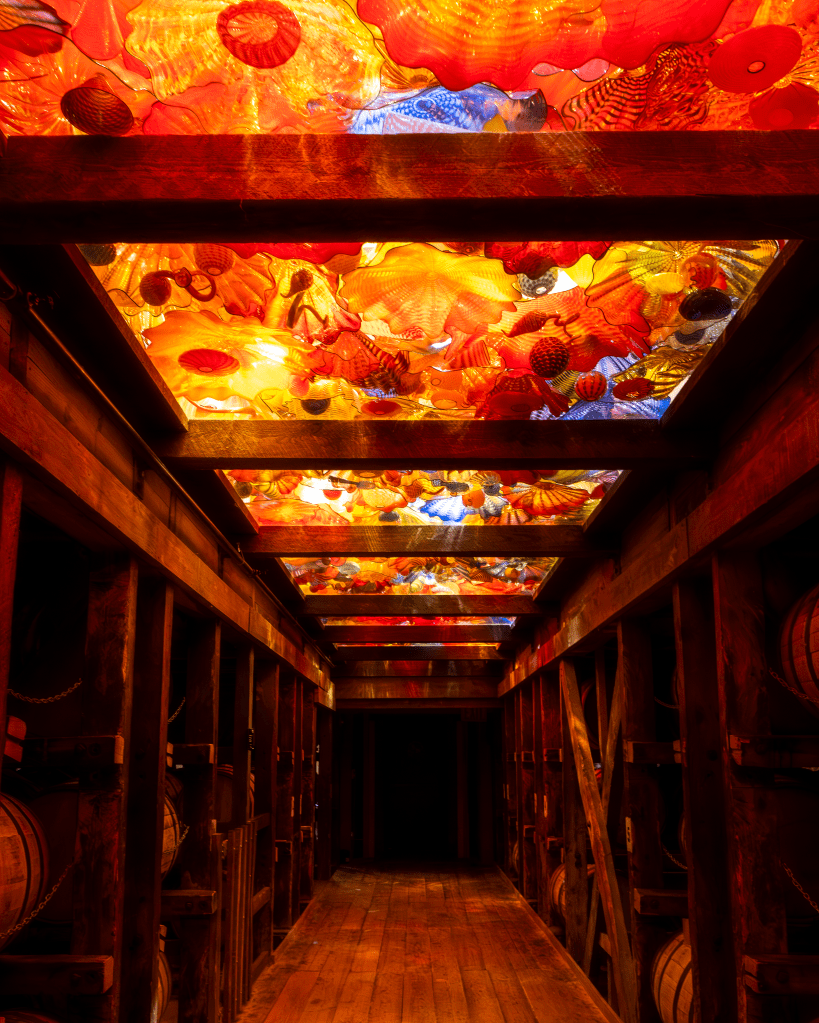
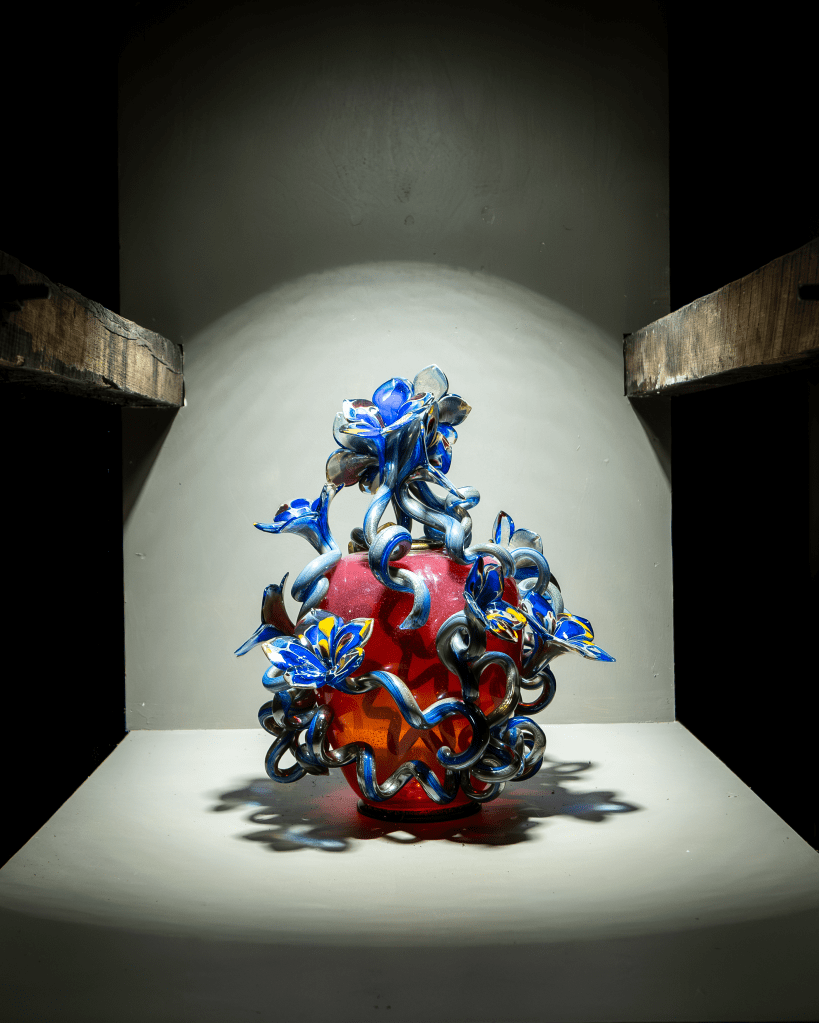
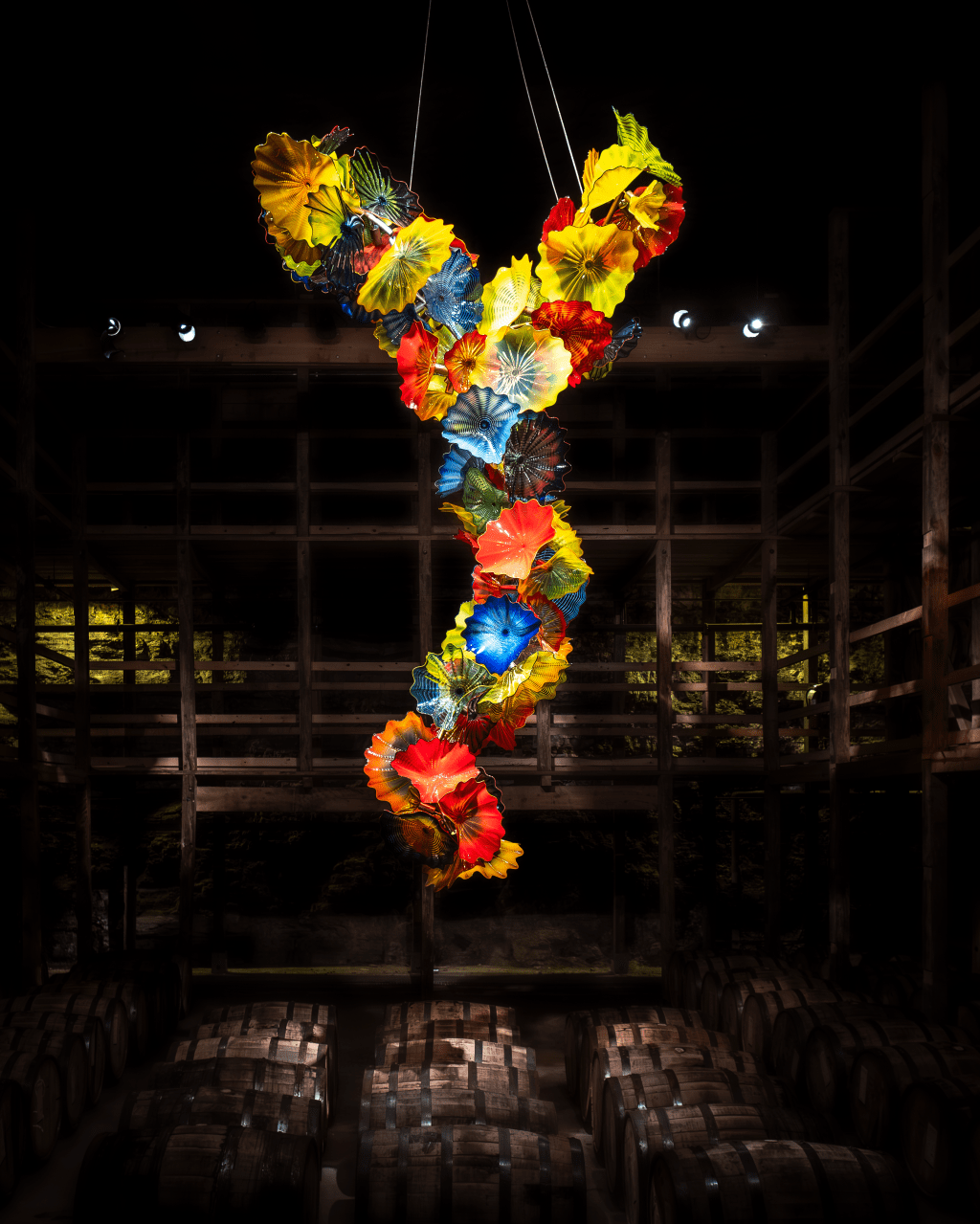
    Chihuly’s relationship with Maker’s Mark has spanned more than a decade; 2025’s installation marked a return to the Loretto campus, and a permanent installation of his work, titled The Spirit of the Maker, casts a warm glow over a collection of barrels held in a narrow space alongside the gift shop.

    The 2025 exhibit drew new attention to this permanent artwork while incorporating other sculptures, including some new pieces inspired by the distillery.

    The Spirit of the Maker (2013)

    The Maker’s Mark Tour

    While Chihuly’s art is what drew me out to the distillery on Friday, December 5, I wasn’t going to miss the chance for a tour. I chose the Maker’s Mark Tour, the distillery’s most popular option, to learn about the brand’s history.

    Guided by a friendly and charismatic gentleman named Chad, our group of 15 or so explored the distillery’s historic still house (predating the Maker’s Mark brand at least half a century), warehouses, and label production, along with the bottling line where every bottle of Maker’s Mark Whisky receives its famous wax. The tour ends with a tasting of four Maker’s Mark whiskies and the opportunity to purchase and dip your own bottle in the gift shop.

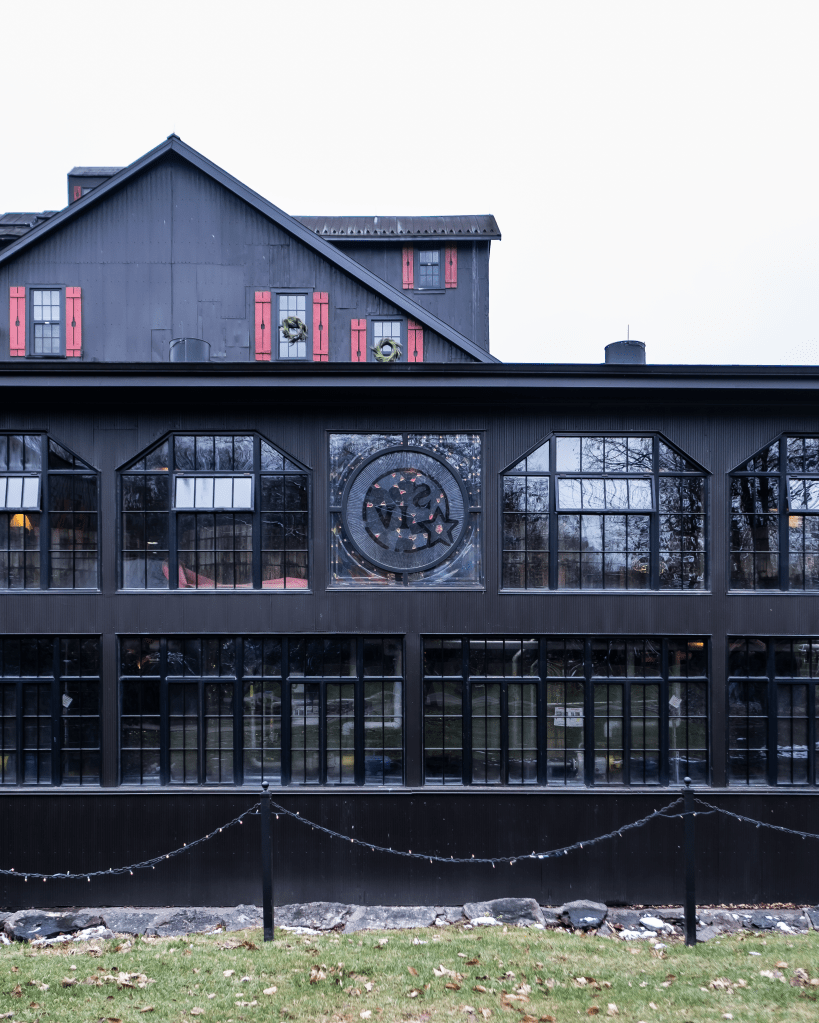
    Along the way, we learned of the Samuels’ family’s whisky legacy, which stretches all the way back to Scotland and inspired the brand’s use of the e-exclusive “whisky” on their products. Winding through the black-walled buildings, Chad explained how Mr. Samuels pivoted from a successful career in Louisville to purchase the already-established farm and distillery in rural Loretto. The still-in-use still house is the oldest in the country and home to a column still standing 5 stories tall.

    Legend has it that the Samuels family decided on the brand’s singular whisky recipe by baking a variety of proposed mash bills into loaves of bread. The best tasting loaf won out, with a mix of 70% corn, 16% soft red winter wheat, and 14% malted barley. Maker’s Mark 46 came about from a similar burst of experimentation, with 45 unsuccessful attempts to incorporate French oak staves into the maturation process before landing on the winner.

    Distillation and its corresponding branding efforts have historically been led by men, but Mrs. Samuels was no silent partner in the creation of Maker’s Mark Whisky. Her contributions to the spirit’s recipe and design are properly appreciated at Maker’s Mark. Not only did Mrs. Samuels choose the shape of the bottles and introduce the red wax, but she designed the mark of Maker’s Mark and hand-wrote the original labels, which are still finished on an antique die cut press operated on site.

    Exploring Star Hill Farm

    The moment the tour concluded (following a walk through the aforementioned glowing whisky hallway), I jetted off to the nearest Walmart in nearby Lebanon, KY to pick up an SD card. Despite a veritable stack of cards at home, I had set out for adventure with an empty camera. There was no way I was returning to Lexington without some proper photos.

    Once back on site, I paused for a quick lunch (a delicious salmon sandwich) at Star Hill Provisions, the farm-to-table restaurant nestled within the distillery grounds. Then I took my now-equipped camera and began to wander around.

    “Where can I not go?” I had asked Chad upon my return. In response, he handed me a map with two buildings clearly marked “not open to the public.” Beyond that, the world—or, more accurately, the farm—was my oyster.

    With much of the campus open to guests, I spent the afternoon photographing the Chihuly installations and weaving through historic buildings that make Maker’s Mark feel more like a preserved village than a modern production site.

    A couple of passing Maker’s Mark staffers quickly clocked my camera and stopped to point out the best vistas. One even offered to take a photo of me, which I politely declined—I much prefer my place behind the viewfinder—but these interactions positioned Maker’s Mark as one of the nicest distilleries I’ve visited, both at home and abroad.

    Dale Chihuly is not only known for his art, but for the way he integrates the glass shapes into the surrounding environment. The first time I experienced Chihuly’s art was at the Clinton Library in Little Rock, Arkansas. The second time was at Frank Lloyd Wright’s Arizona home, Taliesin West.

    At Maker’s Mark Distillery, the outdoor sculptures emerged from the grounds in sharp contrast to the grass, earth, and snow below. Scattered throughout the campus, they seemed as natural as the buildings, positioned like flowers bursting through the cold soil in spring.

    Sapphire and Platinum Waterdrop Tower (2017)
    Sol Del Citrón (2014)
    Moonbow Fiori (2025)

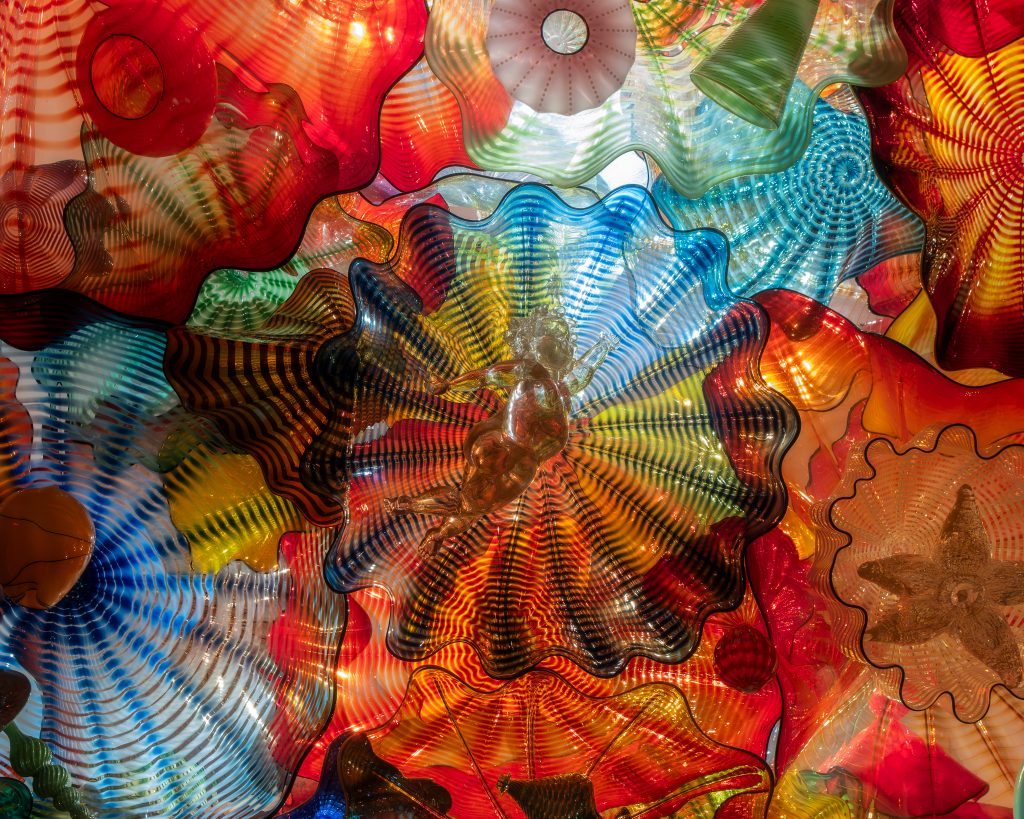
    In the cellar, colorful fan-shaped glass explodes from the ceiling over the oak barrels below. Utilizing extra pieces from the gift shop’s ceiling installation, the beauty of the End of the Day Persian Chandelier simply can’t be captured in photographs.

    But lord, did I try.

    End of the Day Persian Chandelier (2015)

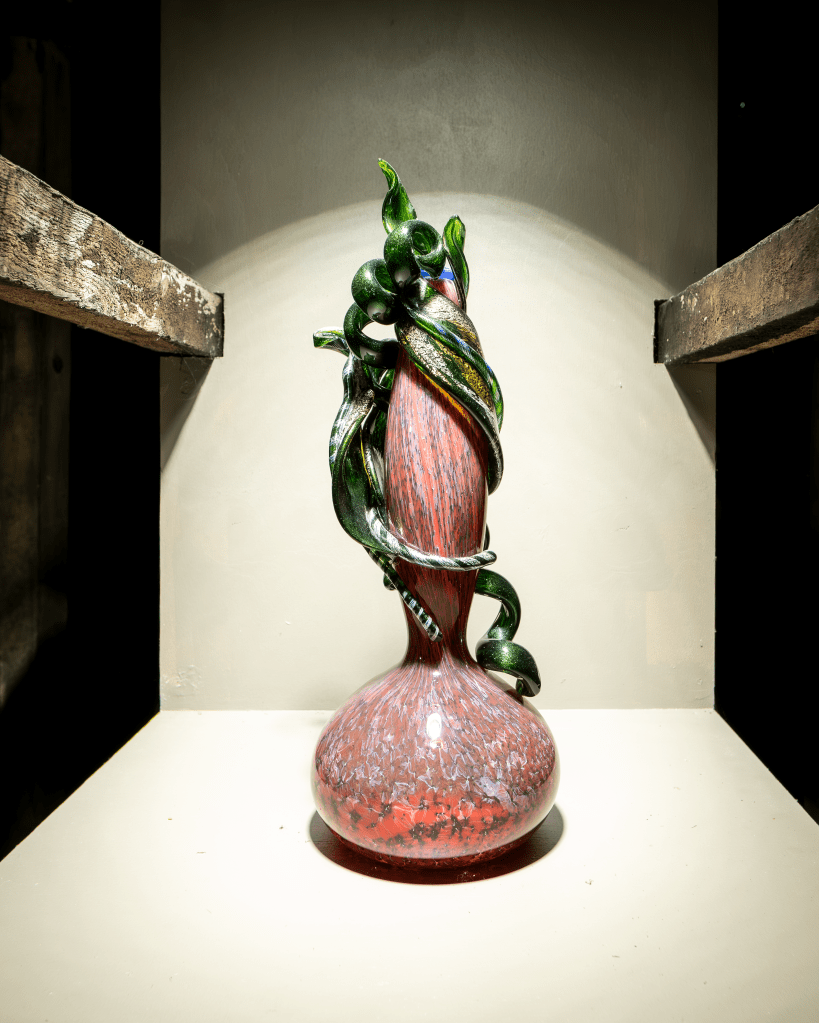
    Nearby in the warehouse, a collection of Venetians—elaborate glass vases—were tucked between the barrels, each delicate shape standing in contrast to the sturdy, whisky-filled wood vessels and racks around them.

    I even found a typewriter, tucked on a dusty desk in the “Quart House.” The small building once served as a package whisky store (and possibly a toll house for the now-defunct railroad). Dating back to 1889, it’s now on the register of historic places as the oldest still-standing location of its kind, a bit of Kentucky history preserved in Maker’s Mark history.

    Starting with Art at Maker’s Mark Distillery

    When I was both properly cold and due back to Lexington, I ended my excursion with a quick walk back through the Visitor Center, where all tours—and the experience of art—begin.

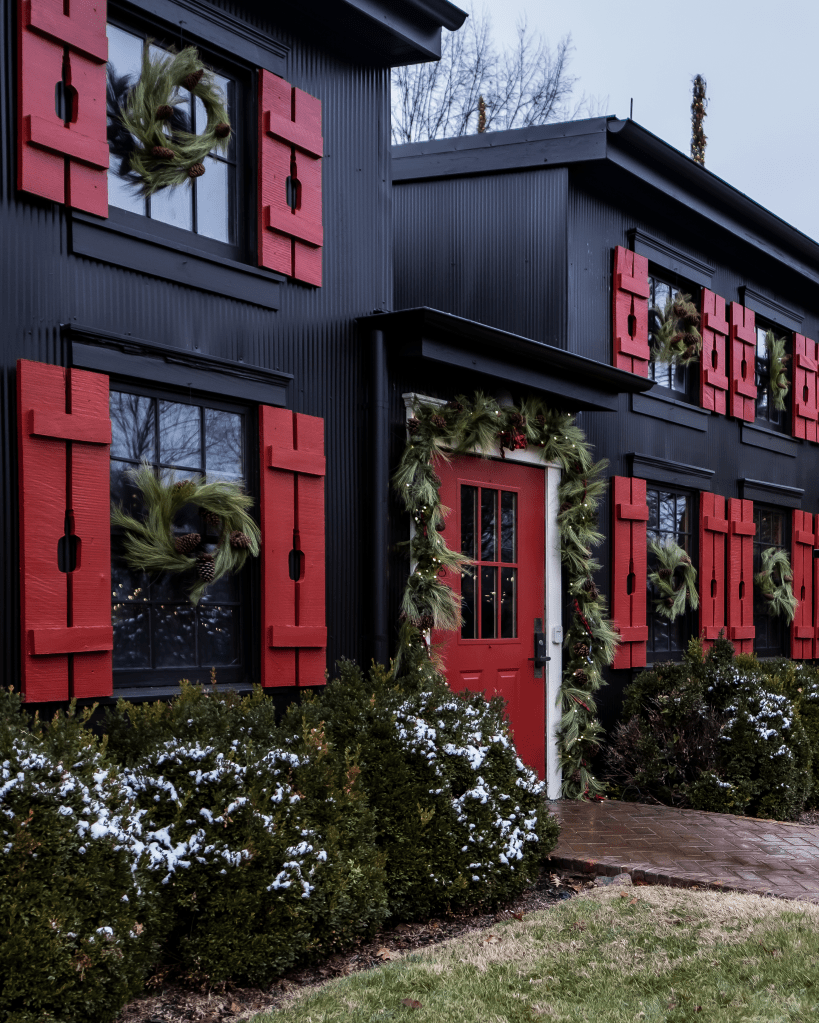
    Upon arrival at Maker’s Mark Distillery, Guests enter through a gallery, thoughtfully lit and enhanced by high ceilings. I was late and distracted (per the usual) and had failed to notice the colorful welcome on arrival, but appreciated it all the more now, knowing the story of the Samuels family and their whisky.

    Even the bathrooms are stunning at Maker’s. While I can’t speak to the men’s room, the ladies is carefully constructed of stone and tile to envelope visitors in a beautiful experience at every turn.

    At the back of the Visitor Center is a small cocktail bar, where I met Whisky Jean Samuels, the distillery cat who was completely unbothered by my presence.

    Whisky Jean rested on a leather sofa under yet another permanent Chihuly installation, Amber & New Oak Chandelier (2017). It’s not pictured, because I was, in true form, focused on the cat.

    If I’d had more time, I would have lingered long enough for a drink, but my evening plans were calling, and I chose safe driving over happy sipping—especially on the single track roads surrounding the distillery.

    As I walked to my car, I took one last slow look across the campus. The light was fading, and Christmas lights were starting to sparkle through the trees, ready for the Ambassadors that would arrive within hours.

    Maker’s Mark has always been known for its whisky, but being there in person makes it clear that its magic lies just as much in the people, the place, and the art they’ve woven into every turn. Even without Chihuly’s sculptures shimmering in the background (the exhibit ended December 7), Maker’s Mark is not just a distillery that creates whisky. The Samuels family has curated a total experience, every drop crafted with intention.

    Sláinte, y’all.


    What to Know About Visiting Maker’s Mark Distillery

    For those who choose quick answers over the magic of prose, here are few FAQs about Maker’s Mark Distillery, a major attraction on the Kentucky Bourbon Trail.

    Where is Maker’s Mark distillery located?

    Maker’s Mark Distillery is in Loretto, Kentucky, about an hour south of Louisville.

    How much does it cost to tour the Maker’s Mark distillery?

    As of December 2025, the Maker’s Mark Tour starts at $30. Other tour experiences range in price.

    Is Maker’s Mark distillery worth visiting?

    Hell yes! Maker’s Mark offers one of the most immersive and visually stunning distillery experiences in Kentucky, with hand-dipped bottles, a rich family history, and seasonal art installations.

    Can I visit Maker’s Mark without a tour?

    You might be able to visit Maker’s Mark at Star Hill Farm without a tour—but do you really want to?

    Does Maker’s Mark still hand-dip every bottle?

    Yes. Every Maker’s Mark bottle is still hand-dipped in red wax at the Loretto, Kentucky distillery.

  • Fire & Glass // Flame Run in Louisville, Kentucky

    Fire & Glass // Flame Run in Louisville, Kentucky

    Kentucky may be best known for its bourbon, but there is far more than spirits in the Bluegrass state to entertain travelers. Whiskey side quests—visits to museums, sights, and non-bourbon experiences—offer an opportunity to go deeper into the culture and curiosities of our region.

    They’re also a great way to give your liver a quick break—and to make a few memories you might actually remember.

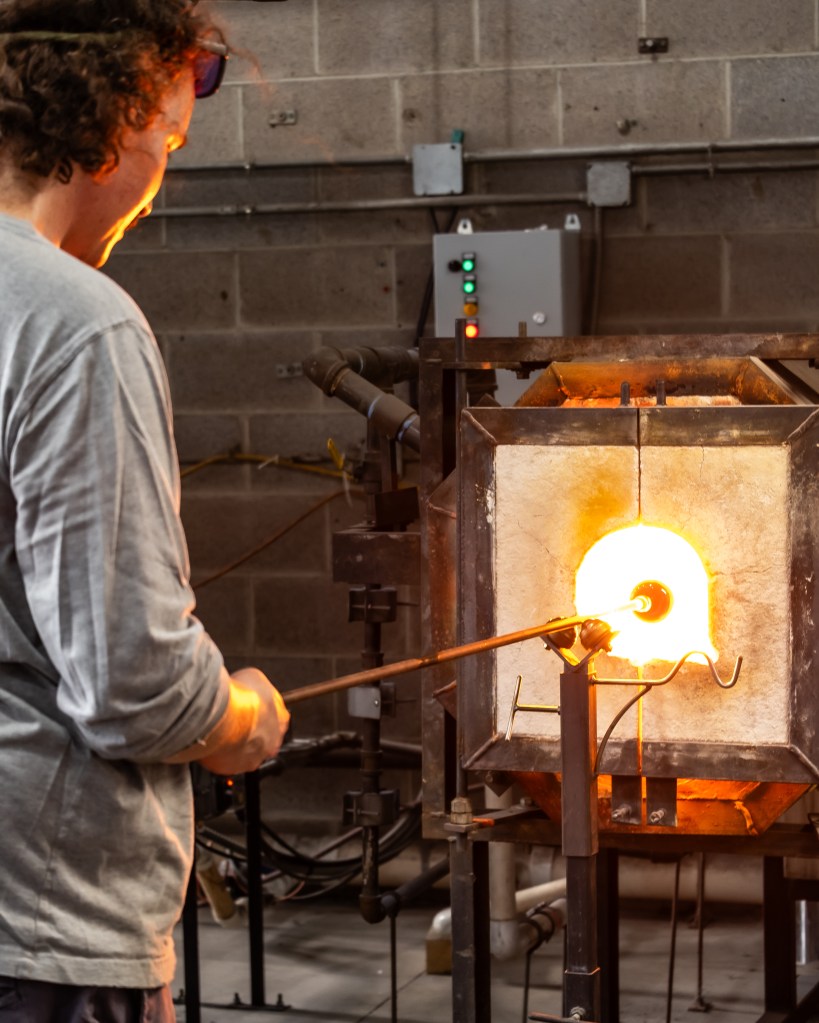
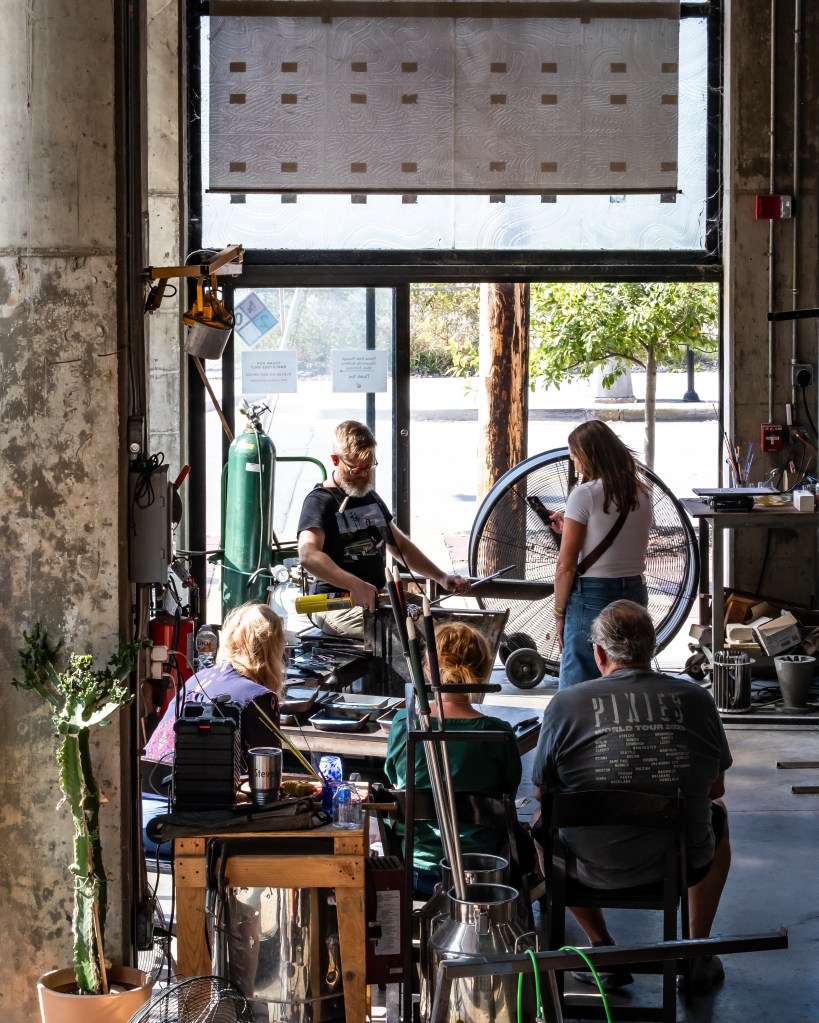
    One perfect spot for a side quest is Flame Run, the largest privately-own glassblowing studio in the Midwest. Located in downtown Louisville and just steps from Whiskey Row, the space is equal parts art gallery and studio. Working just steps from the sidewalk outside, artists use fire and flame to shape liqud glass into delicate and dazzling works of art.

    All that hot air isn’t just for show. Visitors can participate in the glass-blowing experience through classes, studio rentals, and create-your-own glassware experiences. It was the last of these that drew the Lexington Bourbon Society westward on last Saturday, with 25 of us making the trek to experience the art of glassblowing firsthand.

    The design-your-own glassware experience ranges in price, with several small projects available to create in the studio. For our group, the rock glasses and stemless wine glasses (both $65) were the top contenders. Other options included ornaments and paperweights—basically anything the approximate size of a softball.

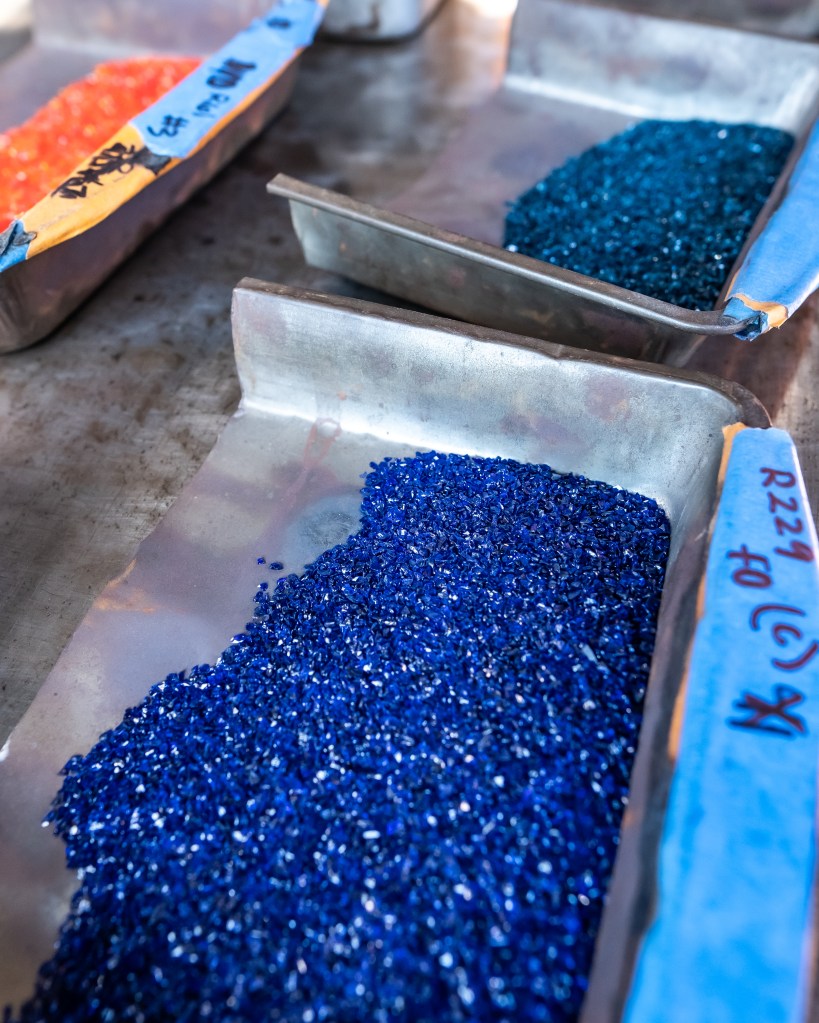
    After choosing your project and your colors, you’re handed a paper bag notated with your selections scribbled Sharpie ink. As informal as it may be, that bag is important: when your turn comes, you must pass it along to the glassblower who’ll bring your creation to life.

    Visitors don’t actually get to blow the glass themselves. With furnaces reaching something like 2,000 degrees Fahrenheit, that’s probably for the best. Though it was a beautiful day in Louisville, the studio was unrelentingly hot. Our group drifted in and out, stepping through the open doors into the cooler air of the sidewalk or up the stairs into an air-conditioned viewing area. The artists, far more used to the heat, worked steadily at their stations.

    When it was my turn to blow, I handed my paper bag to John, my designated artist. I had originally chosen the rocks glass, but I asked John if we could swap it for the wine glass and shape it more into a tulip than a tumbler. He agreed, especially after I gave him full artistic license to interpret my chosen colors (pink, orange, and white) at will.

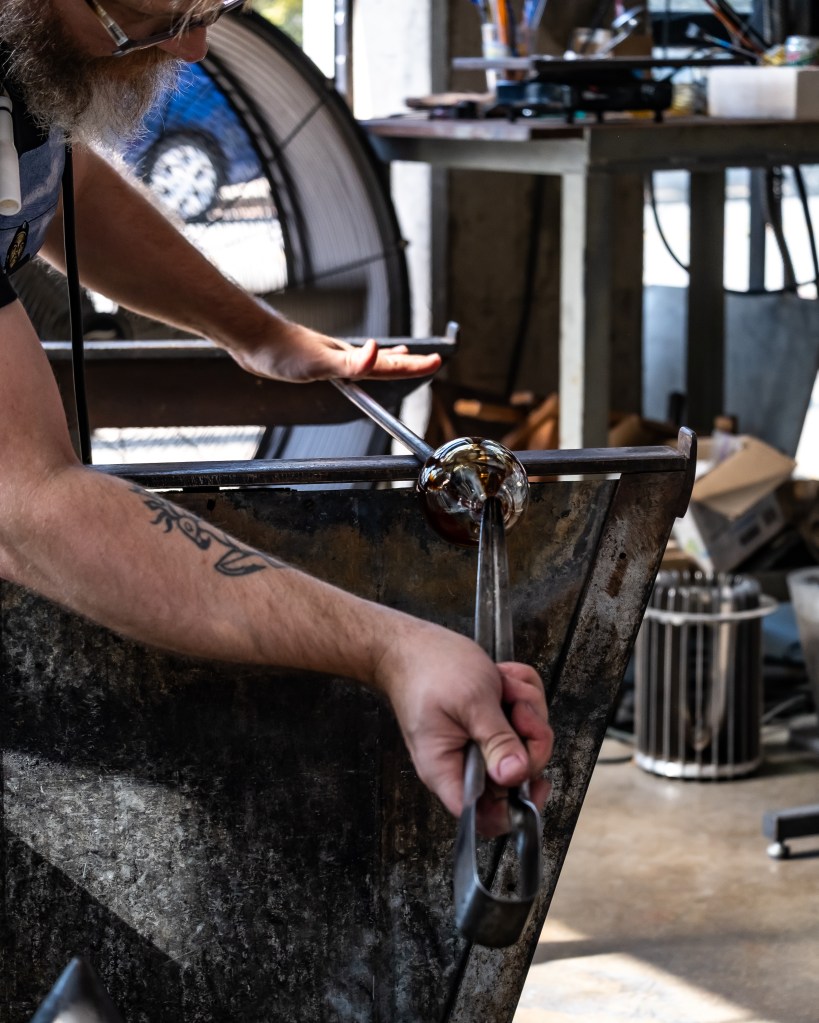
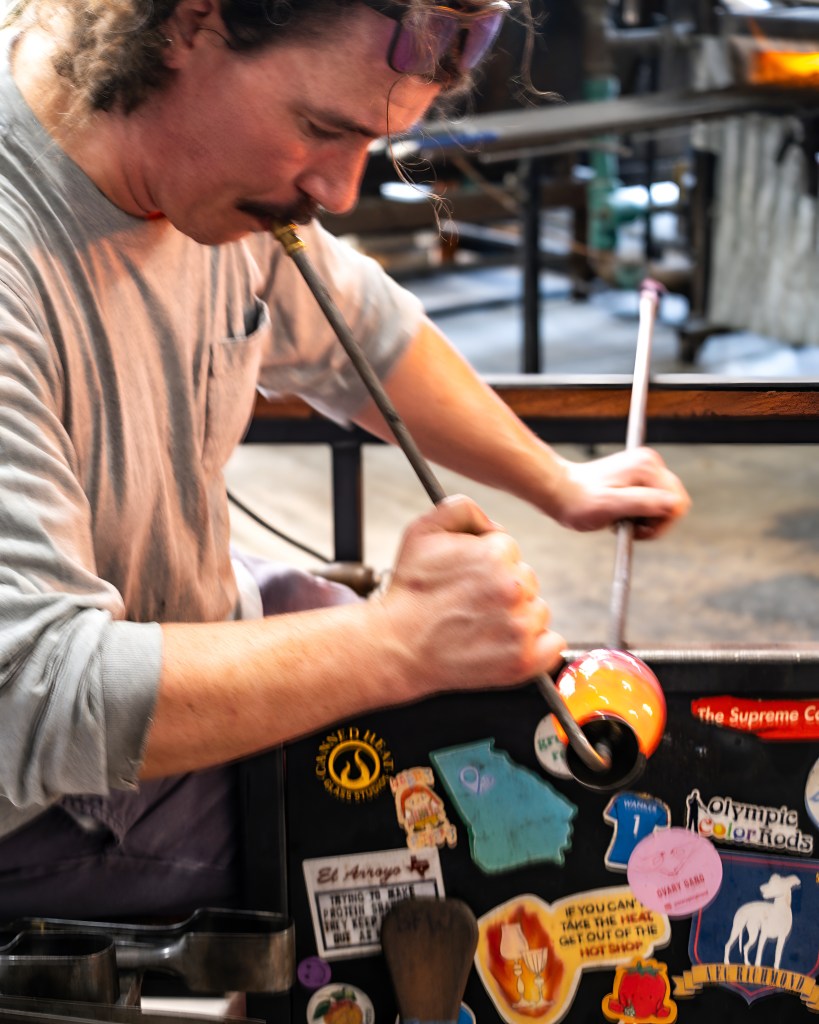
    From one furnace, he drew molten glass onto a long rod, spinning it along the edge of a metal workstation. As he blew air into the glowing hot glass, it began to expand, glowing hot and red with heat and potential. John gently and methodically worked the rod back and forth, slipping the glass in and out of the fire to add glass or keep it hot, and shaping it with calipers and breath and flat tools.

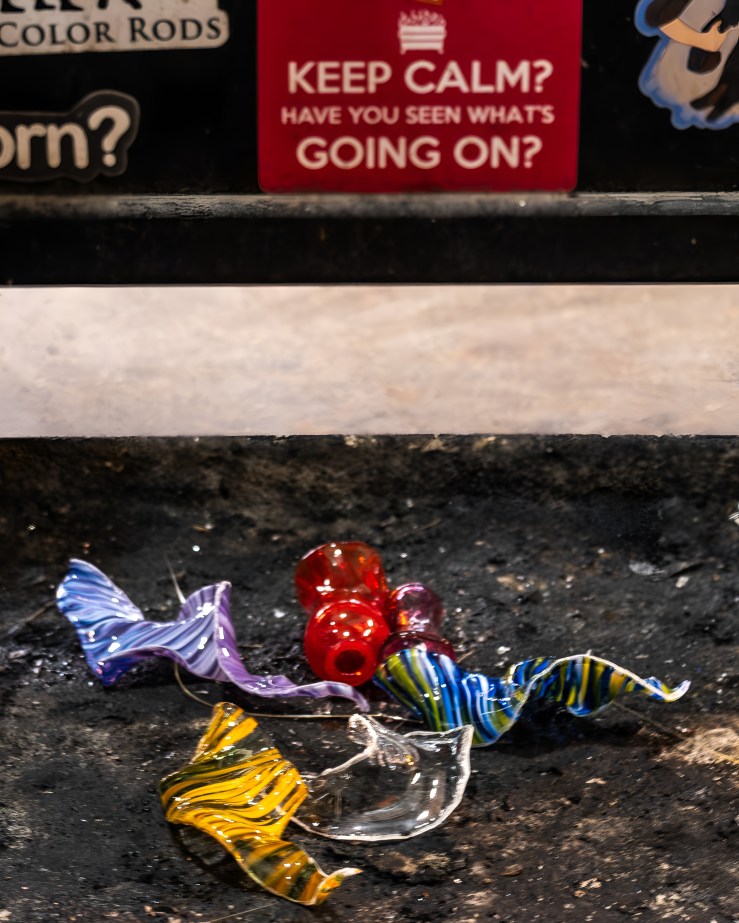
    The whole process to build and shape my chosen piece took maybe 15 minutes, though some were longer. John was patient and gracious as I watched and asked questions throughout. After my glass was complete, it was whisked away to cool in safety—something to keep in mind if you’re just popping in. The glass needs a day or two to rest before you can take it home, and I won’t see mine in its final form until someone goes to retrieve our wares later this week.

    The rest of the afternoon unfolded just as you’d likely expect for a bourbon society: twenty or so bottles (and a collection of snacks) cluttered a table in the gallery, all open for sharing. At one point, a cocktail was shoved under my nose with the words “try this”—resulting in both hands filled with whisky and my camera dangling helplessly by my side.

    For the average visitor, the experience of visiting Flame Run is likely a bit more low-key, but it will be no less fascinating. Whether you walk way with a one-of-a-kind piece of glass, a new appreciation of the craft, or just a good story, it’s a side quest worth taking.

    Sláinte, y’all.