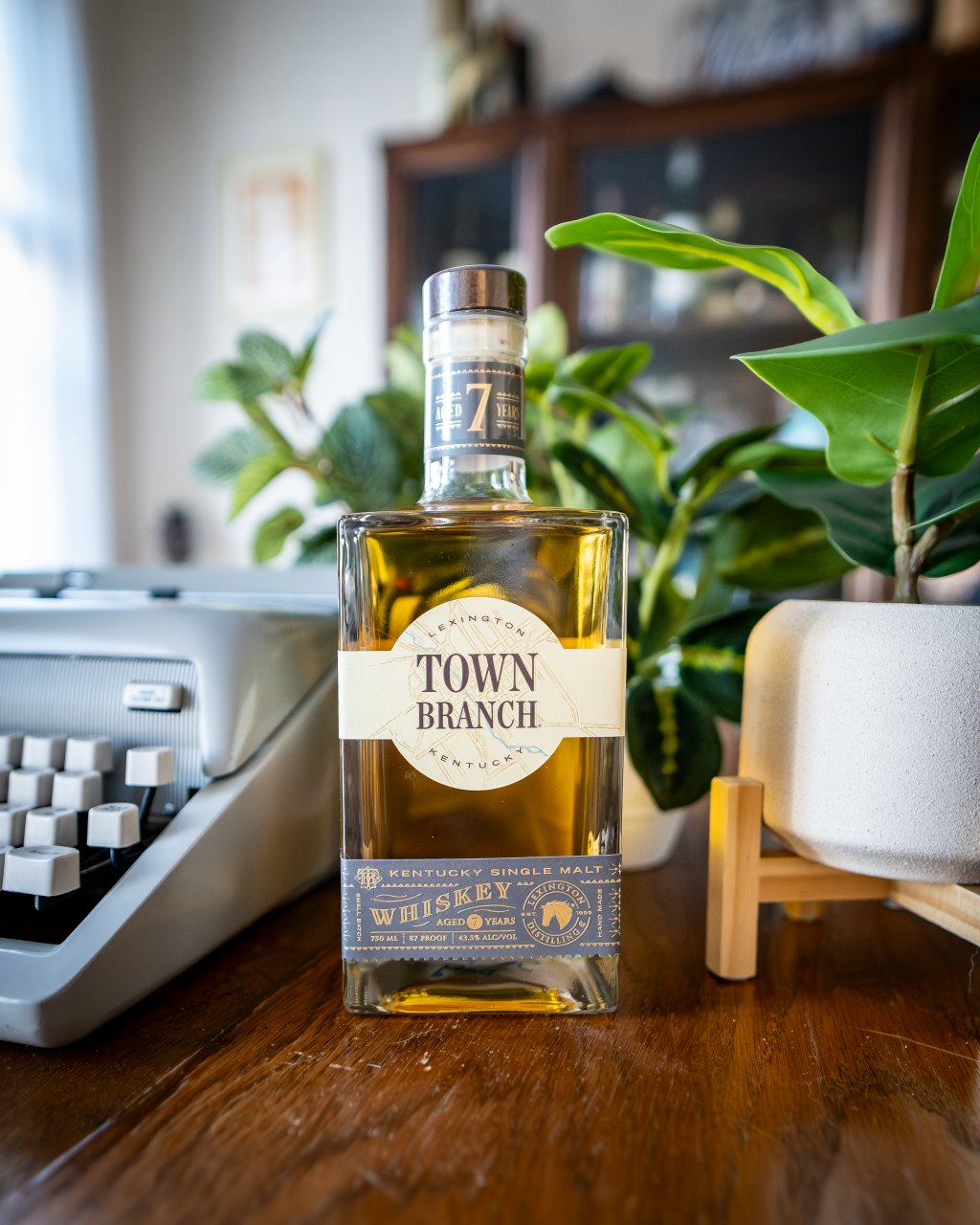
Tag: whisky

  • 11 Whisky Myths to Ditch in 2026

    11 Whisky Myths to Ditch in 2026

    Whisky is more than a drink, and each sip carries more than flavor. Distilled into every bottle is a compelling blend of tradition, identity, and—unfortunately—baggage.

    Some of what we believe about whisky comes from history. Some of it comes from marketing, where storytelling plays with the boundaries of fact and fiction. And some of it is simply lore, repeated long enough to feel like truth.

    It’s the unfounded assertions about whisky that carry the most weight—and do the most damage. These tightly-held beliefs can become barriers to the exploration and enjoyment of whisky. That’s never been a good thing, but in 2026 it presents a big problem for an industry that’s struggling to find its footing in a post-COVID reset.

    The new year feels like a perfect moment to let go of a few myths that no longer serve the drink, the people who love it, or the people who want to know more. So here are 11 whisky myths that simply aren’t worth the buy in 2026.

    Gatekeeping Myths that Keep Newcomers Out of Whisky

    1. There’s a “right” way to drink whisky.

    Some people will tell you that the only way to drink whisky is neat. Room temperature. No ice. No water. Absolutely no mixers.

    This, frankly, is nonsense. Whisky consumption is not a performance, and it’s not a competition.  If your way of drinking whisky brings you closer to the spirit—and to the people and moments around it—you’re doing it right. Ice, water, cocktails, neat pours, shared drams, hurried shots, and long contemplative sips all have their place.

    2. You need a refined palate—and vocabulary—to truly appreciate whisky.

    Most whisky descriptions are bullshit. They’re marketing (and I say this as a marketer). That doesn’t mean that they’re useless or even wrong, but they are highly subjective and often generously creative.

    Everyone experiences the flavors of a whisky differently, depending on personal taste and their unique frame of reference. Tasting is a learned skill, as is the vocabulary and experience most people use to describe whisky’s flavors. No one is born detecting saddle leather, antique libraries, or sun-warmed fig trees. Those descriptors come from experience, memory, cultural shorthand, and sometimes, yes, imagination.

    If you can describe a moment, a place, or a feeling, you can describe a whisky. Your language doesn’t have to sound like a tasting panel or a poem. You can fully experience (and enjoy) a whisky even if the only words you have to describe it are “good” or “bad.”

    3. Certain whiskies are only for certain people.

    This myth is pervasive, stubborn, and deeply annoying—especially to anyone who doesn’t fit the expected profile of a whisky drinker (white hair, white skin, and definitively male).

    At its core, the idea that whisky isn’t for everyone (or that certain whiskies are for certain people) is rooted in misogyny, racism, and outdated assumptions, all dressed up as “tradition.” You can see it in both subtle and not-so-subtle ways, from advertising to representation to the way we describe certain drinks and who they’re for.

    Taste doesn’t have a demographic, curiosity doesn’t require permission, and whisky has always crossed boundaries. There are no geographic, cultural, and social limits beyond legal drinking age to determine who can enjoy whisky or what type of whiskies they should enjoy. If a whisky speaks to you, it’s for you. Full stop.

    4. Whisky culture is only for experts.

    Expertise has its place in whisky, but so do enthusiasm and curiosity. Every whisky expert started as a beginner, unsure of what they were tasting but interested enough to pour a glass anyway.

    For the whisky industry to grow—or to stabilize, in the current market—it doesn’t need more experts. It needs more newcomers, people with space to listen, ask questions, and take that first sip.

    Experts are essential in this space, but as producers and guides, not as gatekeepers. Culture survives by being shared, not guarded, and whisky was designed for drinking and sharing. 

    Outdated Whisky Myths About Production

    5. Older whisky is always better.

    Age statements feel reassuring. They offer a tidy metric in a world that loves easy comparisons. But age tells you how long a whisky waited, not what it became.

    A five-year-old whisky produced in Kentucky and a five-year-old whisky made in Sweden are completely different products. Climate, production style, grain, the type of barrel, and so many more factors play a role in how flavor evolves over time.

    Time can deepen complexity, but it can also bury it. Some whiskies peak early, and some are meant to linger in the barrel a bit longer. Balance, character, and intention (not to mention personal preference) matter far more than the number on the label. 

    6. If it’s expensive, it must be good.

    Is there anything better than finding a whisky you love for a price that doesn’t break the bank? Cost doesn’t equal quality, and price often reflects scarcity, hype, distribution, or collector demand far more than anything else.

    Great whisky doesn’t announce itself with a price tag; it reveals itself in the glass. And, quite frankly, there’s a whisky for everyone at every price point.

    Some of the most honest, expressive, and enjoyable whiskies were never designed to be rare or prestigious. They were made to be opened, to be shared. To show up on ordinary nights and important ones alike, with or without the fanfare of a high price tag.

    7. “Craft” automatically means a better spirit.

    There is something to be said for small whisky producers: they often bring creativity, innovation, and a fresh perspective to challenge tradition. But while small distilleries have their advantages, size alone doesn’t determine integrity.

    Craft isn’t about scale. It’s about intention. It’s about decisions made with care, respect for process, and accountability to quality, whether you’re producing for the masses or for a few loyal customers. Romanticizing smallness can be just as misleading as dismissing it. Great whisky might fill a handful of barrels or thousands.

    8. Whisky must be aged for at least two years.

    This myth is complicated, and understanding requires understanding the differences in production and regulation that define whisky around the world.

    In Scotland, a spirit isn’t whisky until it has spent at least three years in the barrel. In the United States, there is no such minimum unless a whisky is designated as bottled-in-bond or straight. A whisky has to be aged in an oak container, but that aging could—technically—span 10 minutes rather than 10 years.

    Granted, no one wants to drink a 10-minute-old whisky (better known as slightly-dirty moonshine). But the point stands: the rules around aging aren’t universal.

    Regional Whisky Myths to Leave Behind

    9. If it’s not bourbon, it’s whisky.

    First and foremost, bourbon is whisky (or, more accurately to the region, whiskey). To their credit, most bourbon drinkers do actually know this, and they quickly counter any reiteration of fact with “but not all whisky is bourbon.” They’re not wrong—but they are missing the point.

    Bourbon and whisky are not two separate and equal pillars in the worldwide whisky space, and framing them as such dismisses the robust diversity of the worldwide whisky industry that, statistically, accounts for a much larger market share than America’s favorite spirit. Lumping all non-bourbon whisky styles together as “everything else” does a disservice to their cultural impact, range of flavors, and potential for enjoyment.

    10. Bourbon can only be made in Kentucky.

    Bourbon is an American whisky. It is not exclusively a Kentucky whisky.

    Yes, Kentucky still makes about 95% of all bourbon produced. A perfect storm of geopolitical, social, and agricultural factors guaranteed that a century or two ago. But great bourbon is no longer limited by these factors, and distilleries all across the United States are producing fantastic bourbons—with or without the use of limestone water.

    11. All Scotch whisky is peated.

    As a Scotch drinker, I’d like to see this myth die quietly and quickly.

    Yes, peated Scotch exists. Yes, it’s divisive. And no, it is not the singular defining flavor of Scotch whisky.

    Many single malt Scotch whiskies—especially from regions like Speyside and the Lowlands—lean toward fruit, floral, honeyed, or buttery profiles, with little to no smoke at all. One flavor experience shouldn’t define an entire category, especially a category with as much diversity as Scotch.

    Taking the time to understand the nuances of a category can open the door to exploring new flavors and finding something you enjoy, whether it’s Scotch, bourbon, rye, Canadian whisky, or something else.

    And if you still don’t like it? That’s fine. More for the rest of us.

    Leaving the Myths of Whisky Behind

    The future of whisky doesn’t belong to outdated rules and rigid beliefs. It belongs to those who approach the spirit with curiosity and openness. It’s time to pour these myths down the drain and to open our minds to the stories still being written about whisky.

    Sláinte, y’all.

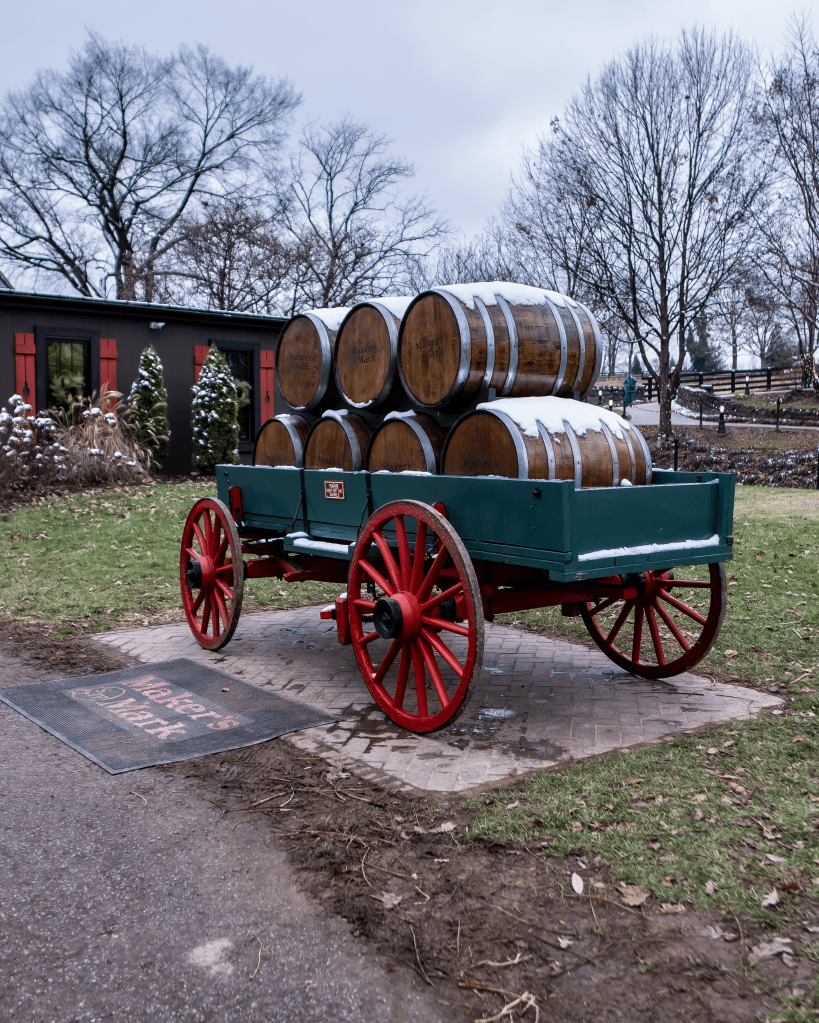
  • Art & Whisky // Maker’s Mark Distillery in Loretto, Kentucky

    Art & Whisky // Maker’s Mark Distillery in Loretto, Kentucky

    It’s no question that there is an art to whisky, but nowhere is that idea more prominent than at Maker’s Mark Distillery in Loretto, Kentucky. Nestled in the gentle hills of Marion County—a little more than an hour from both Louisville and Lexington—Maker’s Mark blends craftsmanship, tradition, and design into one of the most beautiful bourbon experiences in the Commonwealth.

    Established in 1953 by Bill and Margie Samuels, Maker’s Mark is best known for its wheated bourbon recipe and the iconic red wax that seals every bottle.

    Both of these defining features were inspired by Mrs. Samuels, whose distaste for the bourbons of the day led her husband to create a softer, more palatable mash bill, using red winter wheat to balance the necessary corn. Her influence didn’t stop there; the standard Maker’s Mark bottle shape, label design, and hand-dipped wax were all her ideas, now permanently woven into the brand’s identity.

    To this day, every bottle is dipped by hand on site, the liquid wax dripping down the neck of the bottles as they shuttle down the assembly line.

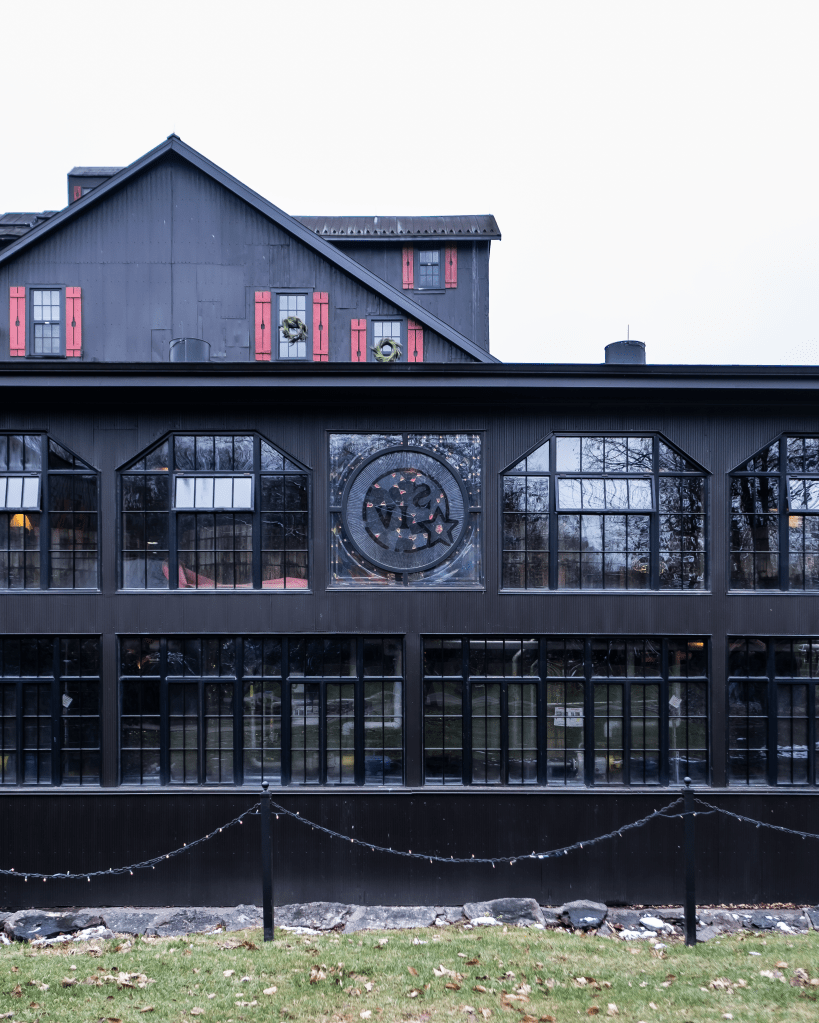
    Seeing the brand’s bottles dipped in person is not for the faint of heart. But for the brave souls who make the trek down narrow winding roads toward the rural distillery, they are rewarded with a stunning pastoral scene and, for a few months this fall, the art of world renowned glass artist, Dale Chihuly.

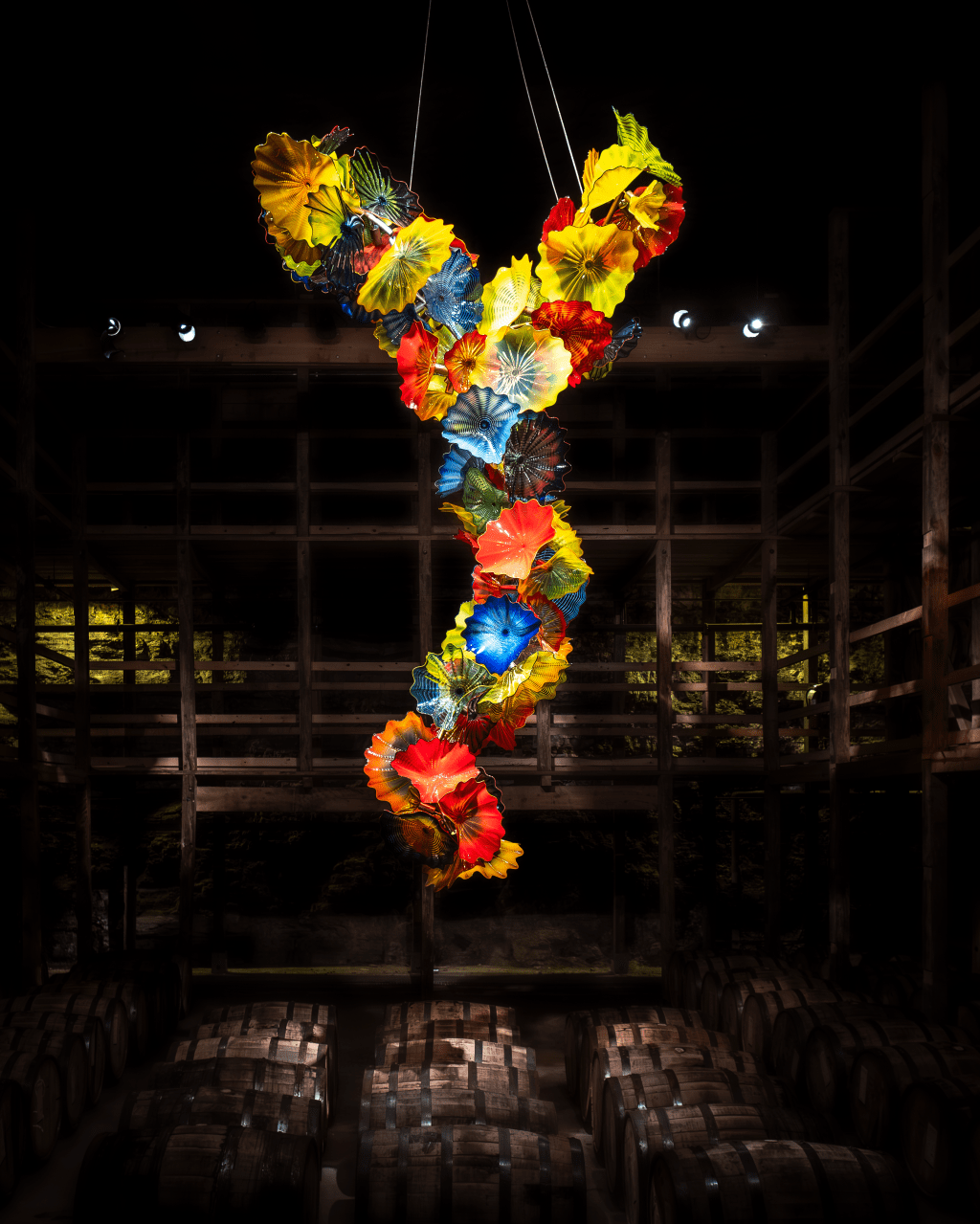
    Orange Hornet Chandelier (2025)

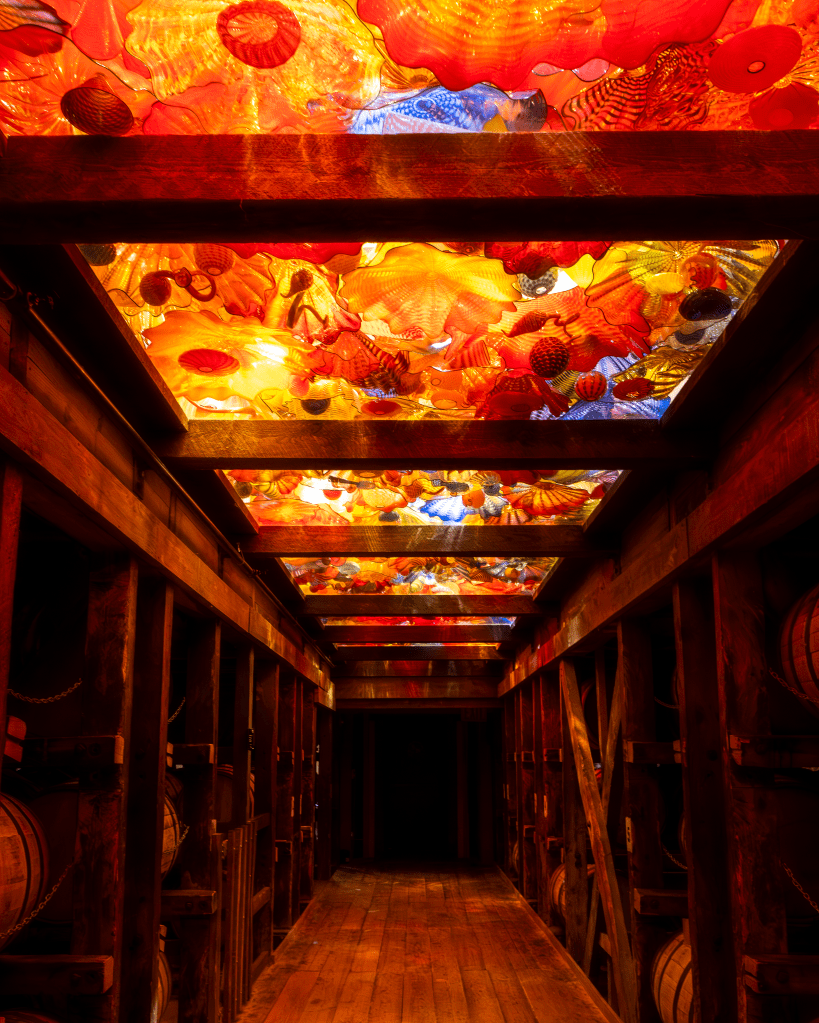
    Chihuly’s relationship with Maker’s Mark has spanned more than a decade; 2025’s installation marked a return to the Loretto campus, and a permanent installation of his work, titled The Spirit of the Maker, casts a warm glow over a collection of barrels held in a narrow space alongside the gift shop.

    The 2025 exhibit drew new attention to this permanent artwork while incorporating other sculptures, including some new pieces inspired by the distillery.

    The Spirit of the Maker (2013)

    The Maker’s Mark Tour

    While Chihuly’s art is what drew me out to the distillery on Friday, December 5, I wasn’t going to miss the chance for a tour. I chose the Maker’s Mark Tour, the distillery’s most popular option, to learn about the brand’s history.

    Guided by a friendly and charismatic gentleman named Chad, our group of 15 or so explored the distillery’s historic still house (predating the Maker’s Mark brand at least half a century), warehouses, and label production, along with the bottling line where every bottle of Maker’s Mark Whisky receives its famous wax. The tour ends with a tasting of four Maker’s Mark whiskies and the opportunity to purchase and dip your own bottle in the gift shop.

    Along the way, we learned of the Samuels’ family’s whisky legacy, which stretches all the way back to Scotland and inspired the brand’s use of the e-exclusive “whisky” on their products. Winding through the black-walled buildings, Chad explained how Mr. Samuels pivoted from a successful career in Louisville to purchase the already-established farm and distillery in rural Loretto. The still-in-use still house is the oldest in the country and home to a column still standing 5 stories tall.

    Legend has it that the Samuels family decided on the brand’s singular whisky recipe by baking a variety of proposed mash bills into loaves of bread. The best tasting loaf won out, with a mix of 70% corn, 16% soft red winter wheat, and 14% malted barley. Maker’s Mark 46 came about from a similar burst of experimentation, with 45 unsuccessful attempts to incorporate French oak staves into the maturation process before landing on the winner.

    Distillation and its corresponding branding efforts have historically been led by men, but Mrs. Samuels was no silent partner in the creation of Maker’s Mark Whisky. Her contributions to the spirit’s recipe and design are properly appreciated at Maker’s Mark. Not only did Mrs. Samuels choose the shape of the bottles and introduce the red wax, but she designed the mark of Maker’s Mark and hand-wrote the original labels, which are still finished on an antique die cut press operated on site.

    Exploring Star Hill Farm

    The moment the tour concluded (following a walk through the aforementioned glowing whisky hallway), I jetted off to the nearest Walmart in nearby Lebanon, KY to pick up an SD card. Despite a veritable stack of cards at home, I had set out for adventure with an empty camera. There was no way I was returning to Lexington without some proper photos.

    Once back on site, I paused for a quick lunch (a delicious salmon sandwich) at Star Hill Provisions, the farm-to-table restaurant nestled within the distillery grounds. Then I took my now-equipped camera and began to wander around.

    “Where can I not go?” I had asked Chad upon my return. In response, he handed me a map with two buildings clearly marked “not open to the public.” Beyond that, the world—or, more accurately, the farm—was my oyster.

    With much of the campus open to guests, I spent the afternoon photographing the Chihuly installations and weaving through historic buildings that make Maker’s Mark feel more like a preserved village than a modern production site.

    A couple of passing Maker’s Mark staffers quickly clocked my camera and stopped to point out the best vistas. One even offered to take a photo of me, which I politely declined—I much prefer my place behind the viewfinder—but these interactions positioned Maker’s Mark as one of the nicest distilleries I’ve visited, both at home and abroad.

    Dale Chihuly is not only known for his art, but for the way he integrates the glass shapes into the surrounding environment. The first time I experienced Chihuly’s art was at the Clinton Library in Little Rock, Arkansas. The second time was at Frank Lloyd Wright’s Arizona home, Taliesin West.

    At Maker’s Mark Distillery, the outdoor sculptures emerged from the grounds in sharp contrast to the grass, earth, and snow below. Scattered throughout the campus, they seemed as natural as the buildings, positioned like flowers bursting through the cold soil in spring.

    Sapphire and Platinum Waterdrop Tower (2017)
    Sol Del Citrón (2014)
    Moonbow Fiori (2025)

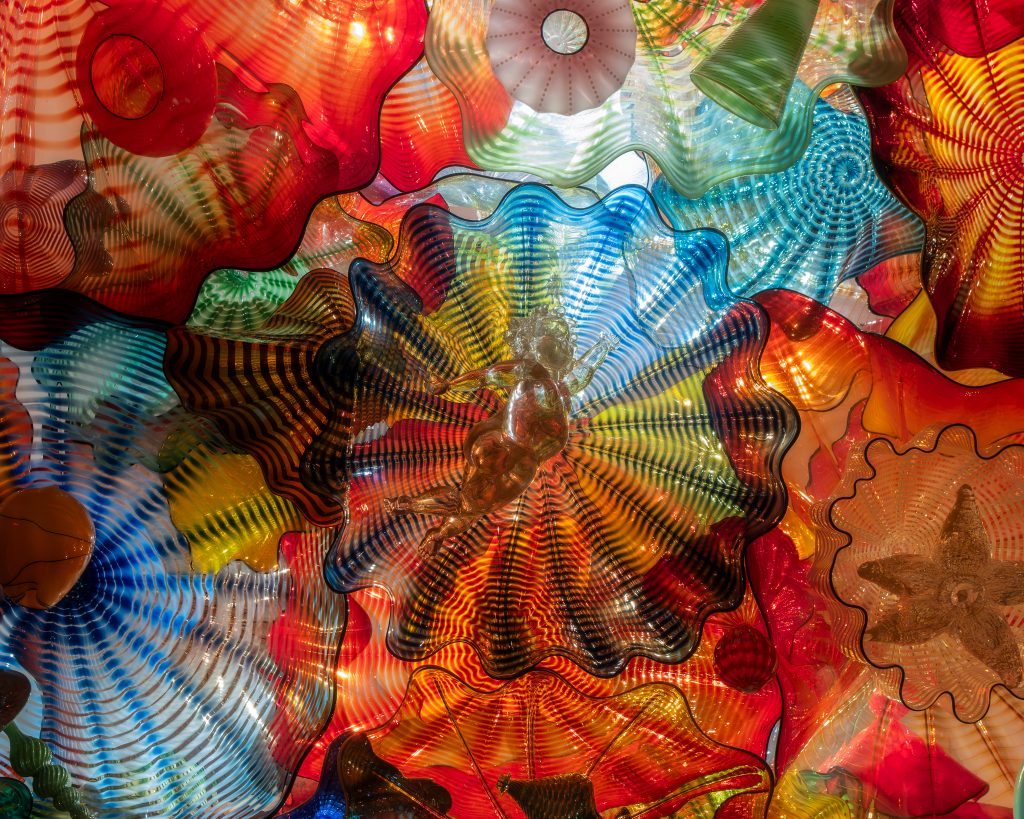
    In the cellar, colorful fan-shaped glass explodes from the ceiling over the oak barrels below. Utilizing extra pieces from the gift shop’s ceiling installation, the beauty of the End of the Day Persian Chandelier simply can’t be captured in photographs.

    But lord, did I try.

    End of the Day Persian Chandelier (2015)

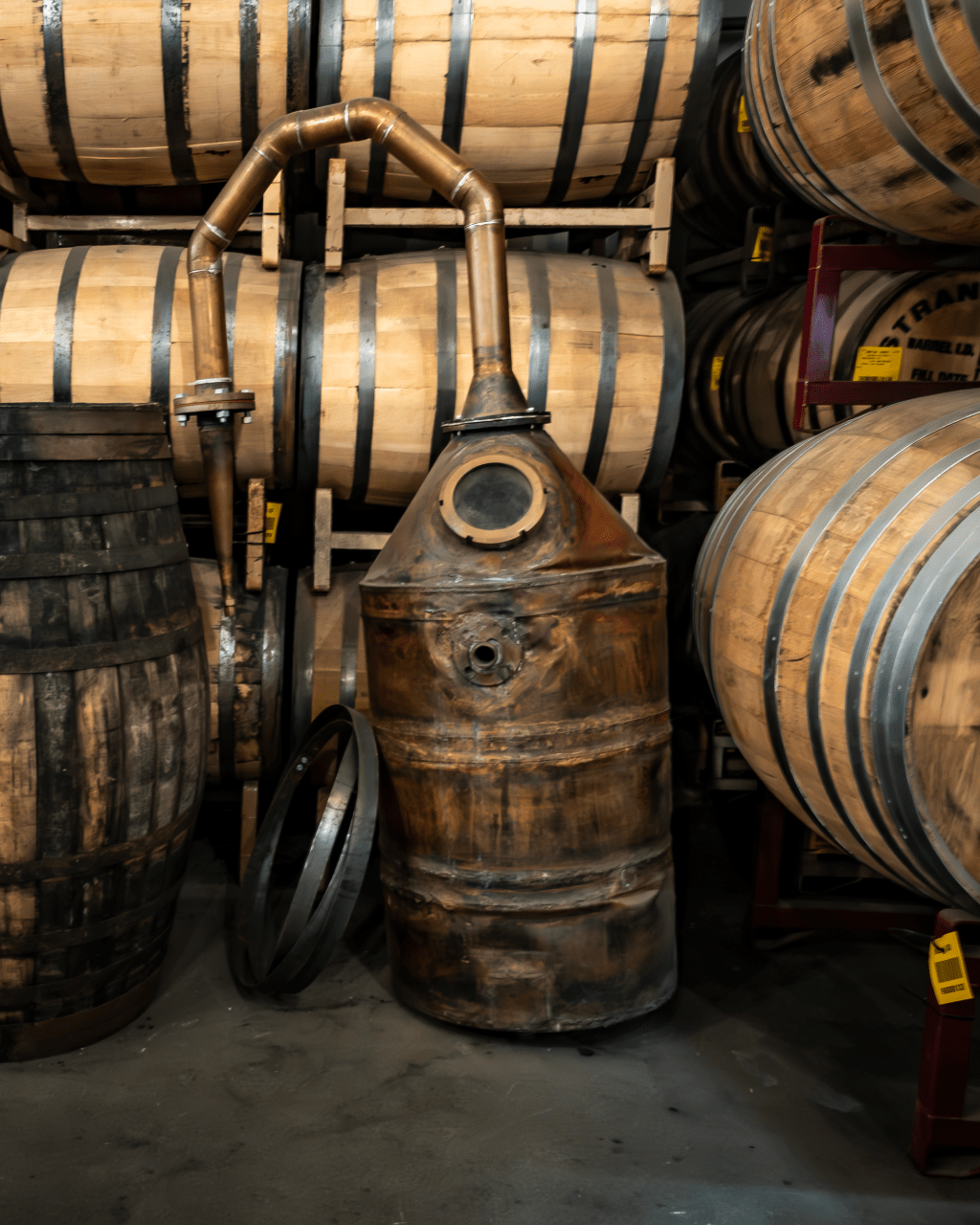
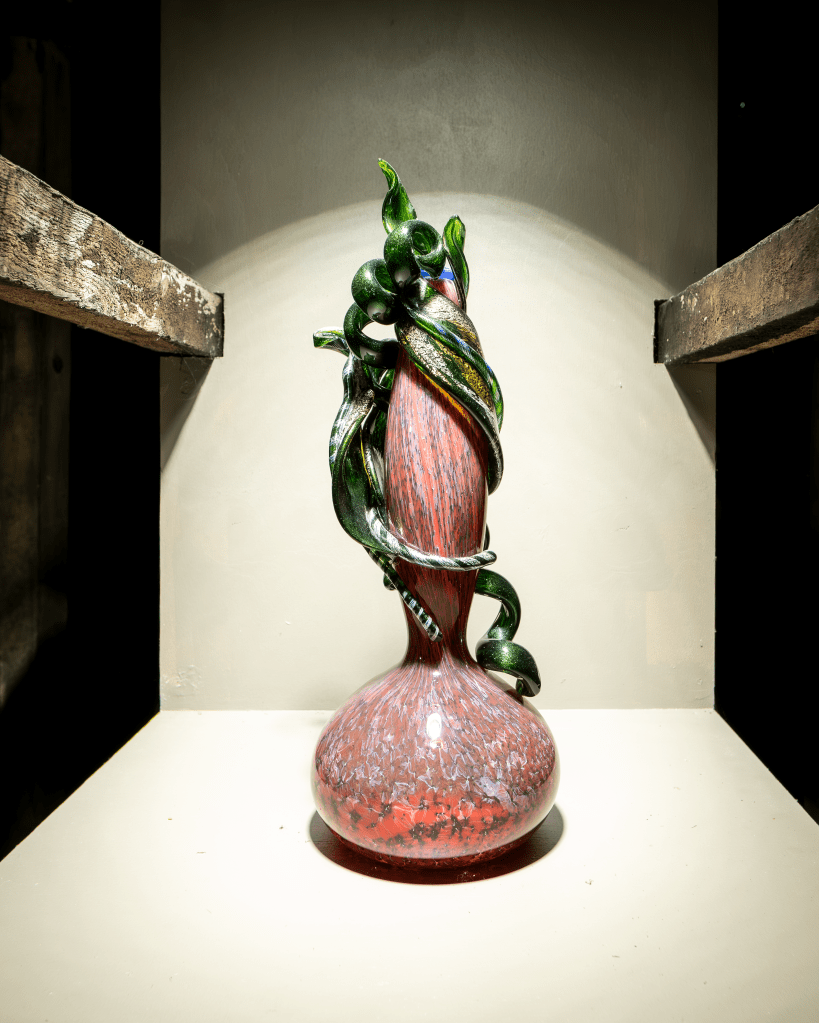
    Nearby in the warehouse, a collection of Venetians—elaborate glass vases—were tucked between the barrels, each delicate shape standing in contrast to the sturdy, whisky-filled wood vessels and racks around them.

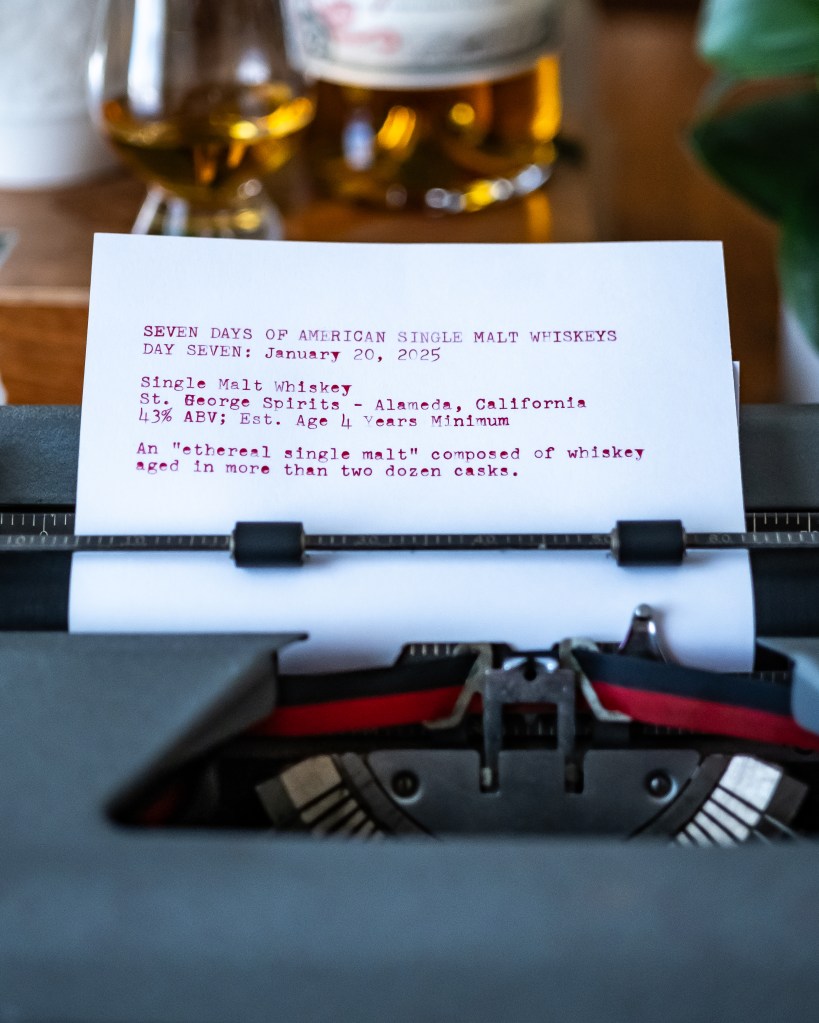
    I even found a typewriter, tucked on a dusty desk in the “Quart House.” The small building once served as a package whisky store (and possibly a toll house for the now-defunct railroad). Dating back to 1889, it’s now on the register of historic places as the oldest still-standing location of its kind, a bit of Kentucky history preserved in Maker’s Mark history.

    Starting with Art at Maker’s Mark Distillery

    When I was both properly cold and due back to Lexington, I ended my excursion with a quick walk back through the Visitor Center, where all tours—and the experience of art—begin.

    Upon arrival at Maker’s Mark Distillery, Guests enter through a gallery, thoughtfully lit and enhanced by high ceilings. I was late and distracted (per the usual) and had failed to notice the colorful welcome on arrival, but appreciated it all the more now, knowing the story of the Samuels family and their whisky.

    Even the bathrooms are stunning at Maker’s. While I can’t speak to the men’s room, the ladies is carefully constructed of stone and tile to envelope visitors in a beautiful experience at every turn.

    At the back of the Visitor Center is a small cocktail bar, where I met Whisky Jean Samuels, the distillery cat who was completely unbothered by my presence.

    Whisky Jean rested on a leather sofa under yet another permanent Chihuly installation, Amber & New Oak Chandelier (2017). It’s not pictured, because I was, in true form, focused on the cat.

    If I’d had more time, I would have lingered long enough for a drink, but my evening plans were calling, and I chose safe driving over happy sipping—especially on the single track roads surrounding the distillery.

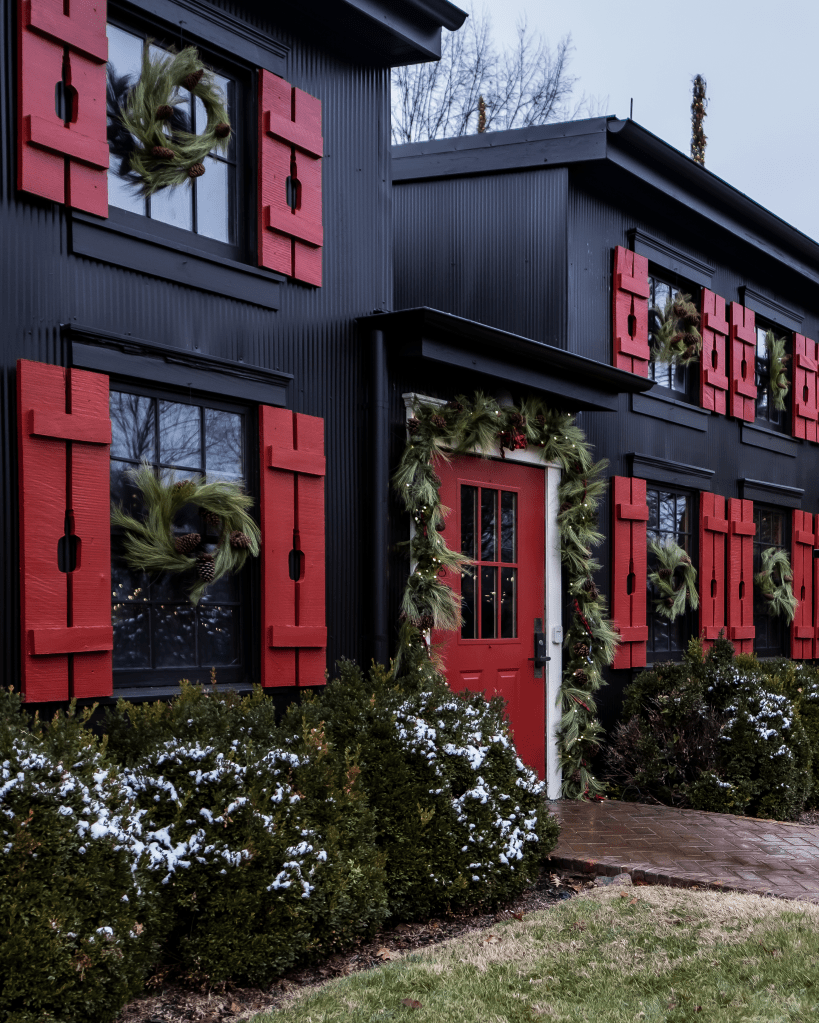
    As I walked to my car, I took one last slow look across the campus. The light was fading, and Christmas lights were starting to sparkle through the trees, ready for the Ambassadors that would arrive within hours.

    Maker’s Mark has always been known for its whisky, but being there in person makes it clear that its magic lies just as much in the people, the place, and the art they’ve woven into every turn. Even without Chihuly’s sculptures shimmering in the background (the exhibit ended December 7), Maker’s Mark is not just a distillery that creates whisky. The Samuels family has curated a total experience, every drop crafted with intention.

    Sláinte, y’all.


    What to Know About Visiting Maker’s Mark Distillery

    For those who choose quick answers over the magic of prose, here are few FAQs about Maker’s Mark Distillery, a major attraction on the Kentucky Bourbon Trail.

    Where is Maker’s Mark distillery located?

    Maker’s Mark Distillery is in Loretto, Kentucky, about an hour south of Louisville.

    How much does it cost to tour the Maker’s Mark distillery?

    As of December 2025, the Maker’s Mark Tour starts at $30. Other tour experiences range in price.

    Is Maker’s Mark distillery worth visiting?

    Hell yes! Maker’s Mark offers one of the most immersive and visually stunning distillery experiences in Kentucky, with hand-dipped bottles, a rich family history, and seasonal art installations.

    Can I visit Maker’s Mark without a tour?

    You might be able to visit Maker’s Mark at Star Hill Farm without a tour—but do you really want to?

    Does Maker’s Mark still hand-dip every bottle?

    Yes. Every Maker’s Mark bottle is still hand-dipped in red wax at the Loretto, Kentucky distillery.

  • Seven Days of ASMW // St. George Single Malt Whiskey

    Seven Days of ASMW // St. George Single Malt Whiskey

    Today is the final day of SEVEN DAYS OF AMERICAN SINGLE MALT WHISKEYS, a series to celebrate the innovative, creative, and talented distillers making American Single Malt Whiskey across the nation.

    It’s been two days since the U.S. Tax & Trade Bureau’s ratification of American Single Malt Whiskey officially went into effect. That means we’re now standing (and sipping) in the future of whiskey, where barley is just as respected in American spirit production as corn and rye.

    The seven distilleries and spirits I’ve featured over the last week are not, in any way, the be-all and end-all of ASMW. None were the first ASMW, and they may or may not be the “best” (though that ranking is inherently subjective). These seven whiskeys just happened to be in my cabinet at the right moment, some because of familiarity and others as a result of curiosity.

    There are many other ASMWs I still have yet to try or, even if I’ve tried them, to purchase in a full bottle. Distribution is one of the biggest challenges still to overcome for American Single Malt Whiskey. Many of the producers representing the best of the category are still largely considered “craft” distillers; they’re doing a lot with limited resources, and crossing state lines to expand their general distribution is no small task.

    We can only hope that the legitimization of the category will increase awareness and demand for American-made single malt whiskeys, thereby also increasing access. If you have an ASMW you love, whether enjoyed locally or discovered on your own whiskey journey, drop a comment over on Instagram. Let’s talk about it! And, even more, let’s share the gift of those recommendations with the whisky enthusiasts of the world.
    (Shameless plug: if you’re an ASMW producer and want to send me a bottle to try and share, I’ll also happily trade my two cents—that is, my honest opinion and some pretty photography—for a tipple.)

    Let’s dive into the final dram of the week: the Single Malt Whiskey from St. George Spirits.

    This was a fun whiskey to close out the series. Like the Peated Single Malt from 10th Street Distillery, I knew nothing about this bottle when I purchased it (on the same very expensive Total Wine trip as the Balcones Single Barrel store pick). I had, in passing, heard of St. George Spirits, but I wasn’t familiar with their whiskey, or opinions of their whiskey, in anyway.

    Curiosity may have killed the cat, but he’s not allowed to drink whiskey anyway.

    Each batch of St. George’s single malt whiskeys is available only as a limited annual release. It’s produced in Alameda, California, and the fact that I found a bottle on the shelf at all is a slight miracle. Sometimes it’s helpful to be a single malt enthusiast in a world of bourbon bros. But this bottle also sat on the shelf for a few years, ready and waiting for my eager cart to roll by.

    I purchased the whiskey in 2024, but the bottle came from the distillery’s 21st batch of single malt, as indicated by “SM021” printed in small red text.

    St. George released their first batch of ASMW in 2000, and they’re currently on number 24. As the batch numbers appear to correspond with the year of release, this bottle like came out in 2021.

    Old or new, I’ll take it. This distillery has been making single malt whiskeys for 25 years, and I’m excited to try anything I can get my hands on.

    On the nose, I immediately get a hit of sweet, slightly over-ripened green apples. There’s a slight grainy grassiness too, like walking in a farmer’s field after the rain. Yesterday when I originally opened the bottle I noted it as a little funkier than I do today; I poured another small bit this afternoon to refresh my tasting memory, and found the initial punch softened.

    I guess that’s my reminder to try my whiskeys at various times; our senses vary throughout the day and week, depending on a number of factors.

    On the palate, the same bright fruit flavor leads the way, but it’s rounded out with a creamy nuttiness. There’s a punch on the back end, as the whiskey takes a sharp upward swing in flavor before fading into a gentle finish. It’s unlike any other single malt whiskey I’ve tried, and that appears to be by design.

    Being an older release, St. George doesn’t currently have a lot of details about Batch 21 online, but a review from the Whiskey Wash helped to answer a lot of questions.

    For one, the whiskey is made with several barley varietals, including “various roast levels of two-row barley sourced from Wisconsin (pale malt, crystal malt, chocolate malt, black patent malt) and German Bamberg malt (unroasted barley smoked over beech and alder wood).” Batch 21 included whiskeys aged for 4.5 to 10 years.

    Even more remarkably, those component were selected and drawn from 26 different casks. Every release of St. George Spirits’ Single Malt Whiskeys is similar in its variety, each one a blend of whiskeys stored in a diversity of cask styles and prior uses. The thread of continuity between batches is held only in the hands of the distillery’s distiller and blender, who builds a creative composition from an expansive library of whiskey casks held in the distillery’s rackhouse.

    Batch 21 is unexpected and fascinating. I don’t know if it’s the whiskey I’ll reach for at the end of a long day when I want something familiar and true. Instead it’s a sipper worthy of time, space, and consideration. It’s philosophy, waiting to be examined from every angle.

    Good thing I was a philosophy major.

    Slàinte, y’all!


    In My Glass

    Single Malt Whiskey

    St. George Spirits – Alameda, California

    43% ABV; Est. Age 4+ Years

    On My Desk

    Royal Quiet De Luxe

  • Seven Days of AMSW // Balcones Texas Single Malt Whisky

    Seven Days of AMSW // Balcones Texas Single Malt Whisky

    Y’all, it is time to CELEBRATE!!

    Today, the U.S. Tax & Trade Bureau’s definition and regulations for American Single Malt Whiskey officially go into effect. As of January 19, 2025, American Single Malt Whiskey has risen to official, legal, and regulatory status. This innovative, creative, barley-focused category has now taken its rightful place in the lexicon of American Whiskey alongside bourbon and rye whiskey.

    One week ago, I launched this series, Seven Days of American Single Malt Whiskey, to count down to today’s historic event. While personal circumstances have delayed the completion of the series, I’m back and ready to complete the set today and tomorrow with two incredible whiskeys.

    For Day Six, we’re headed back to Central Texas and, more specifically, to the city of Waco, where you can find Balcones Distilling, one of the American Single Malt Whisky Commission‘s founding members.

    Fun fact: long before I ever moved to Texas, my first-ever trip to the state was a visit to Waco. My choice of destination was questioned by locals at both end of my trip, but a friend from college was in her first year of graduate school at Baylor University. I spent my spring break lounging around the university’s pools where she worked.

    It was “cold” by Texas standards (probably 70 degrees Fahrenheit), but downright balmy compared to Michigan. They’d had to de-ice the plane on the runway before I left, and I spent the rest of the week wearing flip-flops and chasing catfish in a kayak.

    I absolutely loved it.

    Somehow, despite living in Texas for several years (and a good portion of that time less than two hours away), I haven’t been to Waco since. But this incredible distillery, established in 2008 and known for both its single malt whisky and blue corn bourbon, proves that Waco’s talents extend far beyond higher education, cults, and shiplap-centered interior design.

    I’ve had this single barrel bottle of Texas Single Malt Whisky in my cabinet for a few months now. I picked it up on a shockingly expensive trip to Total Wine & More here in Lexington, where I walked in just for fun and immediately filled my cart with several Scotch and bourbon and American single malt whiskeys alike.

    Despite the length of my receipt, not a single regret could be found.

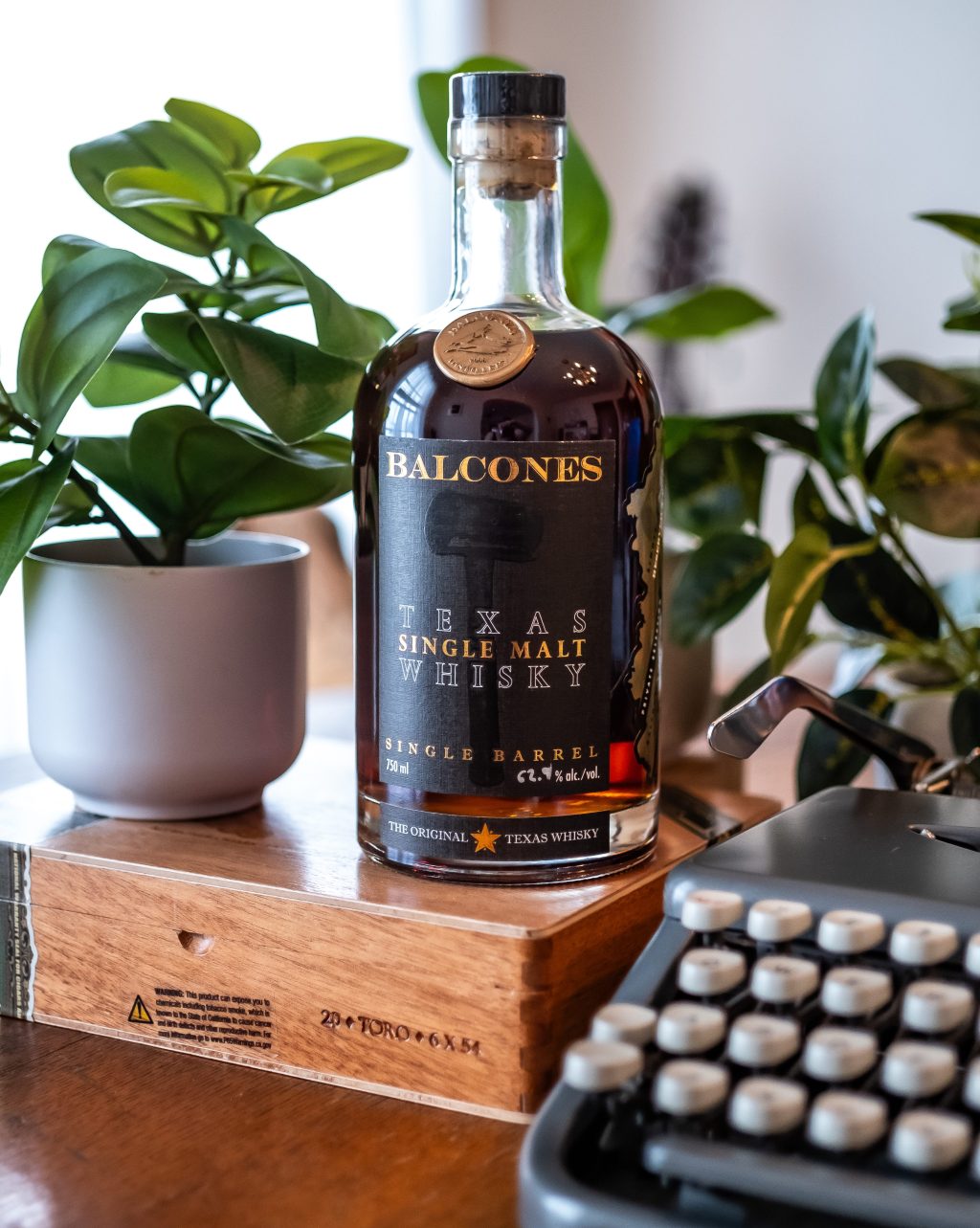
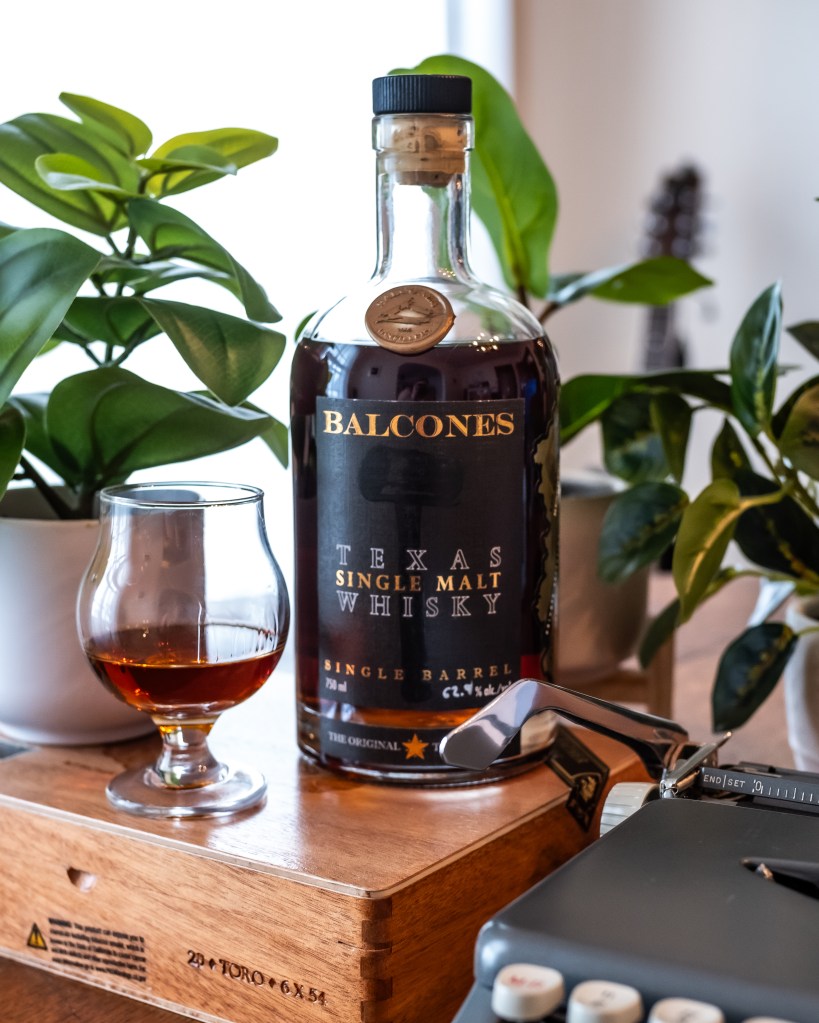
    This Texas Single Malt Whisky is a single barrel selection bottled exclusively for the store. At 62.9% ABV, it’s not a whisky for the feint-hearted. Dark mahogany in color, the cask-level strength is matched only by the richness of both the nose and palate.

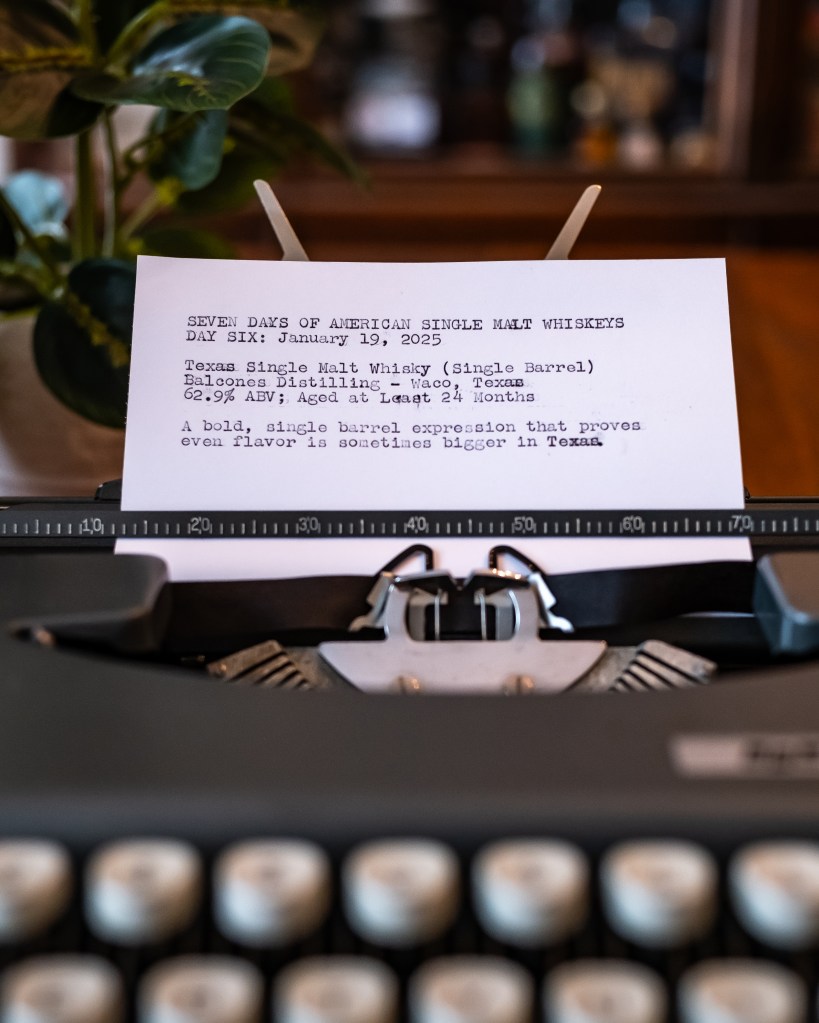
    Even flavor is sometimes bigger in Texas, and this whisky has it in spades.

    Though I’ve known about Balcones—and their excellent reputation—I’ve had Balcones’ single malt whisky just once before. I was in Dallas for a conference, and made my way to the hotel bar almost immediately after checking in. I remember enjoying the dram, though I sipped it through a travel-induced haze. It was good, but didn’t have nearly the impact of this unique barrel selection.

    But that’s the fun of a barrel selection—while you might have a sense of the whisky’s baseline flavor, you never fully know what you’re going to get until you sip it.

    For this pick, the nose is like a rich fruit pie. Maybe cherry? I don’t particularly like cherries, so it’s difficult to translate that common flavor experience into my own experience of this whiskey. The thickly married notes of stone fruit and pastry are both there, though. On the palate, it’s more of the same, though it quickly dissipates into a malty grassiness in the finish.

    In all truth, I can’t fully decide if I like the finish on this whisky; it’s almost like following a delicious piece of pie by sucking on a blade of grass. That may sound terrible, but it’s not as bad as it seems, I promise. I may not be sure if I particularly like it, but I also don’t hate it. It’s definitely different than anything I’ve tried before, and I just keep picturing a cowboy, leaning against a fence after lunch.

    After a wild couple of days, these tasting notes might be going off the deep end. Cowboys? Blades of grass?

    Can I blame the cask strength, y’all?

    Some of us aren’t built for our own whisky enthusiasm, and it doesn’t take long to feel the 125.8 proof of this whisky. Here’s what I can say: I’m very much intrigued, and I can’t wait to explore more of what this bottle has to offer.

    Good thing I’ve got plenty of time to enjoy it.

    Sláinte, y’all!

    In My Glass

    Texas Single Malt Whisky (Single Barrel)

    Balcones Distilling – Waco, Texas

    62.9% ABV; Aged at Least 24 Months

    On My Desk

    1962 Smith Corona Skyriter Manual Typewriter

    Made in England

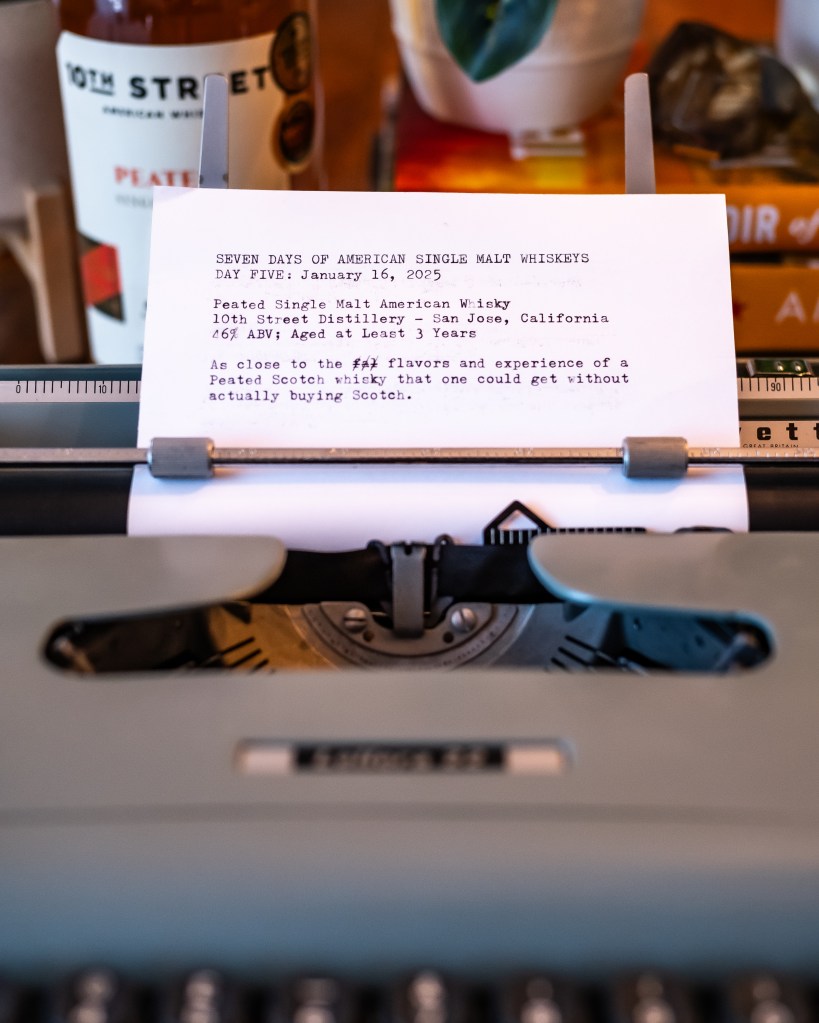
  • Seven Days of ASMW / 10th Street Peated Single Malt

    Seven Days of ASMW / 10th Street Peated Single Malt

    It’s Day Five of SEVEN DAYS OF AMERICAN SINGLE MALT WHISKEYS, a week-long series honoring and celebrating the USA’s newest official whiskey category. The Tax & Trade Bureau’s ratification of American Single Malt Whiskey as a legally-defined subcategory of American whiskey was announced in December. It goes into effect this Sunday, January 19, and we’re counting down to the occasion both here and on Instagram.

    All seven of the whiskeys selected for this series have two things in common. First, they’re all American Single Malt Whiskey, meaning that they’re made from a 100% barley at a single distillery in the USA aged in an oak barrel no greater than 700L, distilled to no more than 160 proof, and bottled at not less than 80. In addition, all of the whiskeys I’m choosing to feature already exist in my whiskey cabinet; I purchased no new bottles for the purposes of this series.

    Unsurprisingly, that means that some of the whiskeys featured so far are old favorites, or they’re new expressions from a well-loved whiskey maker.

    Today’s whiskey is neither. It’s a freshly cracked bottle from a new-to-me distillery, purchased on a whim while shopping online for another particular spirit. Since its arrival, it has held space in my cabinet, waiting to be opened and experienced and introduced to my palate.

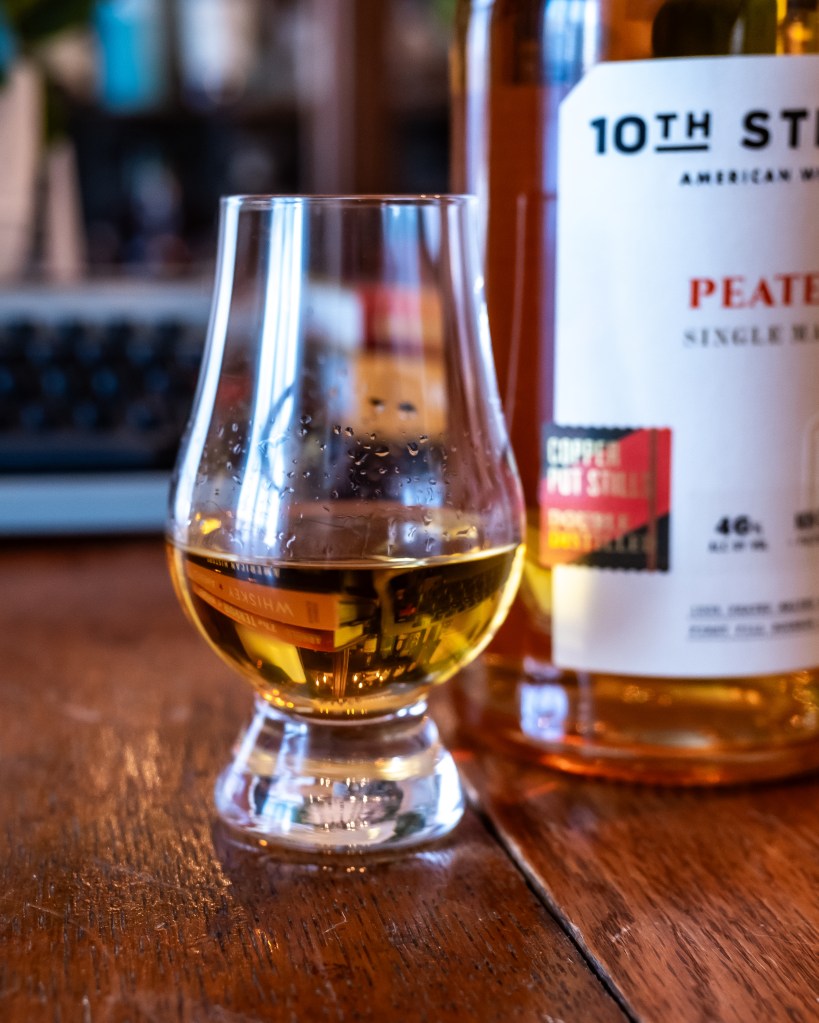
    That whiskey—or, as they prefer to be called, whisky—is the Peated Single Malt American Whisky from 10th Street Distillery. As someone who was introduced to whisky through the salty spirits of Islay, Scotland, the idea of a peated American whisky is enticing. So enticing, in fact, that I ordered this bottle with little-to-no research.

    I can’t help it; I just love that rich peat smoke. And I got it with the 10th Street Peated Single Malt. The second I popped the cork the sweet smell of brine rose up from the neck of the bottle to tingle my nostrils.

    I believe my exact words were “Ooooh.”

    For a peat-lover, this whiskey is a delight. Made from peat-smoked malted barley imported from Scotland, it is aged in first fill ex-bourbon barrels for a minimum of three years. The distillery proudly employs a Scotch-inspired distillation process, using a double distillation and custom-built pot stills to produce their new make spirit.

    The result is a golden colored whisky with well-balanced flavors of smoke, light fruit, and a hint of vanilla, like gently charred summer peaches with a dabble of cream on top. The smoke, while very present, is refined: not too brash and not too faint.

    It’s a deeply enjoyable whisky, and has the awards to prove it. The Peated Single Malt won double gold at the World Wine & Spirits Competition in 2019 and Best in Class from Whiskies of the World in 2018.

    And yet I found myself perplexed. Shouldn’t an American whiskey taste more….American?

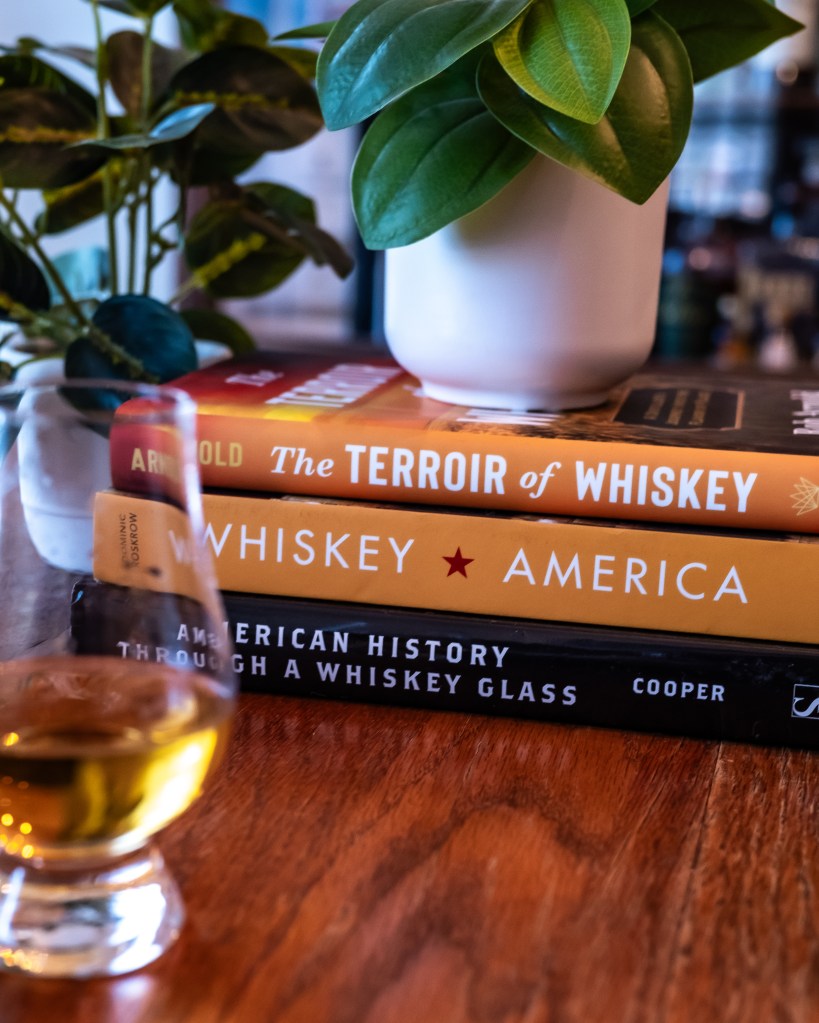
    Terroir is an ever-debated term in the whisky world. It’s the idea that a spirit’s provenance deeply impacts its ultimate flavor profile, thanks to the waters and grains and even the air around it.

    Once upon a time, terroir was everything. Farmers, the original distillers, harvested their own grains, grown on the same lands where they were fermented and distilled into spirits. Water was drawn from local sources, and the closest woods or peat bogs provided any necessary fuel.

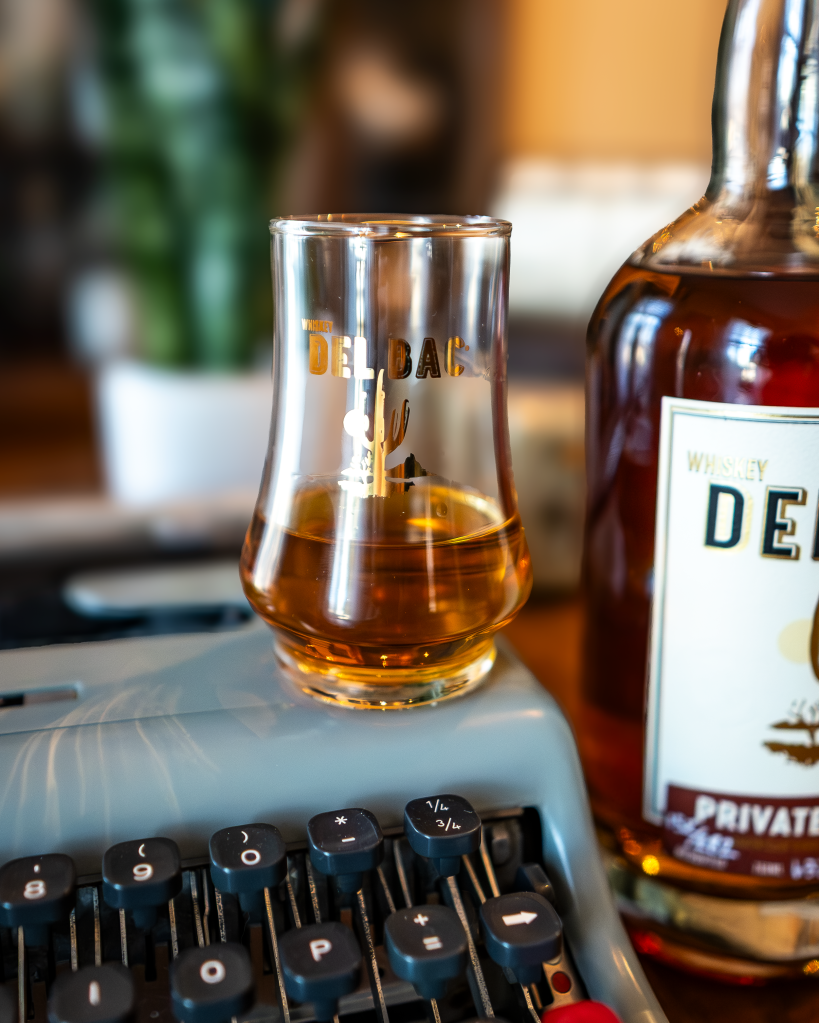
    Even today, many distillers lean wholeheartedly into the culture and flavors of their regions. We saw it earlier this week with the Texas BBQ-inspired Stryker. Virginia Distillery relies on natural spring water from the Blue Ridge Mountains, while Whiskey Del Bac uses mesquite to smoke its barley for Dorado.

    10th Street Distillery, on the other hand, seems to eschew these regional calling cards in favor of a flavor profile that can only be described as transcontinental. If not for the California location of the distillery, this whisky could be Scotch. I know that I’m sipping on an American whisky only because I was the one to read, open, and pour from the bottle. If 10th Street’s Peated Single Malt were placed among a lineup of peated single malt scotch whiskies, I don’t know that I could pick it out blind.

    Is this still an American whisky if it’s made with ingredients sourced from 5,000 miles away, and if it doesn’t taste like what we’d expect from an “American” whisky?

    Yes.

    Even in Scotland, much of the barley used to make whisky comes from England or—even worse—continental Europe. The vocal commitment to using Islay barley that is heard from both Bruichladdich and Kilchoman is enough to tell us that their fellow Islay distilleries are likely not doing the same. Same with the peat that they still use to fire their barley kilns; while it may be Scottish, it’s not necessarily from Islay.

    And yet we don’t question whether these whiskies are “Scotch.”

    The truth is, terroir is only part of the story. Where the grains or the peat or anything else comes from is important. It plays a big role in informing and shaping the flavors in the glass.

    The rest, however, is up to the distillers. Selecting those grains, mashing them, fermenting with their choice of yeast and timing, choosing the distillation temperature and speed, the barrels, the rack house location, and the length of maturation—every one of these steps plays a part in the final whisky.

    For 10th Street Distillery’s Peated Single Malt, that all happened on American soil. It may taste like a whisky from Scotland, but it’s an American Single Malt Whisky through and through.

    Sláinte, y’all.

    In My Glass

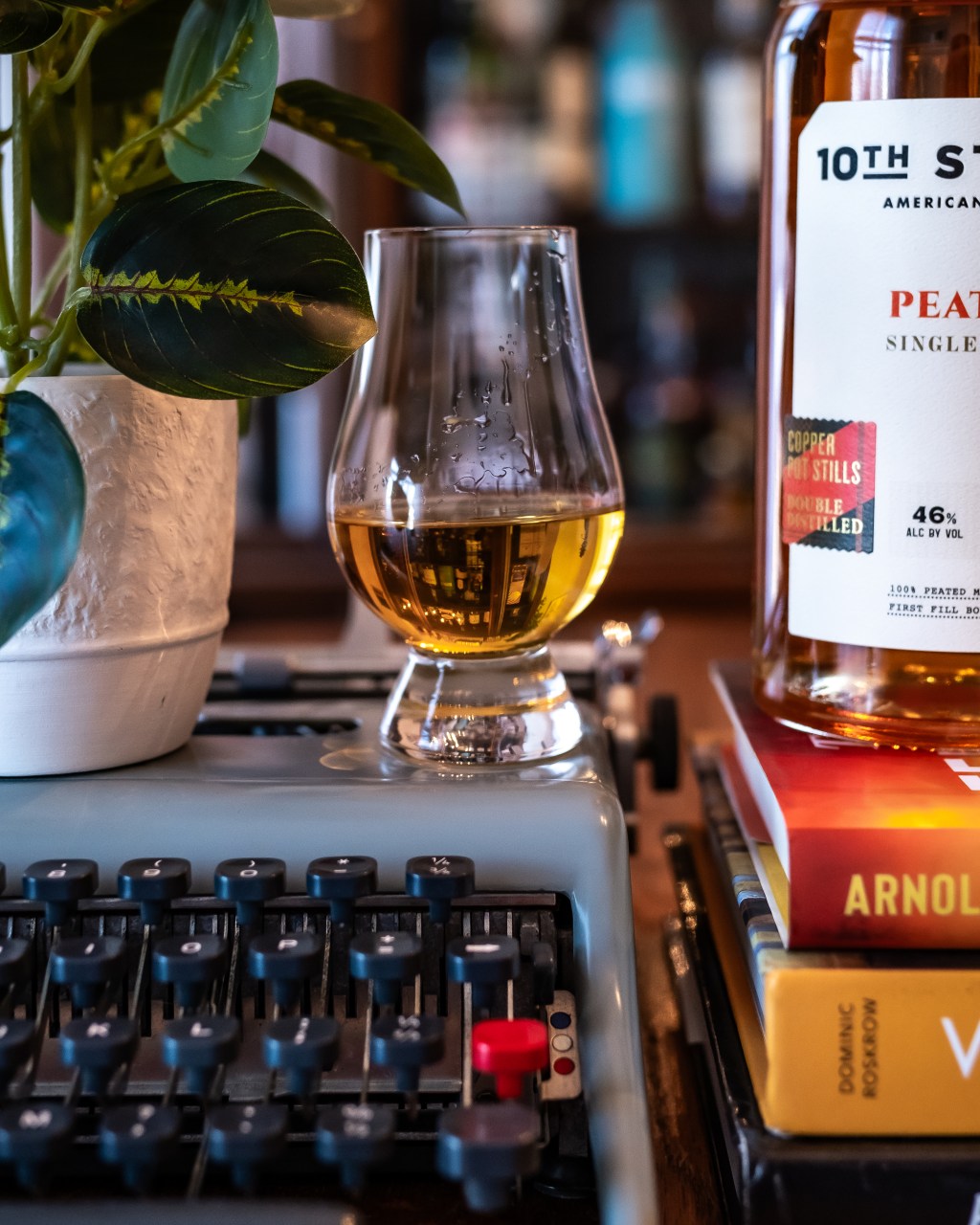
    Peated Single Malt American Whiskey

    10th Street Distillery – San Jose, California

    46% ABV; Aged at Least 3 Years

    On My Desk

    1961 Olivetti Lettera 22 made in Glasgow, Scotland

  • What is American Single Malt Whiskey? Understanding the USA’s Newest Official Whiskey Category

    What is American Single Malt Whiskey? Understanding the USA’s Newest Official Whiskey Category

    Last week, I attended the Stave & Thief Society’s Executive Bourbon Steward Course in Louisville, Kentucky. Our curriculum was, naturally, focused on bourbon. However, one early module went beyond corn whiskey to discuss the various other whiskey categories recognized in the USA. It also included a range of whiskey (and whisky) categories recognized around the world.

    As we closed out the chapter, I realized that American Single Malt Whiskey hadn’t been mentioned. I raised my hand to ask about the perceived oversight.

    “Well, it’s not an official category,” replied Chris, our instructor for the morning.

    “Yeah, I know,” I acknowledged.

    That was the end of the conversation.

    Little did we know, American Single Malt Whiskey was, in fact, a legally-defined whiskey category that day. In fact, the Alcohol and Tobacco Tax and Trade Bureau (TTB) had announced its planned ratification of the category just one day before, on December 12, 2024. The news simply had not yet reached my class of mostly bourbon aficionados.

    Since then, the whiskey world has erupted with chatter about this new and exciting category. Congratulations and questions have flowed in tandem, both in the American whiskey community and those overseas. The questions I’ve seen often stem from expectations set by more established single malt regions, leading to confusion about what the American Single Malt Whiskey category is—and why its regulations have been established as they are.

    So grab a glass of whiskey, and let’s dive in.

    History of American Single Malt Whiskey

    While malted barley was the grain of choice for whiskey distillation in Scotland and Ireland, it grew poorly in most New World soils. Instead, the earliest American distillers focused on rye. Thanks to a variety of sociopolitical, agricultural, and other factors, bourbon, a corn-based, barrel-aged liquor, quickly overtook rye both in terms of production and status. For 200+ years, bourbon has reigned supreme as the nation’s native spirit, even receiving an official designation as such in 1964.

    While limited quantities of barley have been used in bourbon and rye production for centuries, the first known American Single Malt Whiskey was not made until the mid-1990s. Raw barley is more expensive than rye or corn, and demand for single malt whiskeys simply didn’t justify the cost of experimentation for most American distilleries.

    Clear Creek Distillery, founded by Steve McCarthy and now part of Hood River Distillers, was the first to take a chance on malted barley. With the release of McCarthy’s Oregon Single Malt Whiskey, the distillery introduced a traditional-yet-unexpected spirit to the American whiskey scene, lighting a slow fuse that eventually led to an small explosion of American Single Malt Whiskey distillers and enthusiasts.

    Today, hundreds of distilleries across the nation are making some type of American Single Malt Whiskey. The American Single Malt Whiskey Commission (ASMWC) counts more than a hundred of these distilleries as members. These include craft distilleries like the category’s catalyst, Clear Creek Distillery, established bourbon makers like Jim Beam, and Tennessee whiskey pioneer Jack Daniels.

    What is American Single Malt Whiskey?

    The American Single Malt Whiskey Commission was founded to “establish, promote and protect the category of American Single Malt Whiskey.” Created by some of the category’s first producers, they drafted and refined the original guidelines for what should be labeled as American Single Malt Whiskey:

    • Made of 100% malted barley
    • Distilled entirely at one distillery
    • Mashed, distilled, and matured in the USA
    • Matured in oak casks no larger than 700 liters
    • Distilled to no more than 160 proof (80% alcohol by volume)
    • Bottled at no less than 80 proof (40% alcohol by volume)
    • If labeled as American Straight Single Malt Whiskey, aged for at least two years

    These requirements draw on established practices in American whiskey while also leaving room for the creativity and innovation that sets American Single Malt Whiskey apart.

    The lack of a minimum age statement (unless labeled as straight whiskey or bottled in bond), a maximum distilled proof of 160, and a minimum bottled proof of 80 are all common to American whiskey regulations.

    Unlike single malt Scotch and Irish Whiskey, any type of still can be employed for the production of American Single Malts, including column, pot, and hybrid stills. Unlike bourbon and rye, distillers can also choose to age their new make spirit in used or new barrels with the interior either toasted or charred.

    For many years, American Single Malt Whiskey has operated out of a so-called “gentleman’s agreement,” with most—if not all—single malt distilleries in the USA following the established guidelines. With the ratification of American Single Malt Whiskey as an official TTB category, these once-loose guidelines are now law. The official ruling was published on December 18, 2024 and goes into effect on January 19, 2025.

    What does the TTB’s recognition of American Single Malt Mean for the Industry?

    The ASMWC has fought tirelessly for legal recognition of American Single Malt Whiskey for the better part of a decade. At the same time, its member distilleries have been successfully producing, labeling, and selling their spirits as American Single Malt Whiskey. So why does the ratification of this new category—the first in 52 years—matter?

    To answer that question, I called my friend Mark A. Vierthaler, the head distiller at Whiskey Del Bac and, in full disclosure, a former colleague. I worked at Del Bac as a tour guide for about six months back in 2021 and 2022. I also objectively love their whiskey—partly due to Mark’s expertise and influence on its production over the last few years. I knew that he could help me understand the full impact of this moment in whiskey history.

    What the TTB’s Recognition of American Single Malt Whiskey Means to the Category

    Mark immediately pointed to one word to describe the importance of the TTB’s ruling: legitimization.

    ” The ratification and recognition of ASMW shows consumers—locally, nationally, globally—that what distilleries like Whiskey Del Bac have been doing for more than a decade and a half has just as much cachet as bourbon, rye, [and] wheat whiskey—whichever American whiskey you choose,” he explained. “It makes it easier to educate consumers, creates trust in the category, and encourages more distilleries to begin experimenting with this American take on a classic style of whiskey.”

    Mark’s clear explanation especially resonated with me due to an experience I had earlier this year. On a trip to England and Scotland, I stashed a couple bottles of Whiskey Del Bac in my suitcase, eventually sharing them with friends who work in the Scotch whisky industry.

    “This is actually pretty good,” my friend Jon said, after taking a sip.

    It was the “actually” that got me—of course I wasn’t going to drag bad whiskey across the ocean. But I couldn’t blame him for his response; because experience and knowledge of the American Single Malt Whiskey category has been so limited, so are the expectations for its spirits. According to Mark’s predictions, the formalization of the category will change that.

    What the TTB’s Recognition of American Single Malt Whiskey Means to Distillers

    As a follow-up, I asked Mark what American Single Malt distillers hope will come from the TTB’s new regulations. He told me that innovation and transparency are two of the most important elements of the ruling.

    “Without an official designation, and American Single Malt Whiskey falling under the amorphous umbrella known as ‘Distilled Spirits Speciality,’ you could claim you were single malt, but there were no methods to ensure that you were following the spirit of the guidelines,” he explained.

    In short, American Single Malt Whiskey distillers—or those who claimed to be—had no real accountability or obligation to follow the ASMWC’s guidelines. Now, distillers and consumers will know that anyone with American Single Malt Whiskey on the label are playing by the same rules. That allows distillers in to explore and expand on the category’s potential even more.

    “With this being made into law, it allows distillers to continue to push the boundaries of what single malt means, while still holding true to a transparent standard,” Mark said. “The designation of American Single Malt shows that American ingenuity and whiskey-making expertise isn’t limited to one category.”

    As an example, he explained, “Whiskey Del Bac was inspired by the Scottish model, but not defined by it. Like our fellow American Single Malt producers, we’re showing that single malt is so much more than what people think it is.

    How to Learn More About American Single Malt Whiskey

    As with any spirit, there are two ways to learn about American Single Malt Whiskey: in a glass or in a class. For the discerning whiskey enthusiast, the best option might be both.

    American Single Malt Whiskeys to Try

    With hundreds of Single Malt Whiskeys being produced in the USA every day, there’s no shortage of whiskeys to sample. Many people can find a bottle of Clermont Steep, made by Kentucky giant Jim Beam, at the local whiskey shop.

    For a deeper glimpse into the quality and innovation embodied by the category, consider buying a bottle from one of the craft distilleries who helped to define it.

    Here are a few of my favorites to consider.

    1. Whiskey Del Bac. I’ve been transparent in my bias toward Whiskey Del Bac, but I’m not alone in my appreciation of this Southern Arizona distillery. While they’re best known locally for Dorado, made with mesquite-smoked malted barley, it’s the Classic, a straightforward, unsmoked single malt, that’s making national waves. Still one of my favorite American whiskeys, the Classic received a 93 rating from Whisky Advocate in 2021.

    2. Westland Distillery. Based in Seattle, this innovative distiller is taking a nerdier approach to whiskey. When I visited the distillery in 2022, I learned about their use of local oak quercus garryana—and a PhD-level exploration of barley varieties too. Their new core range features their Flagship American Single Malt Whiskey as well as whiskeys finished in wine and beer casks.

    3. Minden Mill Distilling. Located outside of Reno, Nevada, Minden Mill’s spirits are a reminder that whiskey is, primarily, an agricultural product. Early farmers often distilled their excess grain as a way to use up overstock and supplement their income. Minden Mills now employs this same farm-to-bottle mentality, harvesting their own grains to produce “single estate whiskey.”

    4. Andalusia Whiskey Co. Stryker, the flagship American Single Malt Whiskey from Andalusia Whiskey Co., features barley smoked over oak, cherry, and mesquite woods. Together, the imparted flavors reflect the unique terroir of the distillery’s Central Texas location. I received a bottle of Stryker last year as a thank you for dog sitting. Then unfamiliar, it has become a daily sipper.

    5. Lost Lantern Whiskey. As a blender and independent bottler, Vermont’s Lost Lantern Whiskey doesn’t make its own spirits. Instead, they work with distilleries throughout the country, frequently engaging American single malt makers to produce a unique range of whiskeys. Flame, which marries spirits from Santa Fe Spirits and Whiskey Del Bac, was named the “Best American Blended Malt” at the 2024 World Whiskies Awards.

    Because of the category’s still-growing prestige (and the challenges of in-country distribution), many of these notable whiskeys can be hard to find. That means that even an American Single Malt Whiskey enthusiast like me still has barely scratched the surface in tasting the incredible whiskeys out there (hint, hint, distillers….send me your samples…).

    Despite the challenges of finding American Single Malt Whiskeys on the shelf, these spirits—and many others not listed here—are absolutely worth a sip.

    Classes to Build Your Knowledge of American Single Malt Whiskey

    Some of us like to pair our whiskey sips with certifiable expertise. For the nerds like me, here are two courses to take your American Single Malt Whiskey knowledge to another level:

    1. The Edinburgh Whiskey Academy’s Certificate in American Single Malt Whiskey. Launched in 2024, this online certification course was produced in partnership with the ASMWC. I was part of the EWA’s pilot program, and I was hired to do a final round of edits to the course content too. Like all of the EWA’s course offerings, the American Single Malt Whiskey Certificate offers a thorough dive into the category. But the best part is the videos: featuring whiskey makers and ASMWC leadership, the class videos provide unique insights from those that know American Single Malt Whiskey best.
    2. Courage & Conviction ASM Academy. This free course from Virginia Distilling Company (another great single malt distiller to try) offers a four-part overview of American Single Malt Whiskey. It covers an overview of the category, production, and sipping the whiskey before wrapping up with an introduction to Virginia Distilling.

    Of course, if you prefer to keep your nose out of the books and in the glass, that’s perfectly okay too. The most important thing for any whiskey enthusiast to know is that American Single Malt Whiskey is officially here—and it’s here to stay.

    Sláinte, y’all!

  • SirDavis American Rye // Queen Bey Makes a Whisky

    SirDavis American Rye // Queen Bey Makes a Whisky

    “I’ve always been drawn to the power and confidence I feel when drinking quality whiskey and wanted to invite more people to experience that feeling.”

    Beyoncé for Harper’s Bazaar.

    It is officially fall 🍁🍂 in Kentucky, and, after 7 years of autumn-free desert living, I am loving every single second of it.

    Maybe it’s the cooler weather or the changing colors, but I’ve been in the mood for all the rye whiskies lately. Neat or in a cocktail, I want to taste spicy, warming notes.

    That makes it a perfect time to pop open this bottle of @sirdavis, the new(ish) rye whisky from @beyonce.

    On the whole, I’m generally skeptical of celebrity spirits. It’s nothing against the famous faces behind them—it’s just that this whisky could taste like horse slobber and still sell. Beyoncé is just that big of a deal.

    But then I learned how Queen Bey worked with Dr. Bill Lumsden (of Glenmorangie and Ardbeg scotch whisky fame) to craft her introduction to the whisky market. She also thoughtfully aged it in a Pedro Ximénez sherry cask (my favorite). And, according to early reviews, this whisky is actually really good.

    So I bought it, and I can confirm: this whisky is really, really good.

    “We have crafted a delicious American whisky that respects tradition but also empowers people to experience something new and unique in the category.”

    Beyoncé for Harper’s Bazaar

    SirDavis Rye is a dark mahogany color, sold in a stunning fluted glass bottle. Sources say the spirit is made with 51% rye and 49% malted barley.

    In the glass, the official tasting notes suggest Seville oranges, clove, cinnamon, ginger, and toffee on the nose. There is definitely something almost old fashioned-esque in the aromas, with hints of flamed oranges and spice.

    On the palate, the whisky is smooth and rich, but not overpowering. It’s well-rounded and thick with a short finish.

    At first, it’s like a blanket at a bonfire, wrapping your tongue in cozy warmth. Then the baking spices come through, adding a flash of cinnamon and pepperiness to the fire.

    This is not a rye that I would necessarily put in a cocktail; the whisky’s barley content softens the bold flavors of rye that typically punch up a Manhattan or an old fashioned. Plus, it’s just 44% ABV—respectable but less sturdy than I prefer in my mixed drinks.

    That’s perfectly fine; this whisky doesn’t need anything else. SirDavis American Rye is a gorgeous sipper all on its own.

    Slàinte, y’all!


    In My Glass

    SirDavis American Rye Whisky
    No Age Statement; 44% ABV
    USA

    On My Desk

    Grundig Triumph Personal Typewriter

  • Port of Leith Distillery // Elevating Whisky in Edinburgh

    Port of Leith Distillery // Elevating Whisky in Edinburgh

    It could be said that the whisky is nothing without tradition. Legends and practices of days long past flow through the industry’s walls and stills and barrels before slipping into your glass. This is a liquid that requires time and patience, with the initiation of the spirit and the final results often spanning generations.

    At the same time, there’s something so remarkable about blazing your own path.

    Case in point: Port of Leith Distillery, the towering new single malt scotch whisky distillery planted on the outer edges of Edinburgh’s northern shores.

    Standing several stories tall, even the bare structure of Port of Leith’s distillation headquarters invite you to consider a new way to whisky. They’re not the only vertical distillery in the world, but they are the tallest. Photographs of the newly-built space’s construction phase reveal wash backs and tanks, glistening in shiny steel, suspended in the air and anchored in place meters above the ground.

    The building is now complete, enclosing those tanks inside its modern walls along with various other equipment, a shop, and a swanky top-floor bar. The look is modern and clean, all dressed in orange and black and white. Entering through the front door, you’re greeted by a brightly lit neon sign: “Thank goodness you’re here!”

    Thank goodness, indeed.

    But while the distillery is ready for guests, their whisky is not. It’ll be another 8 years before the public gets to taste the first single malt whiskies from Port of Leith.

    So what do you do in a whisky distillery that doesn’t have whisky?

    Plenty, it turns out.

    The tour at Port of Leith, a roughly 90-minute event, is not unlike most distillery tours. As you rise and fall through the distillery’s many floors, you can observe the mill and the water tanks and the stills, one wash and one spirit. You can run your hand through the crushed barley grains and see the 1970s cooler box one of the founders borrowed from his parents — it has a purpose, I promise. Your guide, named Ellie in my case, will tell you all about the history of the operation, the grit and determination that led them to their present state. You’ll taste the new make — two different varieties — and learn about the circular practices that make their distillation process sustainable.

    If you’ve ever done another distillery tour, however, you’ll quickly note several points of differentiation. First and foremost: the decision to go vertical. While Leith’s limited landscape made it necessary to build up instead of out, it’s a stark contrast to the sprawling whisky estates of Scotland’s more rural settings. But consider also the barrels soon to be employed to age the distillery’s first whisky: rather than sourcing empty casks through a cooperage, the team went straight to the source, buying still-full casks of sherry and port, wrapping their own label around the now-bottled contents.

    Whisky distillation is a science, but it’s also an art — and a game of faith. It’s hard to know now exactly what the results of the distillery’s efforts will be several years from now when the first bottles are released.

    But while most whisky weighs heavy with the solemnity of tradition, Port of Leith’s joy in the spirit is obvious. You can see it in the bright orange motifs throughout, in the cheeky “property of” notations that adorn their merchandise, and in the curiosity that drives their experimentation with different strains of yeast, something that’s almost unheard of in the current Scotch industry.

    Sitting in the distillery’s penthouse bar to wrap up my experience, the appreciation for whisky and innovation was palpable. To start, the whisky selection stretched high to the ceiling, requiring a library ladder to retrieve the uppermost bottles. In addition, the extensive spirits menu focuses on flavor impact rather than region: light and floral vs. big and bold and so on.

    For two drams, I enlisted the knowledge of my hosts, ultimately selecting an Ardnamurchan and a private bottling from a Speyside distillery. Both were delicious. As were the chips, which I very much needed after several tipples of whisky and wine.

    All in all, it’s hard not to root for Port of Leith’s success. And if you have to wait nearly a decade for whisky, you might as well do it in a 9-story building with stunning views.

    Slàinte, y’all!